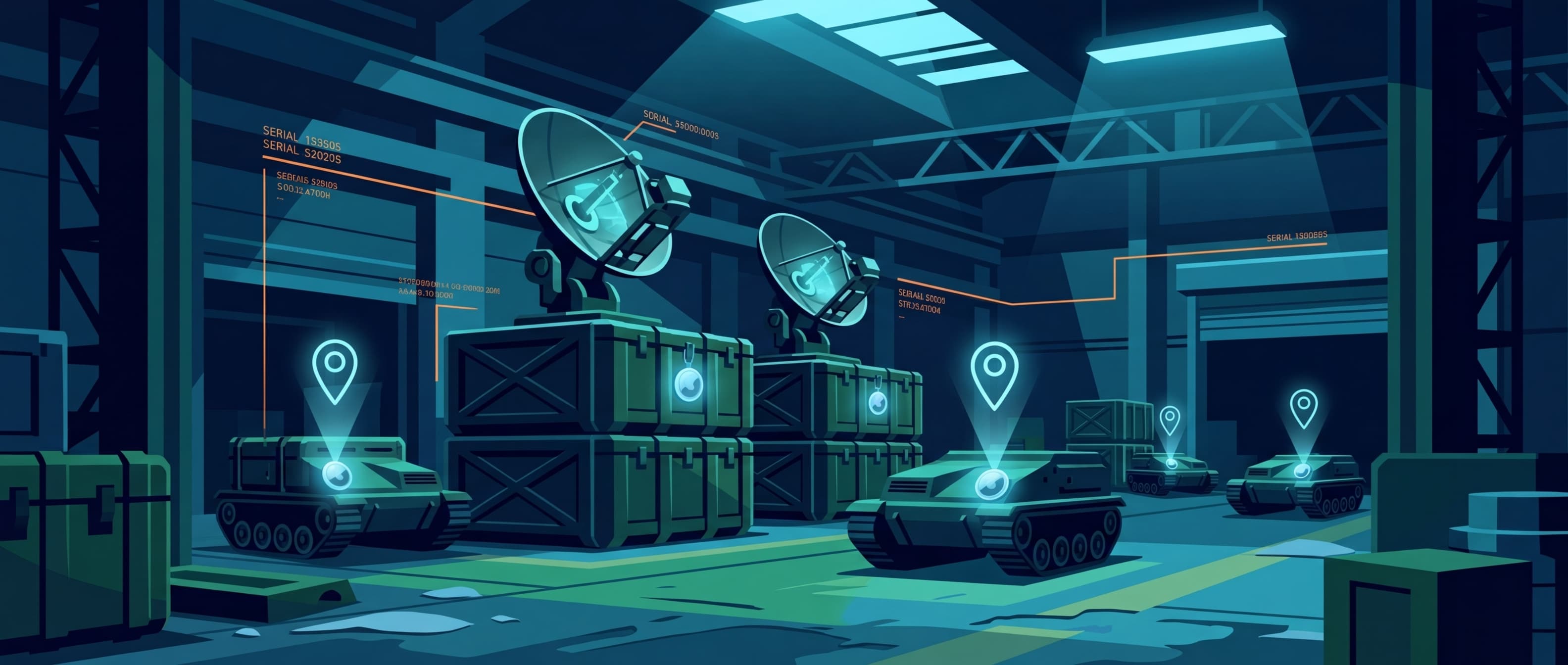
Defense Contractor Asset Tracking: Government Property Accountability That Passes DCMA Audits
In a 2024 GAO audit of contractor-acquired property, 43% of tested assets had inaccurate records in the contractor's property management system. At one Navy contractor facility, that number was 66%. These are not abstract compliance failures. Under DFARS 252.245-7003, a property management system disapproval triggers mandatory 10% withholding on all progress payments, performance-based payments, and interim payments across your covered contracts.
The Department of Defense spent over $440 billion on contracts with 59,000+ companies in 2023 alone. DoD has acknowledged it cannot accurately account for all property held by its contractors. That accountability gap falls on you, the contractor, to close.
The Regulatory Framework: What You Must Track and Why
FAR 52.245-1: Government Property
Every defense contract containing government property (furnished or acquired) includes FAR 52.245-1. This clause requires contractors to establish and maintain a system of internal controls for managing government property. The ten elements of property management in FAR 52.245-1(f)(1) include:
| Element | Requirement | Tracking Impact |
|---|---|---|
| Acquisition | Record receipt of all GFP and creation of CAP | Asset must be entered into records at point of receipt |
| Records | Maintain accurate property records with required data elements | NSN, CAGE code, part number, serial number, location, condition |
| Physical Inventory | Conduct physical inventories per contract requirements | Must verify assets exist at recorded locations |
| Subcontractor Control | Flow-down property requirements to subcontractors | Track assets that move to subcontractor facilities |
| Reports | Report to GFP Module and maintain audit trail | Timestamped movement and status records |
| Relief of Stewardship | Document consumption, loss, damage, destruction | Incident records with last known location and timeline |
| Utilization | Ensure government property used only for contract performance | Location data shows where assets are deployed |
| Maintenance | Maintain government property in serviceable condition | Track assets to maintenance facilities |
| Property Closeout | Account for all property at contract completion | Final inventory reconciliation |
| Movement | Control and document movement of government property | Real-time location and transfer records |
DFARS 252.245-7005: Management and Reporting
The consolidated DFARS clause (effective January 2024) requires contractors to report government property to the GFP Module and maintain records compliant with DoD marking standards (MIL-STD-130). Property records must include location, condition, and custody information updated as assets move between facilities, programs, or subcontractors.
The DCMA Property Management System Assessment (PMSA)
DCMA evaluates your property management system through PMSAs. A PMSA examines whether your system produces accurate records, whether physical inventories reconcile with those records, and whether your internal controls catch discrepancies before auditors do.
The 2025 GAO report (GAO-25-106868) found that DCMA itself did not perform required PMSAs on multiple Army and Air Force contracts. This means when DCMA does show up, the scrutiny is intense. Contractors with weak systems face compounded risk: less frequent oversight followed by more punitive findings.
Why Traditional Property Management Systems Fail
Most defense contractors rely on a combination of enterprise asset management (EAM) software, spreadsheets, and periodic manual inventories. This approach has three structural problems:
1. Records Drift From Reality
An asset gets moved from Building A to Building B. Someone updates the spreadsheet. Someone else does not. The EAM system shows Building A. The physical inventory finds it in Building C. The GAO found 57 total attribute errors across 90 assets at a single Air Force contractor location in June 2024. This is not negligence. It is the predictable result of systems that depend on humans to manually update location records every time an asset moves.
2. Physical Inventories Are Snapshots, Not Continuous Accountability
A wall-to-wall physical inventory tells you where assets are on one day. It tells you nothing about where they were yesterday, whether they left their authorized area last Tuesday, or how they ended up at a different facility. Between inventories, you are blind.
3. Movement Between Facilities and Subcontractors Is a Black Hole
Defense programs routinely move equipment between manufacturing sites, test facilities, customer locations, and subcontractor shops. Each transfer is supposed to generate a property record update. In practice, assets in transit are the most likely to fall out of accountability.
How Airpinpoint Solves Defense Property Accountability
Airpinpoint provides continuous, automated location tracking for physical assets using Apple's Find My network and AirTag-compatible devices. For defense contractors, this means your property records stay synchronized with physical reality without depending on manual updates.
Continuous Location Records
Every tracked asset reports its location automatically. Airpinpoint stores timestamped location history, creating a continuous audit trail that shows exactly where each piece of government property has been, when it moved, and its current position. When a DCMA auditor asks "where is asset X and where has it been," you have a precise, timestamped answer.
Geofence Alerts for Secure Areas
Define geographic boundaries around your facilities, secure storage areas, ITAR-controlled zones, and authorized work areas. Airpinpoint sends immediate alerts when a tracked asset crosses a geofence boundary. This catches unauthorized movement of government property before it becomes a loss or theft incident that requires reporting.
Multi-Facility Visibility
Defense programs span multiple locations. Airpinpoint provides a single dashboard view across all your facilities, showing the real-time status and location of every tracked asset regardless of which building, campus, or city it is in. When assets move between facilities, the system records the movement automatically.
Team-Based Access Control
Assign property management access by facility, program, or role. Program managers see their program's assets. Facility property administrators see everything at their site. Corporate property management has the enterprise view. This mirrors the organizational structure that defense contractors already use for property accountability.
What Defense Contractors Track With Airpinpoint
| Asset Category | Examples | Why Tracking Matters |
|---|---|---|
| GFE (Government-Furnished Equipment) | Test sets, measurement equipment, specialized tooling | Direct government ownership, highest accountability standard |
| CAP (Contractor-Acquired Property) | Equipment purchased with contract funds, fabricated items | Must be reported to GFP Module, often overlooked |
| Sensitive Items | Encryption devices, night vision, communications equipment | Loss requires immediate reporting, potential security incident |
| Tooling and Test Equipment | Calibration instruments, jigs, fixtures | Moves between programs and facilities frequently |
| IT Equipment | Laptops, servers, portable storage | ITAR/CUI data protection requires physical accountability |
| Shipping Containers and Packaging | Reusable containers, shipping fixtures | High-value items that circulate between contractor and government |
ITAR Physical Security Considerations
ITAR requires that defense articles be physically secured and accessible only to U.S. persons. Airpinpoint supports these requirements in several ways:
Domestic Data Storage: Airpinpoint is a U.S.-based platform. Location data for your tracked assets does not transit through or reside in foreign data centers.
Perimeter Monitoring: Geofence alerts around ITAR-controlled areas detect when a tracked defense article leaves its authorized zone. This provides an additional layer of physical security beyond badge readers and locked doors.
Movement Audit Trail: If an ITAR-controlled item moves between authorized areas (e.g., from a clean room to a shipping dock), Airpinpoint records the movement with timestamps. This documentation supports your Technology Control Plan by showing that physical security controls are actively monitored.
Access-Controlled Dashboard: Only authorized team members see asset locations. Role-based access ensures that tracking data for sensitive programs is visible only to personnel with appropriate access.
Deployment: Operational in Days, Not Months
Traditional property tracking infrastructure (RFID gates, RTLS beacons, wired sensor networks) requires months of planning, installation, and integration. Defense facilities with SCIFs, clean rooms, and restricted areas make this even harder.
Airpinpoint requires zero infrastructure installation:
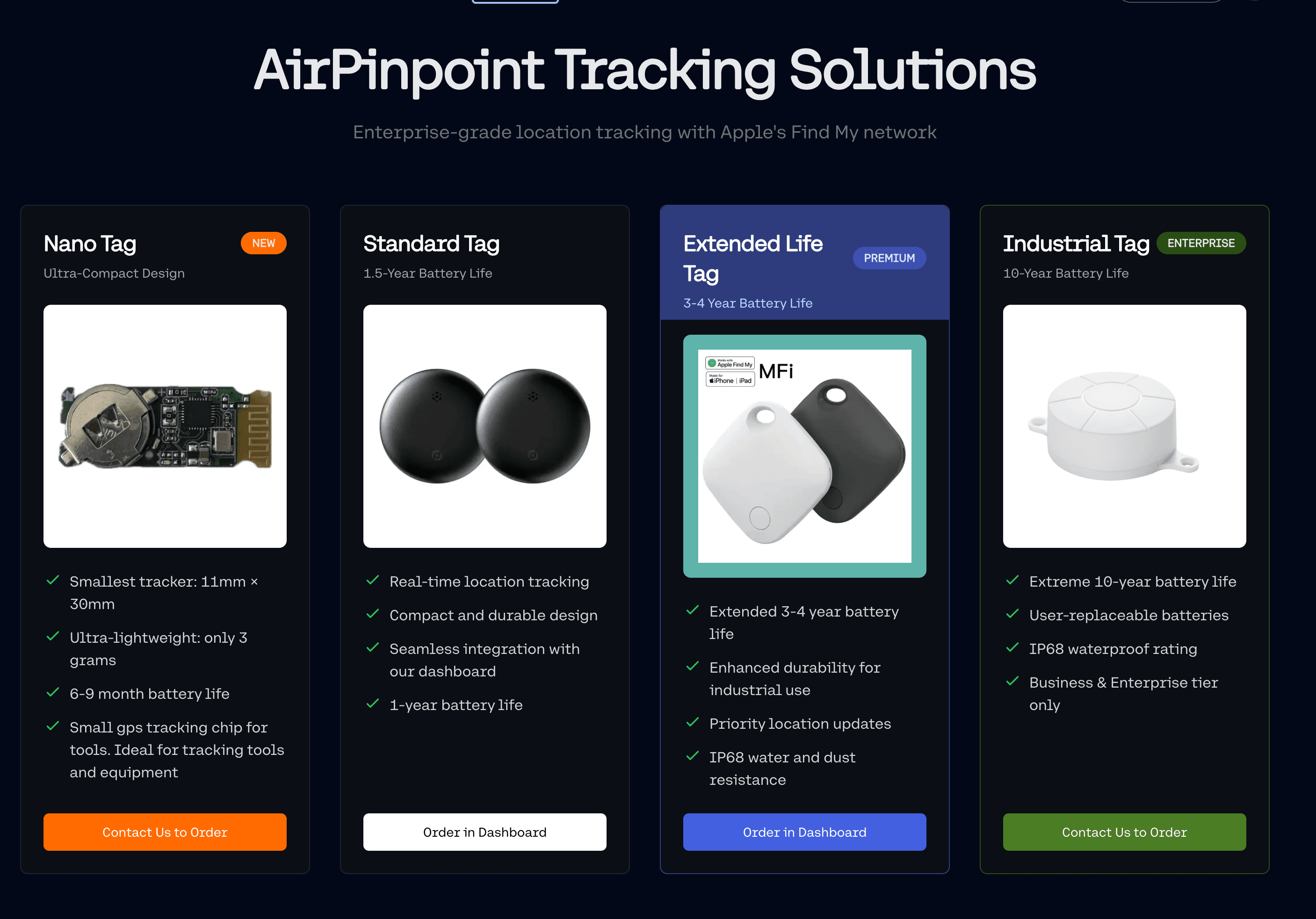
- Tag assets with Apple AirTags or Find My compatible devices ($24-29 per tag)
- Register assets in the Airpinpoint dashboard with property record identifiers (NSN, serial number, contract number)
- Define geofences around facilities, buildings, and secure areas
- Assign team access by facility, program, or property management role
- Start tracking with location updates leveraging the billion-plus devices in Apple's Find My network
Most defense contractors complete initial deployment in 1-2 weeks across their primary facility and scale to additional sites as needed.
Cost Comparison: Airpinpoint vs. Traditional Systems
| Solution | Per-Asset Cost | Infrastructure Cost | Deployment Time |
|---|---|---|---|
| Airpinpoint | $1.49/month + $29 tag | $0 | 1-2 weeks |
| RFID Gate System | $0.50-5.00/tag | $15,000-50,000/facility | 3-6 months |
| Active RTLS | $50-200/tag | $100,000+/facility | 6-12 months |
| Manual Inventory | Staff time (often 2-4 FTEs) | Spreadsheets/EAM license | Already deployed (and failing) |
For a contractor tracking 500 pieces of government property across 3 facilities, Airpinpoint costs roughly $8,940/year in subscriptions plus $14,500 in one-time tag costs. An RFID system for the same scope would run $45,000-150,000 in infrastructure alone, before tags and software licensing.
The financial calculus becomes even more clear when you consider the penalty for system disapproval: 10% withholding on progress payments. On a $50 million contract, that is $5 million in delayed cash flow.
Who Uses Airpinpoint for Defense Property Accountability
The fit here is narrow and worth stating plainly. Airpinpoint suits property accountability for unclassified, movable, contractor-held items: test sets, tooling, fixtures, shipping containers, ground support equipment. It is not an approved solution for classified material, and nothing on this page should be read as a recommendation for one. The reasons the approach fits the unclassified case:
- No infrastructure means no facility modification approvals. Adding RFID readers to a SCIF requires security engineering reviews. Attaching an AirTag to a test set does not.
- Continuous tracking beats periodic inventory. Real-time location data is fundamentally more useful than quarterly wall-to-wall counts.
- The system scales with the program. Adding 100 more tracked assets takes an afternoon, not a procurement cycle.
- Location history provides audit evidence. Timestamped records answer DCMA questions definitively.
Getting Started
If your current property management system depends on manual location updates, periodic physical inventories, and spreadsheet reconciliation, you are operating with the same approach that produced 43% error rates in GAO testing.
Airpinpoint provides the continuous, automated physical accountability layer that closes the gap between your property records and physical reality. Start with your highest-risk assets (GFE, sensitive items, ITAR-controlled articles) and expand from there.
The cost of deploying Airpinpoint across your government property inventory is a fraction of the cost of a single DCMA system disapproval. The question is not whether you can afford better property accountability. It is whether you can afford not to have it.
 Our Solution