Updated
Tools and Equipment Insurance Guide 2026: Coverage, Costs, and How Tracking Cuts Premiums
A $50,000 excavator costs roughly $400 to $600 a year to insure through inland marine coverage. Whether tracking it changes that number is a question only your agent can answer, and this guide will not pretend otherwise.
Here is what we could establish. Broker guidance for inland marine consistently lists GPS tracking alongside locked storage and jobsite security as factors that reduce premiums. What almost none of them publish is a percentage. We went looking for a quantified, attributable discount for tracked equipment on an inland marine schedule and did not find one. The crisp figures you will see quoted elsewhere (up to 40%, up to 30%, 25 to 35%) are lifted from personal auto telematics programs, which price how a named individual drives their own car. Different product, different rating basis, not applicable to your equipment schedule.
So this guide covers what insurance you actually need, what it costs, where the coverage gaps are, and what tracking genuinely changes: the quality of your claim file and the length of time between a theft and the phone call.
The Four Types of Equipment Insurance
Not all equipment insurance is the same. Most contractors need at least two of these four types, and many need three.
| Coverage Type | What It Covers | Where It Covers | Typical Cost | Best For |
|---|---|---|---|---|
| Inland Marine | Tools, equipment, materials in transit or at job sites | Anywhere (transit, job sites, storage) | $0.80-$3.00 per $100 value | Contractors, field service, any mobile equipment |
| Business Personal Property (BPP) | Equipment at your fixed business location | Your office/shop/warehouse only | $0.50-$1.50 per $100 value | Office equipment, shop tools, stored inventory |
| Commercial Auto | Vehicles and permanently installed equipment | On the road | 3-5% of vehicle value/year | Work trucks, service vehicles, mounted equipment |
| Equipment Breakdown | Mechanical/electrical failure | Your premises (usually) | $0.20-$0.50 per $100 value | Boilers, HVAC, electrical panels, compressors |
Inland Marine: The Coverage Most Contractors Underestimate
Inland marine insurance has a confusing name. It has nothing to do with boats. It covers property that moves: equipment hauled between job sites, tools in a crew truck, materials in transit.
This is the coverage gap that costs contractors the most money. Your BPP policy covers the table saw sitting in your shop. The moment that saw gets loaded onto a truck and driven to a job site, BPP coverage stops. Inland marine picks up where BPP leaves off.
Key details:
- Covers theft, vandalism, accidental damage, fire, and weather events
- Follows equipment to any location (job sites, client facilities, in transit)
- Scheduled items (individually listed, over $2,500) get full replacement value
- Unscheduled items (blanket coverage, under $2,500 each) have per-item and per-occurrence caps
- The Hartford caps unscheduled tools at $500/item and $10,000/occurrence
Business Personal Property: The Baseline
BPP is included in most commercial property policies. It covers equipment at your business address: desks, computers, shop tools, stored materials.
If all your equipment stays in one place, BPP might be sufficient. For any contractor who moves equipment between sites, BPP alone creates dangerous coverage gaps.
When You Need Both
A landscaping company with a shop full of equipment (BPP) that sends crews out daily with mowers, trimmers, and blowers (inland marine) needs both policies. Most contractors do. The cost of both together is still less than a single uninsured theft claim.
What Equipment Insurance Actually Costs
Premium Rates by Equipment Value
| Equipment Schedule Value | Annual Premium Range | Monthly Cost |
|---|---|---|
| $25,000 | $200-$750 | $17-$63 |
| $50,000 | $400-$1,500 | $33-$125 |
| $100,000 | $800-$3,000 | $67-$250 |
| $250,000 | $2,000-$7,500 | $167-$625 |
| $500,000 | $4,000-$15,000 | $333-$1,250 |
These ranges come from the $0.80 to $3.00 per $100 of value band, which is wide because it has to absorb trade, territory, deductible and loss history. Where you land inside it is driven far more by your claims record than by any single security measure.
Small contractors with under $25,000 in tools typically pay $14-$40/month through simplified tools and equipment policies. The minimum premium for most inland marine plans is $500/year.
What Drives Your Premium Up
| Factor | Impact on Premium | What You Can Control |
|---|---|---|
| Equipment value | Direct: higher value = higher premium | Schedule accurately, don't over-insure |
| Claims history | 20-40% surcharge for recent claims | Prevent losses with tracking and security |
| Industry risk class | Construction pays more than IT consulting | Can't change this |
| Location/territory | Urban areas cost more (higher theft rates) | Can't change this |
| Deductible amount | Higher deductible = lower premium | Choose the highest you can absorb |
| Security measures | Listed by brokers as a rating factor; percentage rarely published | Ask your agent to quote it with and without |
| Coverage breadth | Broader perils = higher cost | Don't cut coverage to save on premiums |
Deductible Trade-offs
| Deductible | Premium Impact | Best For |
|---|---|---|
| $500 | Highest premium | Small operations, can't absorb large losses |
| $1,000 | Standard (most common) | Mid-size contractors, balanced approach |
| $2,500 | 10-15% premium reduction | Larger fleets, self-insure small losses |
| $5,000 | 20-25% premium reduction | Large operations, strong cash reserves |
How GPS Tracking Affects Insurance Premiums
Insurance is a math game. Insurers price risk, and they price it off your loss history far more than off your equipment list. Tracking can move that in three ways, and it is worth being precise about which ones are proven and which are mechanism.
1. Theft Recovery Rate
Roughly 21% to 23% of stolen heavy equipment is ever recovered, and recovery of small tools and single-item thefts falls below 7% (National Insurance Crime Bureau and National Equipment Register). Note the age of that data: NICB and NER stopped publishing detailed annual equipment theft reports after 2016, so this is the most recent public baseline anyone has.
There is no published recovery rate for tracked equipment, because nobody has run the comparison. The figures above 90% that circulate in this category are vendor claims without a study behind them, and we are not going to repeat them.
What tracking changes is not a probability we can quote, it is the content of the police report. A stolen $30,000 mini excavator with no tracker is a description and a last-seen weekend. The same excavator with a tag is a boundary crossing at 2:47am, a heading, and a sequence of positions afterward. One of those is actionable and one is not. Whether it becomes a recovery depends on the department, the jurisdiction and how quickly you call: we have no law enforcement partnerships and cannot promise the outcome.
2. Geofence Alerts Prevent Losses
Geofencing creates virtual boundaries around job sites, storage yards, and authorized areas. When equipment crosses a boundary, you get an alert once a run of consecutive reports confirms the move, which on a site with people around is 15 to 40 minutes.
This turns a potential theft into a prevented theft. Your insurer never has to pay a claim. Over time, fewer claims mean lower premiums.
3. Claims Documentation
When you do file a claim, tracking data provides:
- Exact location and timestamp of the last known position
- Movement history showing the equipment was where you said it was
- Geofence breach alerts with precise timing
- Proof that security measures were active
This does not guarantee a faster payout, and any vendor telling you it does is guessing about your adjuster. What it does is close off the questions that stall a file: where the equipment was last, exactly when it left, and whether the security measures you described were actually running.
Discount Programs by Insurer
This is where most guides in this category go wrong, so here is the correction.
| Program | What it actually is | Applies to your equipment schedule? |
|---|---|---|
| Nationwide SmartRide | Personal auto usage-based insurance. Scores an individual's driving: speed, braking, mileage, time of day | No |
| State Farm Drive Safe & Save | Personal auto usage-based insurance, same basis | No |
| Progressive Snapshot | Personal auto usage-based insurance, same basis | No |
| Inland marine / contractors equipment | Rated on schedule value, trade, territory, deductible and loss history | Yes, this is your policy |
The "up to 40%" and "up to 30%" figures attached to the first three are real, published, and about car insurance for a named driver. They are routinely reprinted on equipment tracking pages as though they were equipment discounts. They are not.
For inland marine specifically, broker guidance is consistent in direction and silent on magnitude. Locked storage, jobsite security and GPS tracking are listed as things that reduce premiums; we could not find a broker or carrier publishing a percentage for it.
So ask, and ask precisely. Not "do you offer a GPS discount," which invites a vague yes, but: "Quote this schedule twice, once as it stands and once with every scheduled item tracked and geofenced, and show me the difference." A number you can hold the carrier to is worth more than a range you read on a vendor's website. Expect some carriers to tell you it makes no difference at bind and only shows up at renewal through a cleaner loss run. That is a legitimate answer, and it is still a reason to track.
The Insurance ROI of Equipment Tracking
We will not model an insurance saving for you, because we cannot source the discount rate that a model like that depends on. What we can do is give you the cost side exactly, and the worksheet for the rest.
The Cost Side, Which We Know Exactly
| Devices | Hardware (one time, $29 each) | Subscription ($11.99/device/month) | First-year total |
|---|---|---|---|
| 5 | $145 | $719 | $864 |
| 8 | $232 | $1,151 | $1,383 |
| 12 | $348 | $1,727 | $2,075 |
| 20 | $580 | $2,878 | $3,458 |
Those are our published prices and they are the only numbers on this page we can stand behind without qualification.
The Benefit Side, Which Is Yours to Fill In
Four inputs, all of which are in your own records or one phone call away:
- Your actual quoted discount. Get the schedule quoted both ways, as described above. If the answer is zero, write zero. Plenty of contractors will get zero, and that is worth knowing before you buy rather than after.
- Deductible exposure. Your per-claim deductible times claims filed in the last three years, annualized. This is usually larger than people expect and it is money tracking can plausibly affect, because a recovered machine is a withdrawn claim.
- The uninsured slice. Everything that falls under your per-item unscheduled cap. A van of cordless tools capped at $500 an item is mostly uninsured in practice, and none of it shows up in your premium at all.
- Downtime. Day rate on the machine, times realistic days to replace it. For anything with a lead time, this is often the biggest number in the exercise and the one people forget.
Add those, discount them by your own honest estimate of how often faster information would actually have changed the outcome, and compare against the table above.
Payback Period
Payback depends entirely on input 1, which we cannot know. Three ways it commonly goes:
- The carrier quotes a real reduction. Compare it directly against the annual subscription. This is arithmetic, not judgment.
- The carrier says it only helps at renewal. Then payback runs through your loss run, over two or three years, and the deductible line (input 2) is doing the work rather than the premium line.
- The carrier says it makes no difference. Then insurance is not the reason to track, and you should evaluate it on inputs 2 through 4 alone. It may still clear easily on the uninsured slice by itself.
If none of those three clear the cost, don't buy it. A guide that cannot reach that conclusion isn't a guide.
Filing Equipment Theft Claims: What You Need
When equipment gets stolen, the clock starts. Here is the documentation checklist, in order.
Immediate (Within 24 Hours)
- File a police report. Your insurer will require the report number. Include serial numbers, photos, and last known location from your tracking system.
- Notify your insurer. Call your agent or the claims hotline. Most policies require notification within 24-72 hours.
- Pull tracking data. Export location history, geofence breach alerts, and the last known position. Screenshot everything.
- Secure the site. Document how the theft occurred. Take photos of any forced entry, cut locks, or security breaches.
Within One Week
- Submit written claim. Include equipment descriptions (make, model, serial number, year), purchase receipts or invoices, current fair market value, and GPS/tracking data exports.
- Provide proof of ownership. Original purchase receipts, financing agreements, lease documents, or bills of sale.
- Document security measures. List all anti-theft measures in place: GPS tracking, geofences, locked enclosures, site cameras, security patrols.
How Tracking Data Strengthens Your Claim
| Without Tracking | With Tracking |
|---|---|
| "The excavator was at the job site last Friday" | "The excavator left the geofenced job site at 2:47 AM Saturday, moving northeast on Route 9" |
| No proof of equipment location | A timestamped position trail you can export as CSV or JSON |
| Adjuster's open questions stall the file | The three questions that stall a file are already answered |
| Potential disputes about equipment condition | Movement logs showing the machine was in service where you said |
| Nothing in the report but a date range | A boundary crossing, a time and a direction for the police report |
One honest note on that first row. A Find My tag resolves to roughly 10 to 30 meters, which is address level rather than shelf level, and it reports when an Apple device passes near it rather than on a fixed schedule. In a populated area that is frequent. At a quiet rural site it can be sparse. Describe it accurately to your adjuster rather than overselling it, because a trail with honest gaps is more credible than a claim of continuous coverage that the data does not support.
Coverage Gaps That Catch Contractors
Gap 1: Unscheduled Tool Limits
Most inland marine policies cap unscheduled tools at $500-$2,500 per item. If your impact wrench costs $800 and your unscheduled cap is $500, you are underinsured by $300 on that single tool.
Fix: Schedule any tool or piece of equipment worth more than your per-item cap. Keep an updated inventory with current replacement values.
Gap 2: Rented/Leased Equipment
Your inland marine policy covers equipment you own. The excavator you rented for two weeks is probably not covered unless you have a rental endorsement.
Fix: Add a rented/leased equipment endorsement, or verify the rental company's damage waiver covers your use case. Track rented equipment alongside owned assets for complete visibility.
Gap 3: Employee Tools
Tools owned by employees but used on your job sites may not be covered by your policy. If a crew member's personal drill gets stolen from your site, that is their loss unless your policy includes employee tool coverage.
Fix: Check whether your policy covers employee-owned tools used on the job. Some policies offer $5,000-$10,000 in employee tool coverage for a small additional premium.
Gap 4: Equipment in Transit
Some BPP policies and even some inland marine policies have exclusions or reduced coverage for equipment in transit. If a truck full of tools gets stolen at a gas station, verify your coverage applies.
Fix: Confirm your inland marine policy explicitly covers equipment in transit with no sublimits. Track all equipment in transit with geofence alerts on departure and arrival.
How to Get the Best Equipment Insurance Rates
Step 1: Build an Accurate Equipment Schedule
List every piece of equipment with make, model, serial number, year, and current replacement value. Update annually. Insurers reward accuracy because it reduces claim disputes.
Step 2: Install GPS/BLE Tracking
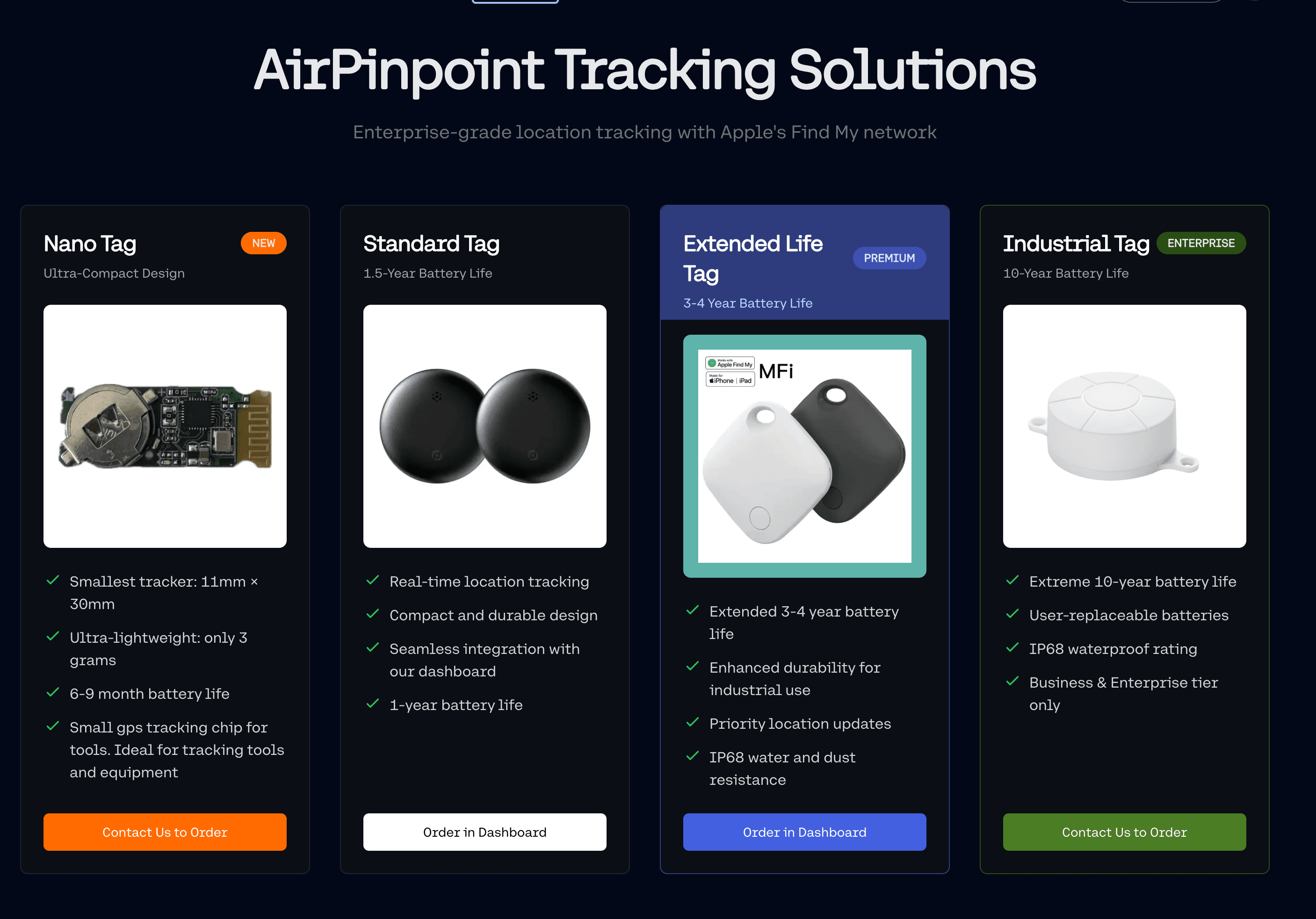
Track every scheduled item and set up geofence alerts for job sites, storage areas, and transit routes. Airpinpoint tags cost $29 each plus $11.99/month per device. For a 10-item fleet, total cost is $290 upfront + $1,439/year.
Step 3: Ask for the Tracking Discount
Show your insurer the tracking system. Provide a list of tracked assets with serial numbers. Some insurers want proof of active geofence alerts. Then ask for the schedule to be quoted both ways, with and without, so the difference is a number on paper rather than a promise. Do not budget around a discount until you have it in writing; some carriers will price it at bind, some only at renewal through a cleaner loss run, and some not at all.
Step 4: Choose the Right Deductible
If your cash reserves can handle a $2,500 loss, take the higher deductible and pocket the premium savings. This is the lever with the most predictable effect on your premium, and unlike a tracking discount you can get it quoted in minutes. Ask for the same schedule at $500, $1,000, $2,500 and $5,000 and pick from real numbers. Remember you are trading a certain annual saving against an uncertain larger loss, so size the deductible against cash you could actually part with in a bad month.
Step 5: Bundle Policies
Many insurers offer package discounts when you bundle BPP, inland marine, commercial auto, and general liability. Ask about contractor's package policies.
Step 6: Review Annually
Equipment values change. Your fleet grows. Market rates shift. Review your schedule and coverage annually. Drop coverage on equipment you have sold. Add new acquisitions promptly.
Equipment Insurance by Industry
| Industry | Primary Coverage Needed | Average Equipment Value | Annual Premium Range | Key Risks |
|---|---|---|---|---|
| General Contracting | Inland marine + BPP | $50K-$500K | $500-$6,000 | Theft, transit damage, job site vandalism |
| Electrical | Inland marine | $25K-$150K | $250-$2,000 | Tool theft from trucks, copper theft |
| Plumbing/HVAC | Inland marine + commercial auto | $30K-$200K | $300-$3,000 | Vehicle break-ins, equipment damage |
| Landscaping | Inland marine | $20K-$100K | $200-$1,500 | Trailer theft, mower theft, seasonal exposure |
| Concrete/Masonry | Inland marine + equipment breakdown | $100K-$1M | $1,000-$10,000 | Mechanical failure, transit damage |
| Roofing | Inland marine | $30K-$150K | $300-$2,000 | Weather damage, theft, falls/drops |
| IT/AV Services | Inland marine + BPP | $50K-$300K | $500-$4,000 | Theft, accidental damage, technology obsolescence |
Getting Started
Equipment insurance protects your assets. GPS tracking makes that insurance cheaper and more effective. The combination is stronger than either alone.
Three steps to start:
- Audit your equipment. List everything with serial numbers, photos, and replacement values. This is your insurance schedule and your tracking inventory.
- Get quotes with tracking. Tell agents you have (or will have) GPS/BLE tracking on all scheduled items. Compare inland marine quotes from at least three insurers.
- Deploy Airpinpoint. Attach trackers to every insured asset. Set up geofence alerts for job sites and storage. Share the tracking dashboard link with your insurance agent.
Do step 2 before step 3. If the quoted difference covers the subscription, the decision is arithmetic. If it doesn't, the case for tracking rests on your deductible exposure, the uninsured slice under your per-item cap, and downtime, and it may well still clear on those alone. What we are not going to tell you is that it works out every time, because we cannot source a discount rate that would make that true.


 Our Solution