
Trailer GPS Tracker: Trailer Tracking With No Subscription
A trailer can be hooked up and towed off in under 60 seconds, and the National Insurance Crime Bureau (NICB) puts the recovery rate for untracked trailers at just 20-30%. The cheapest way to flip those odds is a hidden tracker that keeps reporting after the trailer is gone, with no cell plan a thief can jam and no monthly bill on the hardware.
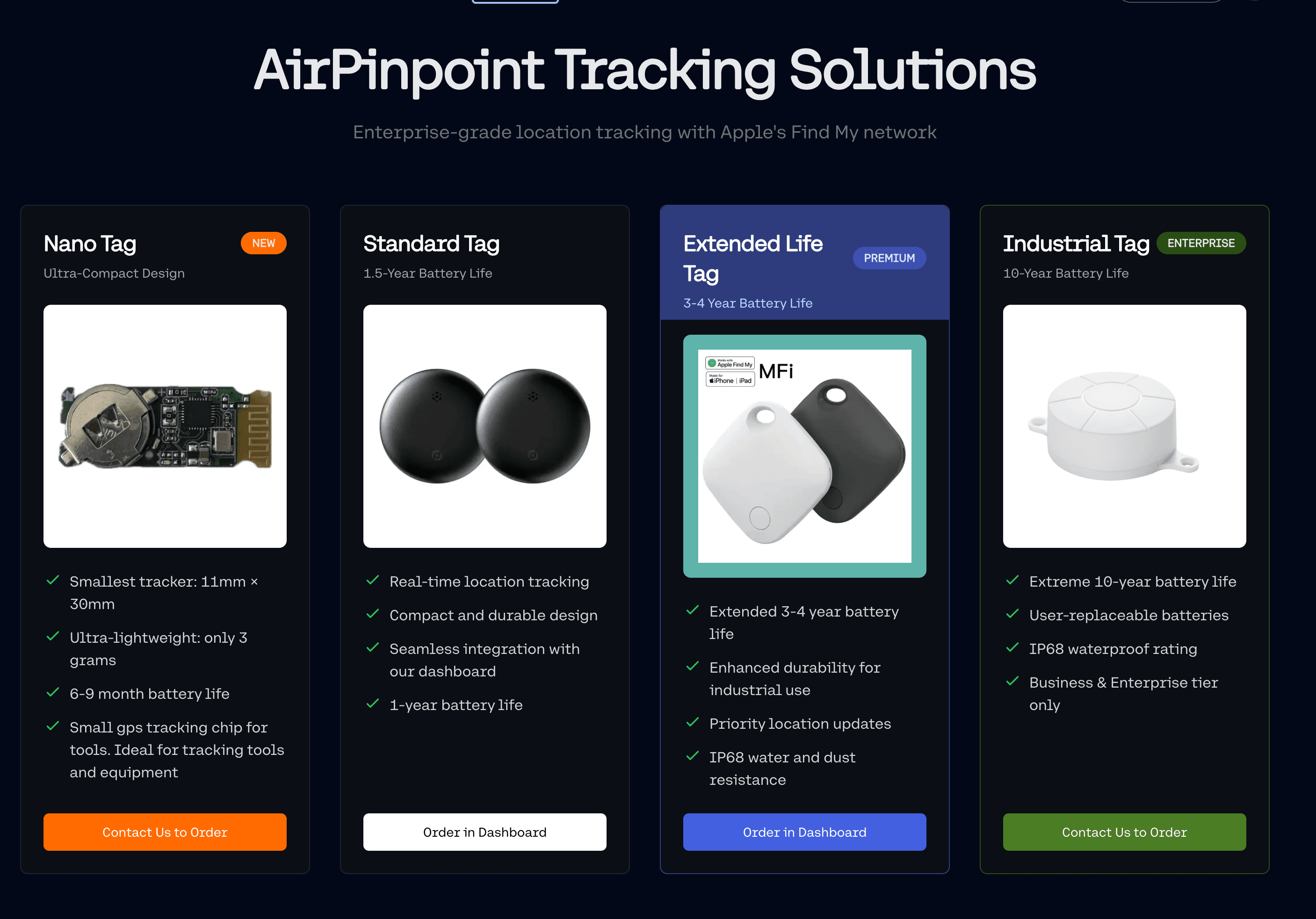
The best trailer tracking setup for most fleets is a Find My tag run through Airpinpoint. It costs $29 per trailer one-time, hides inside the frame, lasts 12+ months with no wiring, and locates through Apple's Find My network of 2.5 billion devices instead of a SIM. Airpinpoint adds the fleet dashboard, geofence alerts the moment a trailer leaves your yard, and full history at $11.99/device/month. For over-the-road trailers that need real-time position on rural highways, a wired or solar cellular GPS still wins.
Trailer tracker types compared
There are four realistic ways to track a trailer. They differ most on install, recurring cost, battery, and whether they keep working when the trailer is stolen.
| Tracker type | Install | Monthly cost | Battery | Theft alert | Best for |
|---|---|---|---|---|---|
| Find My tag (Airpinpoint) | Drop in frame, no wiring | $0 on device; $11.99/device on Airpinpoint | 12+ months, $1 coin cell | Geofence email + webhook on yard exit | Parked, unpowered, near people |
| Hardwired cellular GPS | Wired to power, professional install | $30-50/device | Runs on trailer/solar power | Real-time, but jammable on cellular | Over-the-road real-time |
| OBD plug-in GPS | Plugs into tow vehicle only | $8-50/device | Vehicle power | Tracks the truck, not the trailer | Tow vehicle, not the trailer |
| Hidden battery GPS | Hide and recharge | $8-25/device | 2 days to multi-year by update rate | Real-time, but jammable on cellular | High-value cargo in transit |
The OBD option is on the list only to rule it out: it tracks the tow vehicle, so the moment a trailer is unhooked you lose it. Everything below compares the three that actually track the trailer.
How a Find My tag tracks a stolen trailer
A Find My tag hidden in the frame broadcasts a Bluetooth signal that any of the 2.5 billion Apple devices in range relays to Apple's servers, so the trailer needs no power, wiring, or cell plan. You hide the $29 tag in the frame tube or axle housing, register it in Airpinpoint, and the network reports its position whenever an iPhone passes by, which is every few minutes in populated areas. The detail that matters for theft: the tag keeps reporting after it leaves your yard. As the stolen trailer moves through traffic, every iPhone it passes drops a fresh location into your dashboard, and Airpinpoint fires a geofence alert the second the trailer crosses your yard boundary.
The table below ranks the realistic trailer tracking setups by cost and what they actually deliver.
| Setup | Hardware | Monthly | Battery | Updates | Best for |
|---|---|---|---|---|---|
| Find My tag + Airpinpoint | $29/tag | $11.99/device | 12+ months | Every few min near people | Unpowered trailers parked near people |
| Airpinpoint 7-year beacon | Custom | $14.99/device | 7+ years | Every few min near people | Long-term or remote storage |
| Wired/solar GPS (Samsara) | $100-200 | $30-50/device | Vehicle/solar power | Every 5-60 sec | Over-the-road real-time |
| DIY consumer Find My | $29/tag | $0 | 12+ months | Every few min near people | One person, one trailer |
Why Trailers Are Hard to Track
Trailers present tracking challenges that cars and trucks don't:
No onboard power. Most trailers have no electrical system. OBD-powered trackers (Bouncie, MOTOsafety, Vyncs) are out. You need a battery-powered, solar-powered, or ultra-low-power device.
Battery-powered GPS forces a pick-two-of-three tradeoff. Frequent updates, long battery life, no charging routine: you get exactly two of those. Crank up the update rate on a LandAirSea Overdrive and the claimed "2-week" battery becomes 2-3 days. Keep the advertised battery life and you have a device that checks in once per day. That is the industry's standard fine print. Tracki publishes it plainly: 2-3 days at real-time update rates, 30-75 days at 1-3 updates per day. "Multi-year" battery claims on GPS trackers (like the Trak-4 at 18 months) assume roughly 1 update per day, which is about 550 total location reports for the whole battery. An AirTag delivers that many in under 1.5 days, then keeps going for 12+ months at full update frequency. AirTags are the only option that avoids the pick-two trap, because the battery doing the expensive work belongs to nearby iPhones.
Long idle periods. A utility trailer might sit in a driveway for weeks between jobs. A boat trailer sits all winter. Battery-powered GPS trackers drain even in standby mode, and most die within 1-3 weeks.
Remote storage. Trailers are often stored at job sites, storage lots, or rural properties with spotty cellular coverage. GPS trackers can't transmit location data without a cell signal.
Easy to steal, hard to identify. A utility trailer has no VIN plate visible from outside. Thieves can hook up and drive away in under 60 seconds. By the time you notice, the trailer is in a different county.
Top Trailer GPS Trackers Compared
Battery-Powered GPS Trackers
These are the most popular options on Amazon and in fleet management. All require cellular subscriptions.
| Tracker | Device Cost | Monthly Fee | Battery Life | Update Frequency | Geofencing |
|---|---|---|---|---|---|
| LandAirSea Overdrive | $30 | $20-$30 | 1-2 weeks | Every 10 seconds | Yes |
| Spytec GL300 | $40 | $17-$25 | 2-3 weeks | Every 5 seconds (optional) | Yes |
| Optimus 2.0 | $30 | $20 | ~2 weeks | Every 10 seconds | Yes |
| Tracki | $16 | $17-$20 | 2-5 days | Every 10 seconds | Yes |
Verdict: These work for active tracking during towing, but battery life makes them impractical for trailers that sit idle. The Spytec GL300 offers the best balance of battery life and features. Tracki has the lowest entry price but the worst battery life.
The recurring complaint across reviews for all three is battery, not signal: drain in cold weather, drain even in standby, and real-world life well short of the advertised figure. That is the trailer-specific failure mode, because a trailer sits parked far longer than a daily-driven car.
OBD-Powered Trackers (Tow Vehicle Only)
These plug into your tow vehicle, not the trailer itself.
| Tracker | Device Cost | Monthly Fee | Contract | Key Feature |
|---|---|---|---|---|
| Bouncie | $67 | $8/month | None | Trip history, vehicle health |
| MOTOsafety | $80 | $22/month | None | Teen/fleet monitoring |
| Vyncs | $69 | $50-$100/year | None | No monthly (annual only) |
Limitation: These only track the tow vehicle, not the trailer. Once the trailer is unhooked, you lose tracking. Not a trailer solution.
Enterprise/Commercial Trailer Trackers
For fleets of semi-trailers and high-value cargo trailers.
| Tracker | Device Cost | Monthly Fee | Contract | Battery Life | Best For |
|---|---|---|---|---|---|
| Samsara | $100-$200 | $30-$50 | 3-year | Hardwired/solar | Large commercial fleets |
| CalAmp LMU-3640 | $200+ | $25-$40 | Varies | Hardwired | Asset tracking platforms |
| Digital Matter Oyster3 | $100-$150 | $5-$15 | None | Up to 10 yrs daily, 3.5 yrs hourly (vendor) | Long-duration battery tracking |
| Tenna | Custom | $15-$30 | Annual | Solar | Construction trailers |
Verdict: The Digital Matter Oyster3 is the best cellular option for trailers that must report from genuinely remote areas. Its replaceable-AA battery solves the recharging problem (Digital Matter states up to 10 years at once-daily updates, 3.5 years at hourly), but at $100-150 per device plus carrier fees it costs 4-5x more upfront than a tag, and the recurring fee never goes away.
AirTag-Based Tracking
| Option | Device Cost | Monthly Fee | Contract | Battery Life | Update Method |
|---|---|---|---|---|---|
| Apple AirTag (standalone) | $29 ($24 in 4-pack) | $0 | None | ~1 year | Find My network (passive) |
| AirTag + Airpinpoint | $29 | $11.99/device/mo (Business) | None | ~1 year | Find My + fleet dashboard |
What Airpinpoint adds over standalone AirTag:
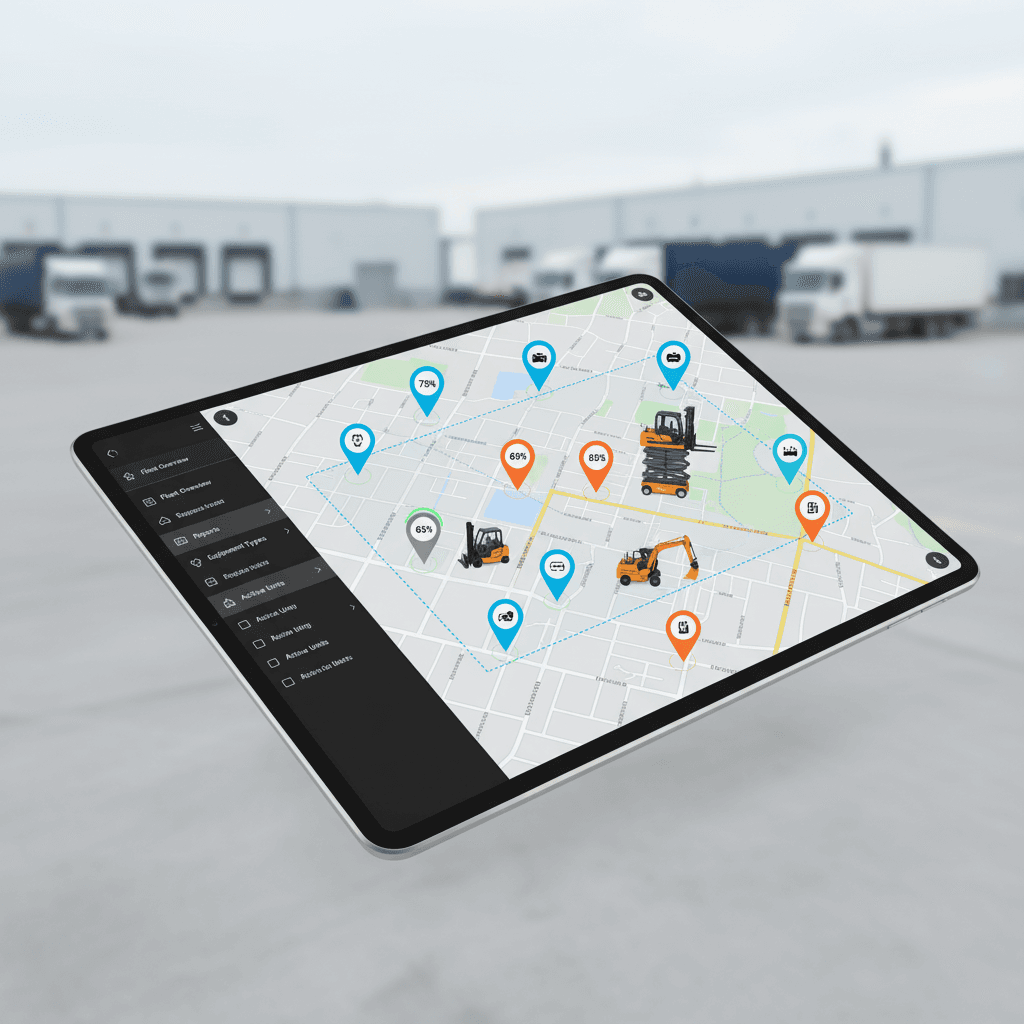
- Fleet dashboard showing all trailers on a single map
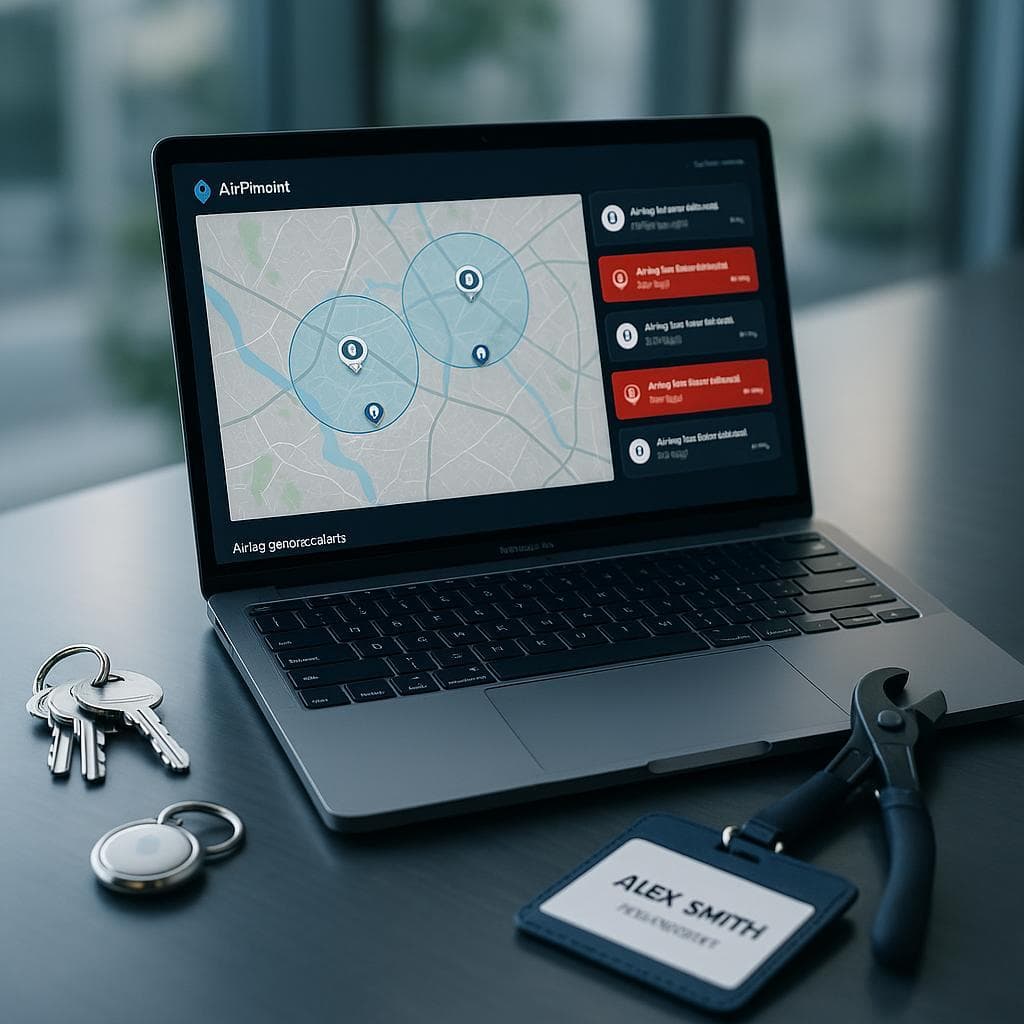
- Geofence alerts when a trailer leaves a defined area
- Location history and movement timeline
- Multi-user access for your team
- Email and webhook notifications
- Inventory management for large fleets
The no-monthly-fee angle
The line that decides most trailer fleets is recurring cost. A cellular trailer tracker bills $8-50/month per trailer for as long as you own it, and that fee is the price of the SIM, not the tracking. A Find My tag has no SIM, so the device itself never bills you. You hide a $29 tag, swap a $1 coin cell once a year, and the only recurring cost is the Airpinpoint subscription that adds the dashboard, geofencing, and history. On a 20-trailer fleet the difference is thousands of dollars a year that buys you the same answer to the same question: where is my trailer.
Want the recurring-cost math on its own, without the GPS comparison? See trailer tracking with no monthly fee and the best GPS tracker with no monthly fee.
How much does trailer tracking cost?
Tag-based trailer tracking costs $29 per trailer one-time plus $11.99/device/month on Airpinpoint Business, while battery and cellular GPS run $16-200 in hardware plus $8-50/month per trailer. Over three years that gap compounds: the real cost of trailer tracking includes device replacement, subscriptions, and the labor of recharging battery GPS units. Here's what 3 years actually costs across fleet sizes.
10 Trailers
| Solution | Year 1 | Year 2 | Year 3 | 3-Year Total |
|---|---|---|---|---|
| LandAirSea Overdrive ($20/mo) | $2,700 | $2,400 | $2,400 | $7,500 |
| Spytec GL300 ($17/mo) | $2,440 | $2,040 | $2,040 | $6,520 |
| Tracki ($17/mo) | $2,200 | $2,040 | $2,040 | $6,280 |
| Digital Matter Oyster3 ($10/mo) | $2,200 | $1,200 | $1,200 | $4,600 |
| Samsara ($35/mo, 3yr contract) | $5,200 | $4,200 | $4,200 | $13,600 |
| AirTag + Airpinpoint ($11.99/mo) | $1,729 | $1,469 | $1,469 | $4,667 |
AirTag device cost: $29/tag. Battery replacement ~$1/year. Airpinpoint Business plan: $11.99/device/mo.
20 Trailers
| Solution | Year 1 | Year 2 | Year 3 | 3-Year Total |
|---|---|---|---|---|
| LandAirSea Overdrive | $5,400 | $4,800 | $4,800 | $15,000 |
| Spytec GL300 | $4,880 | $4,080 | $4,080 | $13,040 |
| Digital Matter Oyster3 | $4,200 | $2,400 | $2,400 | $9,000 |
| Samsara | $10,400 | $8,400 | $8,400 | $27,200 |
| AirTag + Airpinpoint | $3,458 | $2,938 | $2,938 | $9,334 |
50 Trailers
| Solution | Year 1 | Year 2 | Year 3 | 3-Year Total |
|---|---|---|---|---|
| LandAirSea Overdrive | $13,500 | $12,000 | $12,000 | $37,500 |
| Spytec GL300 | $12,200 | $10,200 | $10,200 | $32,600 |
| Digital Matter Oyster3 | $10,500 | $6,000 | $6,000 | $22,500 |
| Samsara | $26,000 | $21,000 | $21,000 | $68,000 |
| AirTag + Airpinpoint | $8,645 | $7,345 | $7,345 | $23,335 |
At 50 trailers, Airpinpoint saves $9,000-$45,000 over three years compared to GPS alternatives.
Battery Life: The Real Differentiator for Trailers
Battery life matters more for trailers than any other tracked asset. Here's an honest comparison:
| Tracker | Claimed Battery | Fine-print update rate | Real-World Battery | Annual Battery Cost |
|---|---|---|---|---|
| Tracki | "Up to 5 days" | 1-3/day for 30-75 days; 2-3 days real-time | 2-3 days at real-time | $0 (rechargeable) |
| LandAirSea Overdrive | "Up to 2 weeks" | Hourly or faster | 5-10 days | $0 (rechargeable) |
| Spytec GL300 | "Up to 2.5 weeks" | Every 5 sec (optional) | 10-14 days | $0 (rechargeable) |
| Digital Matter Oyster3 | "Up to 10 years" (vendor) | Once-daily 10 yrs; hourly 3.5 yrs | Multi-year at low update rates | AA replacement |
| Apple AirTag | "About 1 year" | Every 1-5 min in populated areas | 10-14 months at full rate | ~$1 |
For a 20-trailer fleet using LandAirSea Overdrive, someone needs to visit each trailer every 7-10 days to swap or recharge the tracker. That's 100+ charging trips per year. If your trailers are spread across job sites, the labor cost of recharging exceeds the subscription fee.
AirTags eliminate this entirely. Replace the $1 battery once a year. Done.
Trailer Theft: The Numbers
Understanding the risk helps justify the investment:
- 68,000+ trailers stolen annually in the US (NICB)
- Recovery rate without tracking: 20-30%
- Recovery rate with GPS tracking: 80-90%
- Top theft states: Texas, California, Florida, Georgia, Oklahoma
- Utility trailers are the most commonly stolen type due to universal couplers and lack of identifying features
Average Trailer Values by Type
| Trailer Type | Value Range | Typical Contents Value | Total Exposure |
|---|---|---|---|
| Utility (open) | $2,000-$5,000 | $500-$5,000 (tools) | $2,500-$10,000 |
| Enclosed cargo | $5,000-$15,000 | $5,000-$50,000 | $10,000-$65,000 |
| Boat trailer | $1,000-$3,000 | $10,000-$100,000+ (boat) | $11,000-$103,000 |
| Horse/livestock | $10,000-$50,000 | N/A | $10,000-$50,000 |
| Travel trailer/RV | $15,000-$100,000+ | Personal items | $20,000-$120,000 |
| Semi-trailer | $15,000-$45,000 | $50,000-$500,000+ (cargo) | $65,000-$545,000 |
A $29 AirTag protecting a $15,000 enclosed cargo trailer is a no-brainer investment. The tracker costs 0.2% of what it protects.
Best Tracker by Trailer Type
Utility Trailers (Landscaping, Construction)
Recommendation: AirTag + Airpinpoint
Utility trailers are the most stolen trailer type and the hardest to justify expensive GPS tracking for. A $3,000 utility trailer doesn't warrant a $360/year GPS subscription. An AirTag hidden inside the frame tube costs $29 and lasts all year. Add Airpinpoint ($11.99/mo) for geofence alerts when the trailer leaves your yard.
Placement tips:
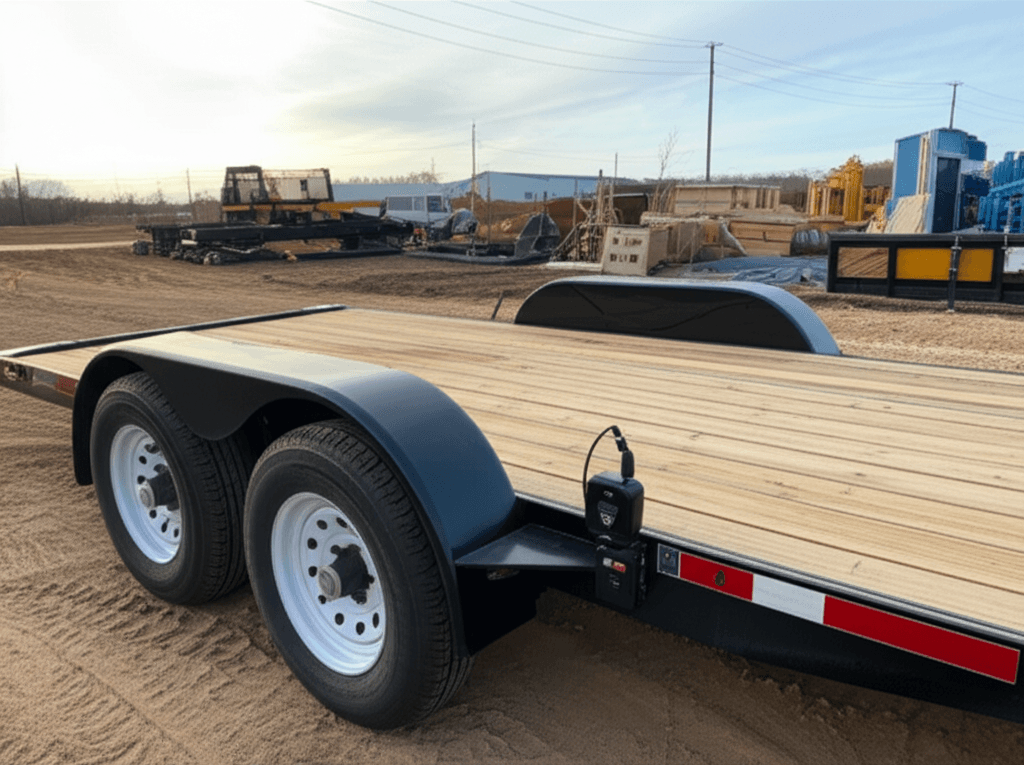
- Inside the frame tube (accessible through drain holes)
- Under the fender, inside a waterproof case
- Inside the tongue jack housing
- Behind the license plate bracket
Enclosed Cargo Trailers
Recommendation: AirTag + Airpinpoint (or dual tracker for high-value cargo)
Enclosed trailers carry valuable equipment. For standard use, an AirTag inside the frame plus one inside the cargo area covers both theft and misplacement. For high-value cargo in transit, consider adding a real-time GPS tracker for active shipment monitoring.
Boat Trailers
Recommendation: AirTag + Airpinpoint
Boat trailers are the strongest case for AirTag-based tracking. They sit idle for 4-6 months during off-season. No battery-powered GPS tracker survives that. An AirTag works the entire off-season without maintenance. When the trailer is at a marina during boating season, iPhone density is high and location updates are frequent.
Horse/Livestock Trailers
Recommendation: AirTag + Airpinpoint or Digital Matter Oyster3
High-value trailers ($10K-$50K) that travel to remote locations (ranches, fairgrounds, rodeos). AirTags work well for theft recovery, but if you need location updates during transit through rural areas, the Digital Matter Oyster3's cellular connection provides more consistent coverage.
Travel Trailers and RVs
Recommendation: Dual approach
Travel trailers and RVs have the highest individual value. Consider an AirTag hidden in the frame (always-on theft protection) plus a hardwired GPS tracker connected to the trailer's electrical system (real-time tracking when plugged in). Airpinpoint manages the AirTag side, while the GPS tracker provides real-time data during road trips.
Semi-Trailers (Commercial Fleet)
Recommendation: Depends on fleet size
Large commercial fleets (100+ trailers) with existing Samsara or Geotab infrastructure should stick with their platform. Smaller operations (10-50 trailers) save significantly with AirTag + Airpinpoint, especially for trailers that sit at yards between loads.
AirTag vs GPS tracker for trailers?
For a parked trailer near people, an AirTag through Airpinpoint beats a GPS tracker on cost, battery, and maintenance; for an over-the-road trailer crossing rural areas, a cellular GPS wins on real-time accuracy. The honest split is this: AirTags depend on nearby Apple devices and report location-only snapshots, while GPS trackers run on cellular, give second-by-second position and speed, but cost $100-200 in hardware plus $30-50/month and die in storage. Here's what traditional GPS trackers offer that AirTags don't.
Real-time location updates. GPS trackers report location every 5-60 seconds via cellular. AirTags update when a passing iPhone detects the Bluetooth signal, which could be minutes or hours apart depending on foot/vehicle traffic nearby.
Speed and movement alerts. GPS trackers can alert you if your trailer exceeds a speed threshold or takes an unexpected route. AirTags don't measure speed.
Continuous route tracking during transit. If you need to know exactly where your trailer is at every moment during a highway trip, GPS is the answer. AirTags show periodic location snapshots along the route.
Temperature and cargo monitoring. Some enterprise GPS trackers (Samsara, Tenna) integrate with temperature sensors for cold chain compliance. AirTags are location-only.
Geofencing without third-party software. Most GPS trackers include geofencing in their subscription. AirTag geofencing requires Airpinpoint or similar software.
What AirTags Do That GPS Trackers Can't
Survive months without maintenance. A year of battery life with zero charging. No GPS tracker with real-time capability matches this.
Work without cell service. AirTags use the Find My network (2.5 billion Apple devices). Any passing iPhone relays the location. GPS trackers are dead without cellular coverage.
Resist jamming. GPS/cellular jammers cost $20-50 online and disable traditional trackers. AirTags use Bluetooth Low Energy, which requires a different and less common type of jammer. Most thieves don't carry both.
Stay hidden. AirTags are the size of a quarter. They fit inside frame tubes, behind panels, inside electrical junction boxes. GPS trackers are 2-5x larger and have antennas that can be spotted.
Cost a fraction of GPS. $29 per trailer vs $100-200 hardware + $200-600/year per trailer. For a fleet of 20 utility trailers, that's a $3,000-$10,000 annual difference.
Setting Up AirTag Tracking for Your Trailer Fleet
Step 1: Buy AirTags
Apple AirTag 4-pack costs $99 ($24.75 per tag). For fleets, Airpinpoint offers bulk pricing.
Step 2: Hide the AirTag
The best placements are inside the trailer structure where they won't be found:
- Frame tube: Drop through a drain hole. Wrap in foam to prevent rattling.
- Axle housing: Inside the spring mount area, secured with adhesive.
- Tongue area: Inside the coupler housing or behind the jack mechanism.
- Enclosed trailers: Inside a wall panel or ceiling cavity, plus one in the frame.
Use a waterproof case (Pelican micro case or similar) if the location is exposed to direct water spray.
Step 3: Set Up Airpinpoint
- Create an account at airpinpoint.com/dashboard
- Register each AirTag to your fleet
- Set up geofences around your yards, job sites, and storage locations
- Configure alerts (email, webhook) for geofence violations
- Add team members who need tracking access
Step 4: Layered Security (Optional)
For high-value trailers, combine AirTags with physical security:
- Coupler lock: $20-$50, prevents hookup
- Wheel lock/boot: $30-$80, prevents towing
- Hitch pin lock: $15-$30, secures to your vehicle
- AirTag in frame: $29, provides location if stolen despite physical locks
Total layered security cost: $94-$189 per trailer. Less than 6 months of a GPS tracker subscription.
Frequently Asked Questions
The FAQ section above covers the most common questions about trailer GPS tracking. For additional questions about Airpinpoint specifically, visit our pricing page or contact our team.

 Our Solution