
Heavy Equipment Rental Software
Heavy equipment rental (excavators, dozers, loaders, cranes) requires software built for the unique demands of industrial machinery. General rental software can't handle hour-based billing, complex maintenance schedules, or the logistics of moving 40-ton equipment.
What Makes Heavy Equipment Rental Different
| Factor | Light Equipment | Heavy Equipment |
|---|---|---|
| Billing | Daily/weekly | Often hourly + daily |
| Delivery | Standard truck | Lowboy, permits, planning |
| Maintenance | Basic service | Complex, hour-based schedules |
| Value | $100-10,000 | $50,000-500,000+ |
| Tracking | Nice to have | Essential |
| Compliance | Minimal | DOT, OSHA, emissions |
Top Heavy Equipment Rental Software
Quipli
Best for: Modern operations wanting clean UX and heavy equipment focus
Quipli was built specifically for heavy equipment rentals with a modern, intuitive interface.
Heavy Equipment Features:
- Equipment utilization dashboards
- Hour meter tracking
- Streamlined online booking
- Mobile-responsive design
- Growing integration library
Pricing: Starting at $299/month
Strengths: Modern design, heavy equipment focus, fast implementation Weaknesses: Newer platform, fewer legacy integrations
Point of Rental
Best for: Large operations needing comprehensive features
The industry standard with the deepest feature set for heavy equipment.
Heavy Equipment Features:
- Complete hour/meter tracking
- Complex rate structures
- Advanced maintenance scheduling
- Telematics integration
- Multi-location support
Pricing: Custom (typically $500-1500/month)
Strengths: Most comprehensive, proven at scale, extensive integrations Weaknesses: Higher cost, steeper learning curve
InTempo
Best for: Enterprise operations with ERP requirements
Full ERP capabilities for the largest rental operations.
Heavy Equipment Features:
- Complete fleet management
- Financial management built-in
- Multi-company support
- Advanced analytics
- Deep customization
Pricing: Enterprise pricing (custom)
Strengths: True ERP, handles complexity, enterprise support Weaknesses: Expensive, long implementation, overkill for smaller ops
Wynne Systems (RentalMan)
Best for: Traditional heavy equipment rental houses
Long-established solution with deep industry knowledge.
Heavy Equipment Features:
- Meter/hour tracking
- Maintenance management
- Parts inventory
- Financial integration
- Industry expertise
Pricing: Custom (mid to enterprise)
Strengths: Industry veteran, comprehensive, good support Weaknesses: Dated interface, slower innovation
Critical Features for Heavy Equipment
1. Hour Meter Management
Heavy equipment bills by hours used, not just days rented:
- Record hour readings at every transaction
- Calculate charges based on included hours vs overage
- Integrate with telematics for automatic hour updates
- Track cumulative hours for maintenance scheduling
- Report utilization by equipment type
2. Rate Structure Flexibility
Heavy equipment has complex pricing:
| Rate Type | Example |
|---|---|
| Daily minimum | $500/day for first 8 hours |
| Hourly overage | $75/hour over 8 hours |
| Weekly cap | $2,000/week (40 hours included) |
| Monthly rate | $6,000/month (160 hours included) |
| Standby rate | 50% of daily when idle on site |
Your software must handle these combinations.
3. Maintenance Scheduling
Heavy equipment requires rigorous maintenance:
- Service intervals by hours (every 250, 500, 1000 hours)
- Pre-delivery inspections
- Post-rental inspections
- Component tracking (engine hours vs equipment hours)
- Service history by unit
4. Transport Logistics
Moving heavy equipment is complex:
- Route planning for oversize loads
- Permit requirement tracking
- Driver assignment and scheduling
- Proof of delivery capture
- Pickup coordination
5. GPS and Telematics Integration
Heavy equipment demands real-time visibility:
| Data Point | Business Value |
|---|---|
| Real-time location | Know where every asset is |
| Geofence alerts | Theft prevention |
| Hour meter reading | Accurate billing |
| Engine runtime | Utilization analysis |
| Fault codes | Proactive maintenance |
GPS Tracking for Heavy Equipment
Heavy equipment is expensive and mobile. GPS tracking isn't optional.
Why Heavy Equipment Needs GPS
- Theft prevention: $400,000 excavators are targets
- Utilization verification: Are hours billed accurate?
- Recovery: Locate stolen equipment in hours, not weeks
- Customer accountability: Prove equipment location
- Geofencing: Alert when equipment leaves authorized area
Integration with Rental Software
| Rental Software Shows | GPS Adds |
|---|---|
| "Rented to XYZ Construction" | "GPS: 34.0522° N, 118.2437° W" |
| "40 hours billed" | "Actual runtime: 43.5 hours" |
| "Due back Friday" | "Currently 50 miles from yard" |
| "Equipment available" | "Confirmed at main yard" |
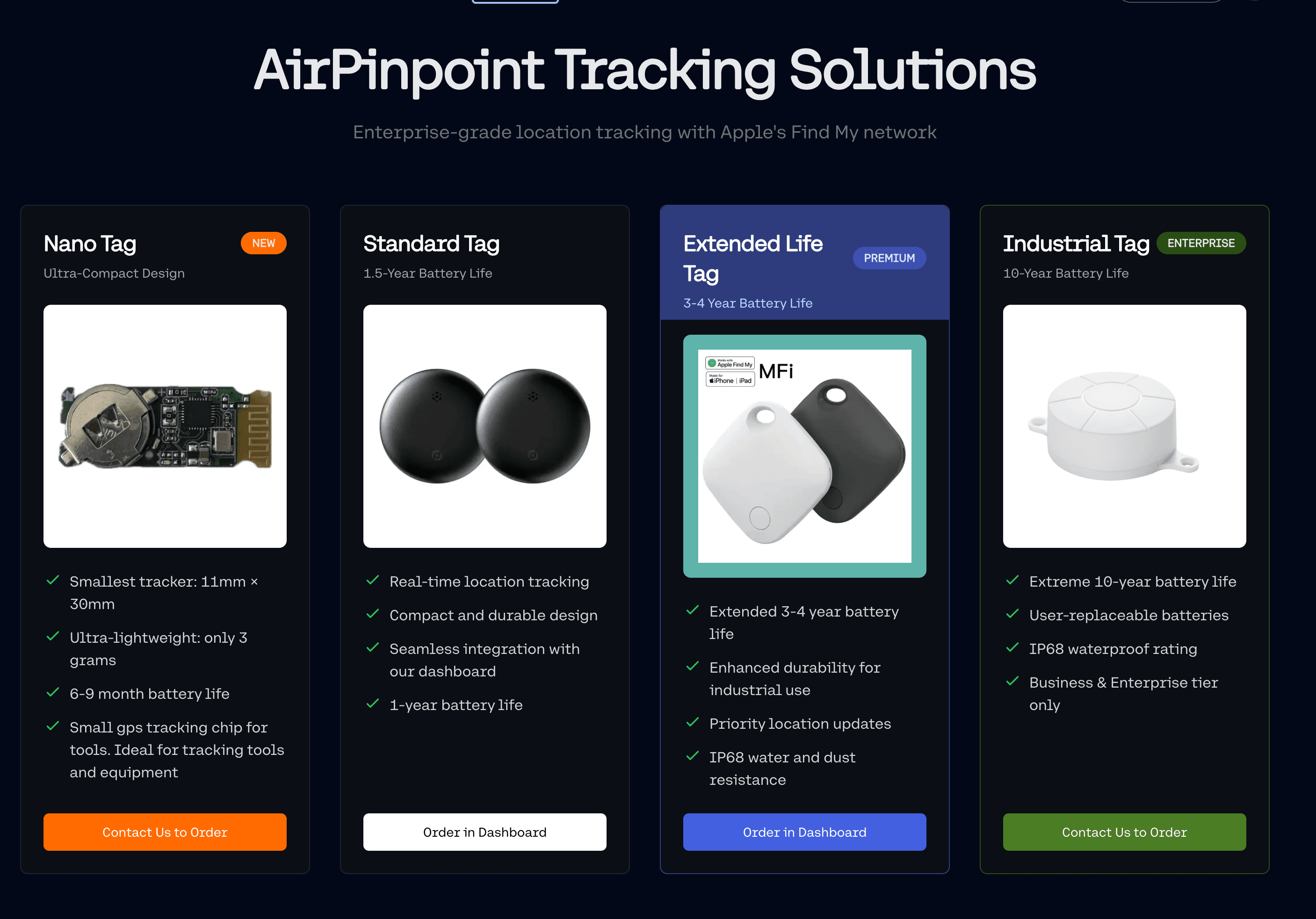
Airpinpoint provides Find My based location tracking for heavy equipment. Airpinpoint ships no pre-built connector to any rental management platform. Location data reaches your system through a REST API (a per-user key generated in the dashboard), outbound webhooks on geofence entry and exit, or a CSV/JSON export. That is a build for your team or your vendor, not a setting you switch on.
Implementation Timeline
Heavy equipment rental software implementations are complex:
Phase 1: Discovery & Planning (2-4 weeks)
- Current process documentation
- Data audit (equipment, customers, rates)
- Integration requirements
- Go-live timeline
Phase 2: Configuration (3-4 weeks)
- Rate structure setup
- Maintenance schedules
- User roles and permissions
- Document templates
- Integration configuration
Phase 3: Data Migration (2-3 weeks)
- Equipment records with specs and hours
- Customer and job site data
- Active rentals and contracts
- Historical data (optional)
Phase 4: Training & Go-Live (2-3 weeks)
- Role-specific training
- Parallel operation period
- Go-live support
- Post-launch optimization
Total: 9-14 weeks for full implementation
ROI Calculation
For a 50-unit heavy equipment fleet ($5M value):
| Improvement | Annual Impact |
|---|---|
| 20% utilization increase | $200,000 |
| 90% theft reduction | $150,000 |
| Accurate hour billing (+5%) | $50,000 |
| Admin efficiency (50%) | $40,000 |
| Reduced maintenance costs | $30,000 |
| Total Annual Benefit | $470,000 |
Software + GPS cost: $15,000-40,000/year ROI: 10-30x
Selection Checklist
Before choosing heavy equipment rental software:
- Hour meter tracking and complex billing
- Maintenance scheduling by hours
- GPS/telematics integration
- Transport/logistics management
- Multi-location support (if applicable)
- Mobile access for field operations
- Accounting integration
- Customer portal
- Reporting and analytics
Getting Started
- Audit your fleet: Document all equipment with specs and current hours
- Map your processes: How do rentals flow today?
- List requirements: What features are essential vs nice-to-have?
- Demo vendors: See Quipli, Point of Rental, InTempo
- Check references: Talk to similar-sized operations
- Plan GPS integration: Include tracking from day one
- Budget implementation: Software + services + training
Heavy equipment is too valuable to manage with spreadsheets. The right software pays for itself in months.



 Our Solution