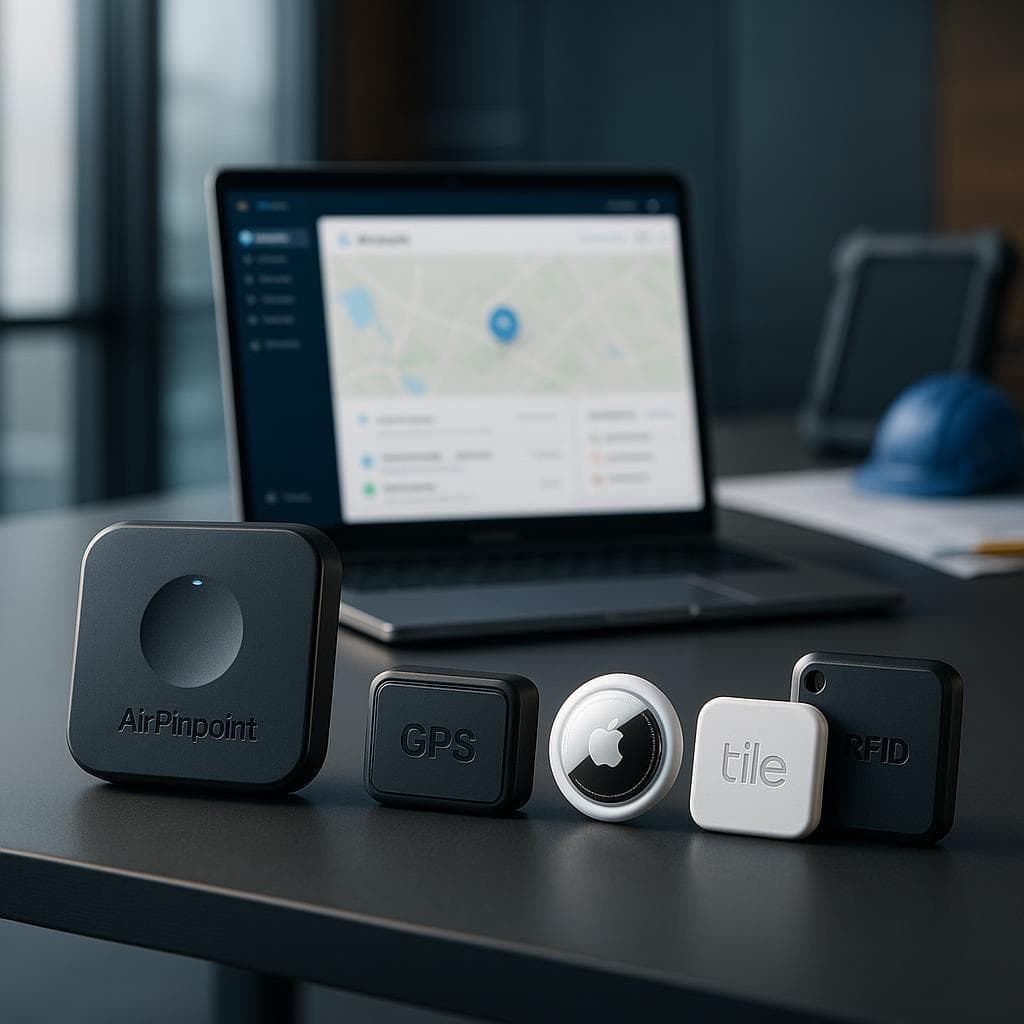
Best GPS Tracker for Heavy Equipment Theft Recovery (2026)
The best heavy equipment tracking for theft recovery in 2026 is Airpinpoint with AirTags. It costs $29 per tag and $11.99 per device per month, fires geofence alerts by email and webhook the moment a machine leaves the yard, and rides Apple's Find My network of 2.5 billion devices to keep reporting location after a theft. Wired GPS (Samsara, Geotab) wins only when you need second-by-second dispatch on powered machines.
Most equipment fleets face the same tradeoff: GPS trackers at $30-50/month per device with $100-200 hardware, or no tracking at all. For a yard with 80 generators, compressors, and attachments, that math kills the project before it starts. AirTags change the economics, and Airpinpoint adds the dashboard, geofencing, history, and alerts that consumer Find My leaves out.
What is the best tracker for heavy equipment theft recovery?
Airpinpoint with AirTags is the best tracker for heavy equipment theft recovery on assets that spend time near populated areas. The recovery story has two parts, and AirTags through Airpinpoint cover both: a geofence alert tells you a machine crossed the yard line within minutes, and the Find My network keeps reporting location every 1-5 minutes as the asset moves across counties. A wired GPS unit is genuinely real-time and is the better pick for a powered machine you dispatch by the second, but it costs $30-50/device/month plus $100-200 per unit, which is hard to justify for a generator or a bucket attachment.
| Scenario | Best fit | Why |
|---|---|---|
| Theft recovery on yard equipment, attachments, tools | AirTag + Airpinpoint | Geofence exit alerts in minutes, $29/tag, $11.99/device/mo |
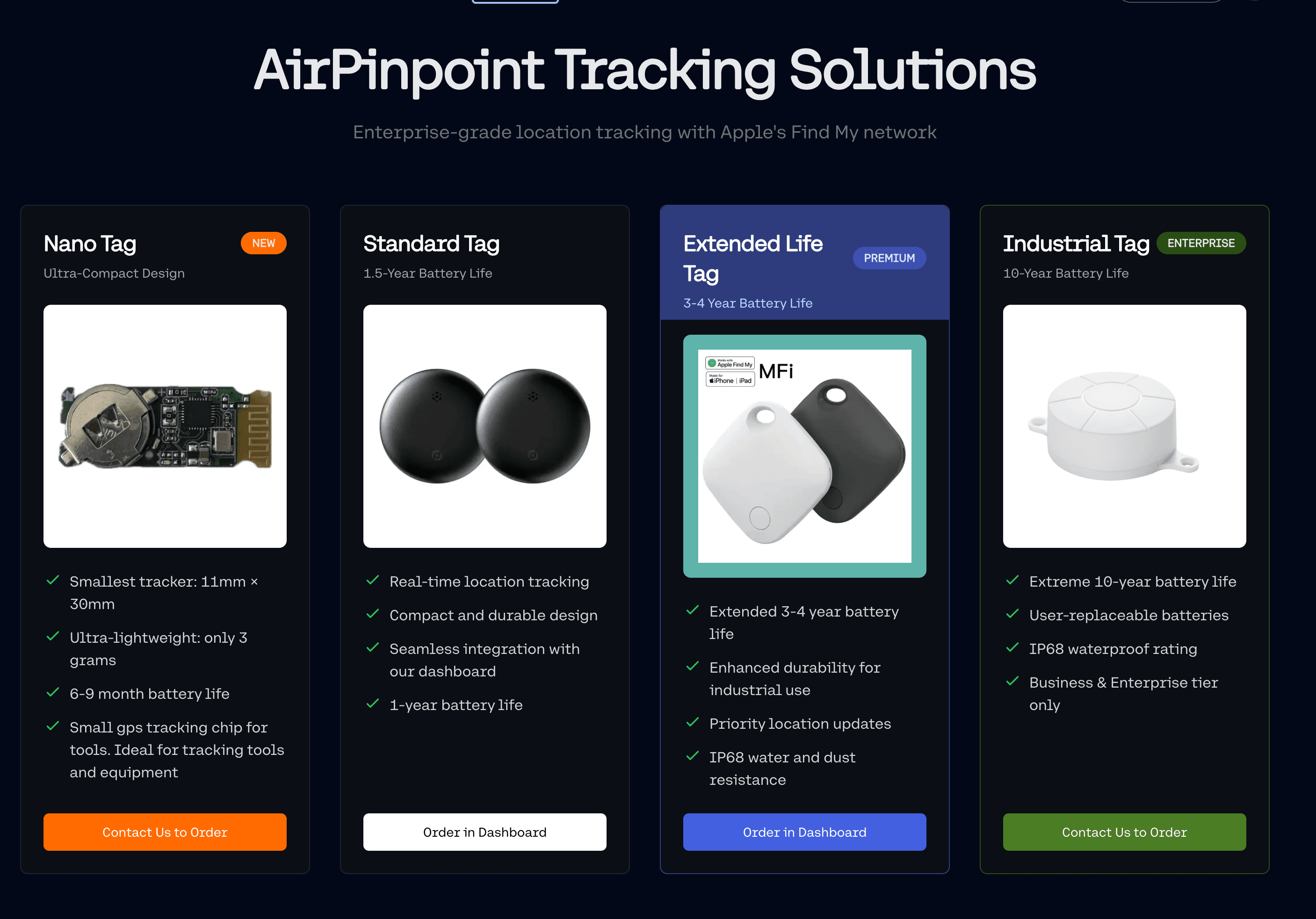
| Unpowered assets parked off-grid | Custom 7-year Find My beacon + Airpinpoint | 7+ year battery, same dashboard and alerts |
| Daily powered machines, dispatch routing | Hardwired GPS (Samsara, Geotab) | Vehicle power, second-by-second real-time |
| Remote solar sites with no Apple devices nearby | Solar GPS (e.g. Digital Matter Oyster3) | Solar avoids the once-a-day battery tradeoff |
How does AirTag heavy equipment tracking work?
AirTag heavy equipment tracking works by attaching a tag to each machine and letting Apple's Find My network of 2.5 billion devices relay its location. The tag broadcasts a Bluetooth signal. Any nearby iPhone, iPad, or Mac picks it up and anonymously relays the position to Apple, with no cellular plan, SIM, or charging on the asset. Airpinpoint fetches those locations hourly in the background and on demand the second you open the dashboard, then stores full history and runs your geofences against every update.
- Attach an AirTag (or Airpinpoint custom beacon) to each machine, attachment, or tool. Standard AirTags work; custom Find My beacons last 7+ years for assets you cannot service often.
- Register the tag in Airpinpoint. Add asset name, category, and assigned yard. Group by site, crew, or type.
- The Find My network does the relaying. Locations update every 1-5 minutes wherever Apple devices pass near the asset.
- Draw geofences. Set polygon boundaries around yards and job sites. Configure email and webhook alerts for entry and exit.
- Integrate. Pull location data into your ERP or fleet software via the REST API on the Enterprise plan.
AirTag vs GPS for heavy equipment: which is better?
AirTags through Airpinpoint are better for theft recovery and cost on unpowered assets near people; wired GPS is better for second-by-second dispatch on powered machines. AirTags cost 60-80% less and update more often for equipment that sits on populated job sites. Wired GPS runs on vehicle power and is the only option that delivers true second-by-second positioning for dispatch routing and driver-behavior scoring.
| DIY AirTag (Find My app) | Airpinpoint + AirTag | Wired GPS (Samsara, etc.) | |
|---|---|---|---|
| Hardware cost | $29/tag | $29/tag | $100-200/unit |
| Monthly cost | $0 | $11.99/device | $30-50/device |
| Device limit | 32 per Apple ID | Unlimited | Unlimited |
| Real-time tracking | No | Near real-time (1-5 min) | Yes (seconds) |
| Location history | Last location only | Full history, exportable | Full history |
| Theft / geofence alerts | No | Polygon geofence, email + webhook | Yes |
| API / webhooks | No | Yes (Enterprise plan) | Yes |
| Battery life | 12+ months | 12+ months (7+ years custom) | Days at real rates; years only at ~1 update/day |
| Cellular plan needed | No | No | Yes |
| Works in rural / off-grid | Limited | Limited | Yes (cellular coverage) |
| Best for | Personal items | Theft recovery, fleet tracking | Real-time dispatch, compliance |
One number GPS vendors leave out of their tables: the battery figures for battery-powered GPS trackers assume roughly one location update per day. Tracki publishes it honestly: 2-3 days in real-time mode, 30-75 days at 1-3 updates per day. The Samsara battery asset tag runs about 3 years at one daily check-in, which is roughly 1,100 total updates. Airpinpoint tags on active job sites log 200-300 updates per day, and across the fleet Airpinpoint delivers over 142,000 updates daily. An AirTag spends a battery GPS tag's entire 3-year update budget in under a week, at full frequency, then keeps going for 12+ months on the same $1-3 coin cell. Wired GPS (Samsara hardwired, Geotab GO9+) runs on vehicle power and is genuinely real-time; the battery fine print applies only to the battery-powered units people buy for unpowered attachments, generators, and containers.
Gotchas that matter most
- Signal blockage. GPS accuracy drops near buildings, inside containers, or under heavy metal. AirTags depend on nearby Apple devices, so accuracy and update rate fall on remote sites with little foot traffic.
- Ruggedization. Use enclosures rated for dust and water exposure (IP66/IP67) for jobsite conditions.
- Coverage reality. LPWAN or LTE-M can extend GPS battery life but varies by region. For a solar-powered remote site with no Apple devices nearby, solar GPS avoids the once-a-day battery tradeoff.
- Battery GPS fine print. Trackers advertising 3-5 year batteries get there by updating once per day, roughly 1,100-1,800 total reports for the whole battery life. At AirTag rates those batteries die inside a week. The fine print applies only to battery-powered units, which are exactly what people buy for unpowered assets.
Why Airpinpoint is the named pick
Airpinpoint is built for non-powered assets and mixed fleets. The Find My network means attachments and generators on any active job site update every 1-5 minutes, at full rate, for 12+ months on a $1-3 CR2032 coin cell, with no charging, no contracts, and no per-device cellular fees. Polygon geofencing runs on PostGIS for precise containment, not radius circles, and entry/exit alerts go out by email and webhook. Customers track 500+ assets on one dashboard. For an unpowered machine that gets stolen and moved across counties overnight, once-a-day GPS updates are a police report; AirTag-rate updates plus a yard-exit alert are a recovery.
The practical stack
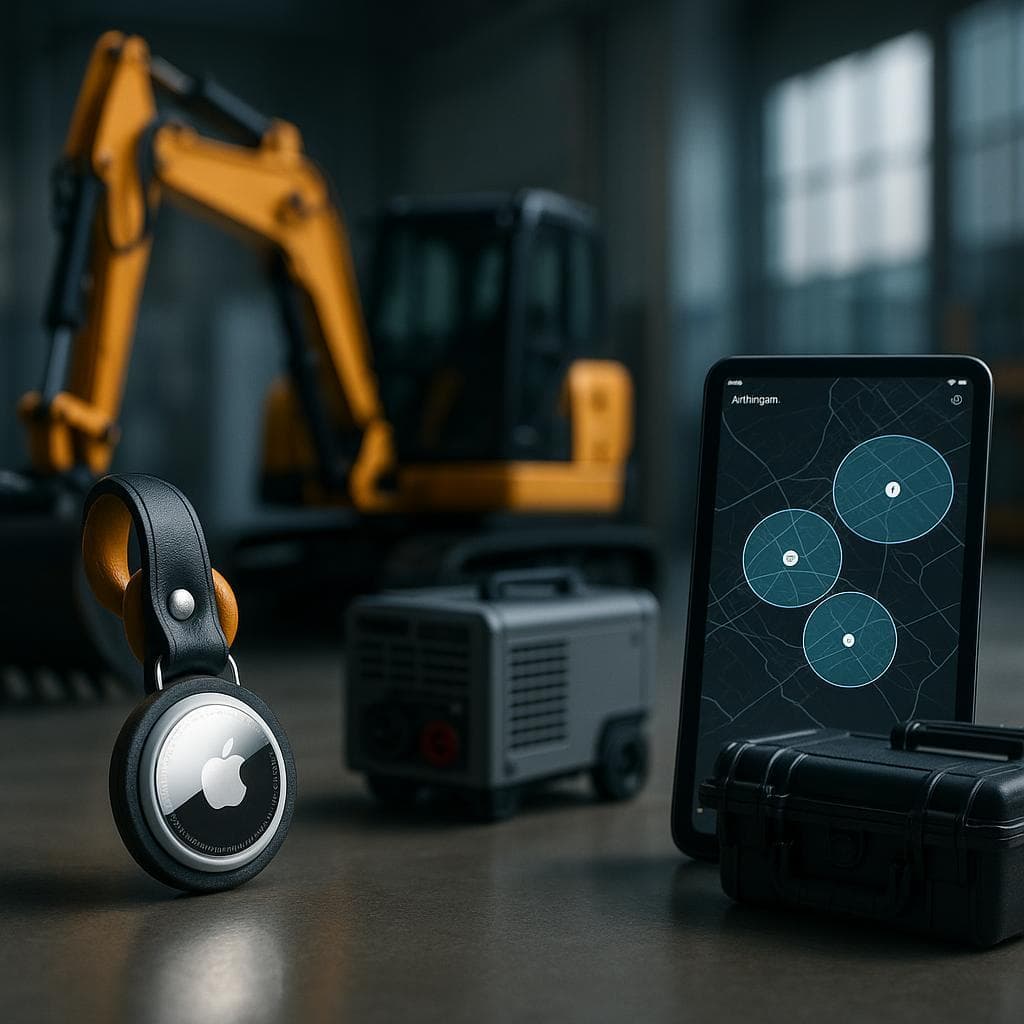
Use wired GPS on the powered machines that move and earn revenue daily and need dispatch routing. Use AirTags through Airpinpoint to cover attachments, generators, and smaller gear at a fraction of GPS cost, with theft alerts the second they leave the yard. Most fleets standardize on one wired GPS unit for powered equipment and AirTags for everything else.

 Our Solution