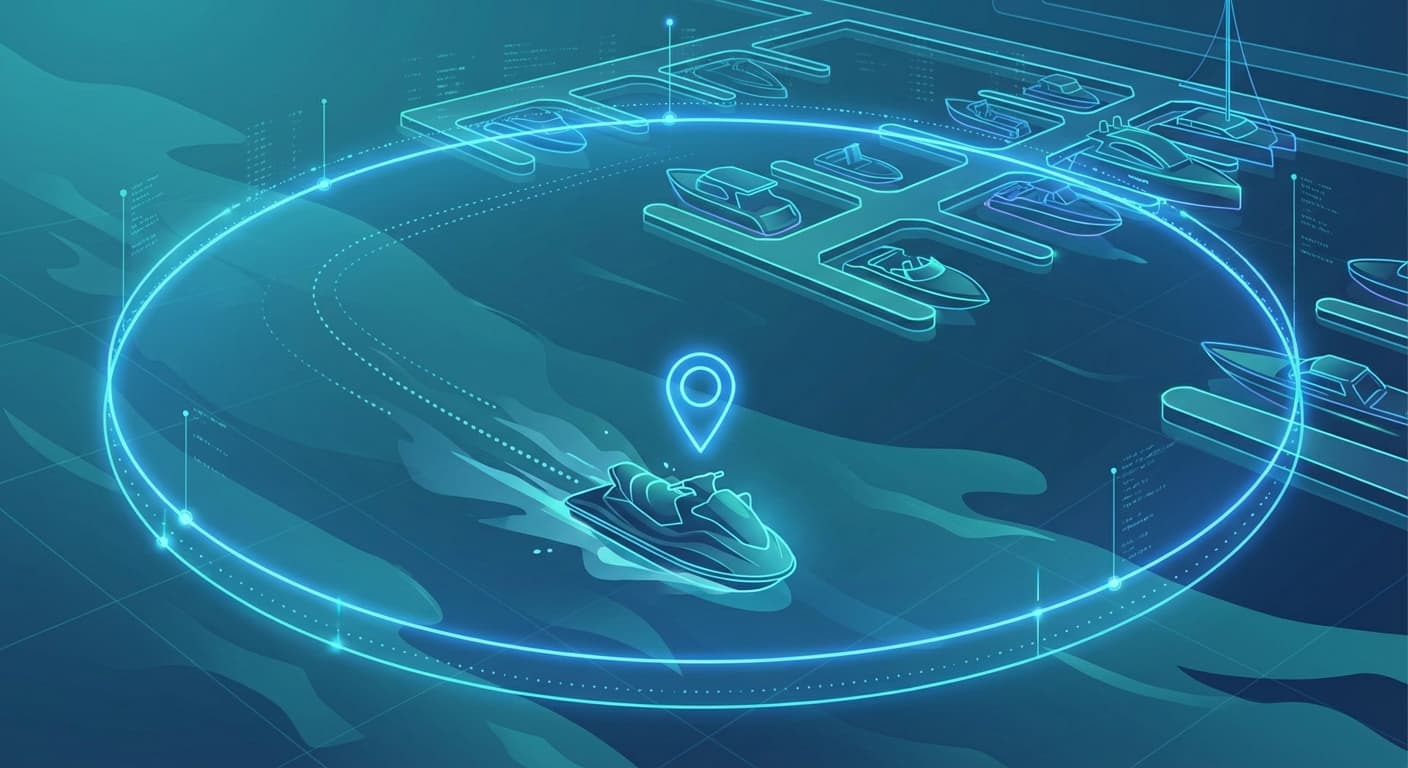
Jet Ski GPS Tracker: Fleet Tracking for Rental Companies and Marinas
A new jet ski costs $8,500 to $22,000. A rental fleet of 20 units represents $170,000 to $440,000 sitting at the dock. And according to the National Insurance Crime Bureau, personal watercraft have the lowest recovery rate of any stolen boat type: just 37%.
For rental operators, marinas, and waterfront resorts, the math is simple. Lose two jet skis and you are out $17,000 to $44,000 before insurance deductibles, replacement delays, and lost rental revenue. Track every unit in your fleet for less than the cost of one stolen PWC per year.
This page covers how jet ski rental companies and marinas are using GPS and AirTag-based tracking to prevent theft, enforce rental boundaries, and manage seasonal inventory across their watercraft fleets.
Why Jet Skis Get Stolen
Jet skis are among the easiest watercraft to steal. They are light enough for two people to lift onto a trailer. They sit on open docks and in unattended storage yards. And they are worth $5,000 to $15,000 on the resale market, where title verification is far less rigorous than with cars.
The Numbers
| Statistic | Data |
|---|---|
| US watercraft thefts per year | ~4,400 (NICB) |
| PWC recovery rate | 37% (lowest of all boat types) |
| Top state for watercraft theft | Florida (~1,000/year) |
| Peak theft months | May through August |
| New jet ski price range | $8,500-$22,000 |
| Used resale value | $5,000-$15,000 |
How They Get Stolen
From trailers at boat ramps. The most common method. A thief backs up a truck, hooks up the trailer, and drives away. This takes less than five minutes if the trailer is not locked to a ground anchor or hitch lock.
From marina docks. Jet skis tied to docks with rope are easy targets. Even cable-locked units get taken with bolt cutters. The thief rides the jet ski away or lifts it onto a waiting trailer at a nearby ramp.
From storage yards. Off-season storage is the highest-risk period for rental fleets. Jet skis sit unattended for 4-6 months in shared storage lots. A thief with a trailer and a lookout can take multiple units in a single trip.
Renter theft. A renter takes a jet ski beyond the rental zone, loads it onto a trailer at a distant boat ramp, and never comes back. This is not technically "theft" in every jurisdiction, which makes prosecution harder and recovery slower.
Why Recovery Rates Are So Low
That 37% recovery rate is the worst of any watercraft category. Cruisers and sailboats recover at 50%+. The reasons:
- Jet skis are easy to transport by trailer, making them hard to track once they leave the water
- Hull identification numbers (HINs) are easy to grind off
- Stolen PWCs are often sold in private cash transactions with no title check
- Many end up in other states or exported within days of theft
Without a tracking device, a stolen jet ski that leaves the immediate area is unlikely to come back.
Tracking Options for Jet Ski Fleets
AirTag + AirPinpoint (Best for Fleets)
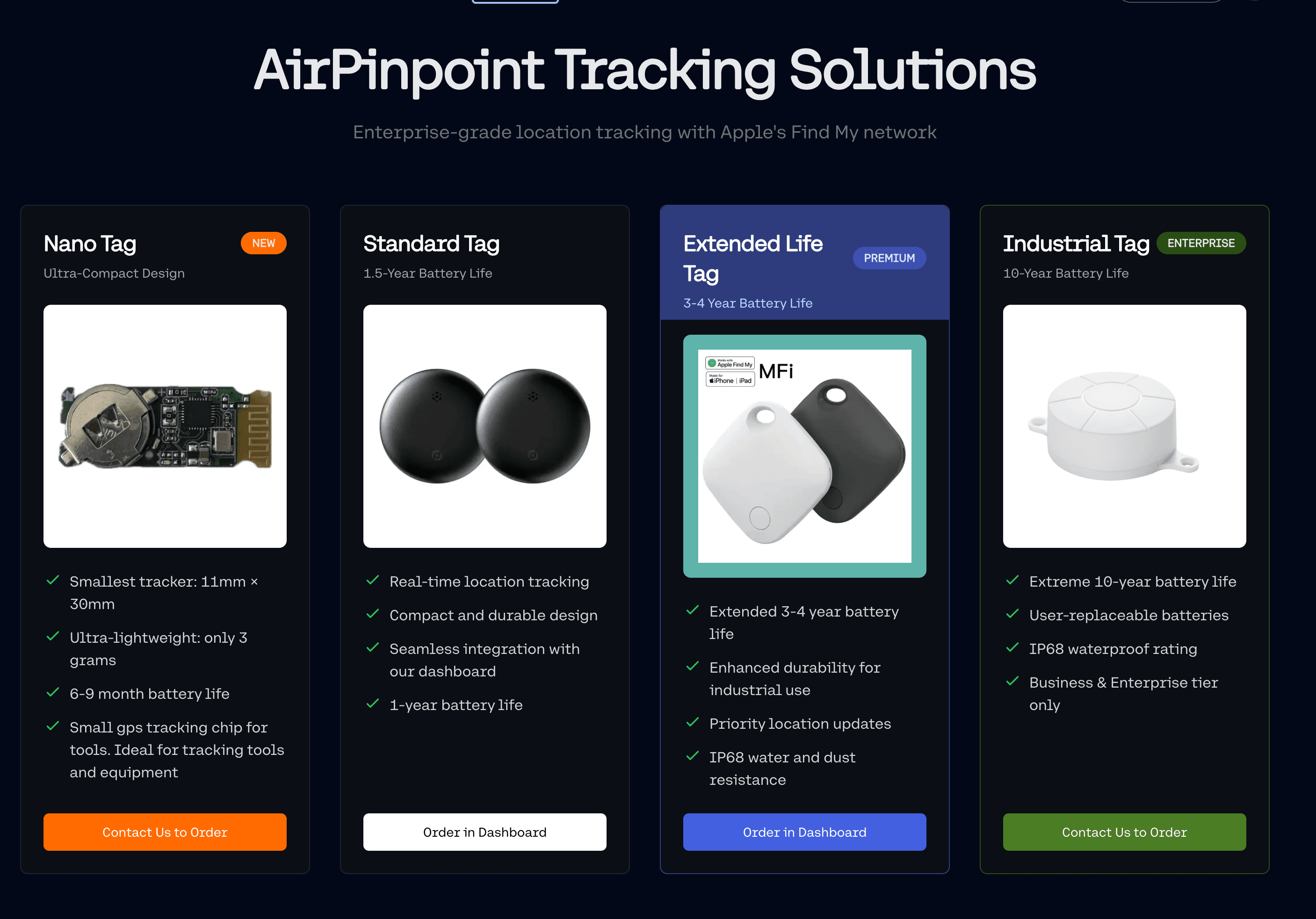
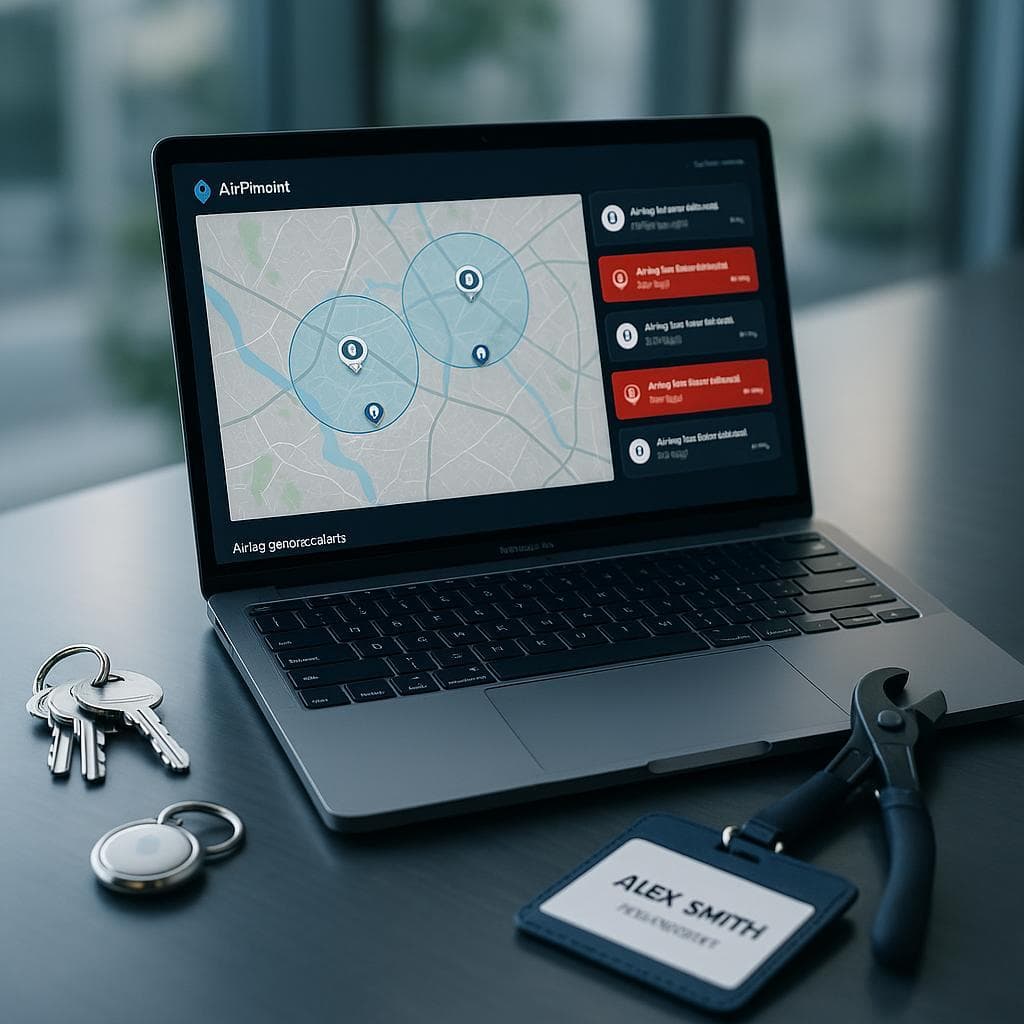
How it works: Place an AirTag inside each jet ski's dry storage compartment. The AirTag broadcasts a Bluetooth signal that any passing iPhone picks up and relays to Apple's Find My network. AirPinpoint aggregates all your AirTags into a single fleet dashboard with geofencing, alerts, and location history.
Cost: $29 per AirTag (one-time) + $11.99/device/month (AirPinpoint Business plan)
Pros:
- No wiring, no antenna, no waterproofing concerns (AirTag goes in a dry compartment)
- Battery lasts about 1 year (standard CR2032, costs $3 to replace)
- Fleet dashboard shows every jet ski on one map
- Geofence alerts when units leave the rental zone or storage area
- Works in all high-traffic waterfront areas where iPhones are common
Cons:
- Not real-time GPS. Location updates depend on passing iPhones, so updates may come every few minutes rather than every 30 seconds
- Limited coverage far offshore or on remote waterways
- No speed monitoring or engine telemetry
Best for: Rental fleets, marina inventory tracking, off-season storage monitoring, rental boundary enforcement via geofence alerts.
SPOT Trace (Satellite Tracker)
How it works: Satellite-based tracker that sends GPS coordinates via the Globalstar satellite network. Works anywhere with sky visibility, including open water far from shore.
Cost: ~$50 device + $12/month (Basic plan) or $5/month (Extreme Tracking add-on for 2.5-minute updates)
Pros:
- Works anywhere, including open ocean, where cell and Bluetooth coverage do not exist
- Dock mode eliminates false alerts from wave movement
- Satellite coverage, no dependency on iPhone density
Cons:
- No fleet dashboard; each tracker is managed individually
- Requires a battery change every few months depending on tracking interval
- No geofencing in the device itself (email/SMS alerts only)
- Limited to location tracking, no speed or engine data
Best for: Individual PWC owners, offshore tracking, remote locations.
Dedicated Marine GPS (WAIV, OtoTrak, Rastrac)
How it works: Hardwired or self-powered cellular GPS unit with a marine-rated enclosure. Provides real-time tracking, speed monitoring, geofence enforcement, and in some cases automated speed limiting.
Cost: $200-$500 per device + $15-$30/month
Pros:
- Real-time GPS updates (as frequent as every 30 seconds)
- Speed monitoring and automated speed limiting inside geofences
- Engine hour tracking, trip logging, utilization reporting
- Purpose-built for marine rental operations
Cons:
- 3-5x the cost of AirTag-based tracking per unit
- Many require professional installation or wiring
- External antennas and wiring are exposed to saltwater corrosion
- Higher per-unit cost makes it harder to justify for seasonal businesses
Best for: High-volume rental operations that need real-time speed enforcement and engine telemetry. Operators in areas where liability requires documented speed monitoring.
Cost Comparison for a 20-Unit Rental Fleet
| Solution | Device Cost (20 units) | Annual Subscription | Year 1 Total | Year 2+ Annual |
|---|---|---|---|---|
| AirTag + AirPinpoint | $580 | $2,878 | $3,458 | $2,878 |
| SPOT Trace | $1,000 | $2,880 | $3,880 | $2,880 |
| Dedicated Marine GPS | $4,000-$10,000 | $3,600-$7,200 | $7,600-$17,200 | $3,600-$7,200 |
| No tracking | $0 | $0 | $0 | $0 (until a $15K jet ski disappears) |
The AirTag + AirPinpoint option costs $3,458 in the first year to track 20 jet skis. That is less than the insurance deductible on most commercial watercraft policies, and a fraction of the $8,500-$22,000 replacement cost of a single stolen unit.
Rental Zone Enforcement with Geofencing
One of the biggest operational headaches for jet ski rental companies is renters who leave the approved riding area. They ride too far from shore. They enter shipping channels. They take the jet ski to a beach bar three miles away and forget what time their rental ends.
Verbal instructions ("don't go past the red buoy") do not work. Printed maps get ignored. The only reliable approach is geofence alerting.
How It Works with AirPinpoint
-
Draw your rental zone. In the AirPinpoint dashboard, draw a polygon around your approved riding area. Include the marina, the rental zone, and any adjacent waterways.
-
Set alerts. Configure alerts for boundary crossings. When any tracked jet ski exits the geofence, you get a push notification.
-
Respond. Call the renter or dispatch a chase boat. Most renters are not being malicious; they just drifted too far. A phone call brings them back. For the rare renter who is genuinely trying to take the jet ski, you have a location trail.
-
After-hours protection. Set a tighter geofence around your dock. Any movement after business hours triggers an alert. This covers both theft and unauthorized use by employees or marina staff.
Layered Geofencing
Some operators use multiple geofences:
- Dock geofence (tight): Alerts on any movement outside the marina slip area. Active after hours.
- Rental zone geofence (medium): The approved riding area during business hours. Alerts when a renter drifts too far.
- Emergency geofence (wide): A large boundary that covers the maximum possible area. If a jet ski crosses this line, something has gone seriously wrong (theft, renter heading to open ocean).
AirTag Placement on Jet Skis
AirTags are IP67 rated: they survive submersion in 1 meter of water for up to 30 minutes. That said, you do not want the AirTag sitting in standing water for months. Place it in a dry compartment.
Recommended Locations
Bow storage compartment. Most jet skis have a dry storage area at the front, accessed by lifting the seat or opening a hatch. This is the best location: protected from water, not visible to renters, and accessible for battery replacement.
Glove box or center console. Some models have a small lockable storage compartment. An AirTag fits easily and stays dry.
Under the seat. Many PWCs have a storage cavity under the main seat. Tuck the AirTag into a corner where it will not rattle or shift.
Engine compartment (in a waterproof case). If you need to hide the AirTag from determined thieves, place it in a small waterproof case inside the engine bay. Use a $10-$15 Pelican or similar case rated to IP68 for extra protection against bilge water.
What to Avoid
- Do not attach an AirTag to the exterior hull. It will be exposed to constant water and may detach.
- Do not place it in the footwell area, where standing water accumulates after riding.
- Do not rely on a single AirTag if your jet skis are being targeted. Place one in the bow and one in the engine bay.
Off-Season Storage Tracking
Seasonal jet ski rental businesses operate 5-7 months per year. The other 5-7 months, the fleet sits in storage. This is when theft risk is highest because:
- Units are out of sight for months at a time
- Storage yards often have minimal security (a fence and maybe a camera)
- Insurance companies may reduce coverage during extended storage periods
- A theft in November might not be discovered until April
AirPinpoint for Winter Storage
Keep your AirTags active during the off-season. Set a geofence around the storage lot. Any movement triggers an alert.
The math: 20 jet skis tracked through 6 months of storage costs $1,440 (20 units x $11.99/mo x 6 months). One stolen jet ski costs $8,500-$22,000 to replace, plus the insurance deductible ($1,000-$5,000 on most commercial watercraft policies), plus the lost rental revenue when you are short a unit at the start of the season.
AirPinpoint also gives you a check-in capability during storage. Instead of physically visiting the storage yard every week, open the dashboard and confirm all units are showing their expected locations.
Fleet Management Beyond Theft Prevention
Tracking is not just about theft. For rental operations, knowing where every unit is at all times solves several daily operational problems.
Inventory Accountability
At the end of each rental day, your dashboard shows exactly which jet skis are back at the dock and which are still out. No more counting units in the dark or relying on a whiteboard that the last employee forgot to update.
Maintenance Scheduling
Tag each jet ski in AirPinpoint with its serial number and maintenance schedule. When a unit is due for service, you know exactly where it is, whether it is on the rental line, in the maintenance bay, or at a dealer for warranty work.
Multi-Location Operations
Some rental companies operate from multiple marinas or beach locations. AirPinpoint shows all units across all locations on a single dashboard. If one location is short on inventory and another has extras, you can see it immediately and redistribute.
Insurance Documentation
After a theft or damage claim, your insurance company will ask for documentation. AirPinpoint provides location history showing exactly where the jet ski was, when it moved, and where it ended up. This speeds up claims and strengthens your case, especially for renter-related incidents where liability is disputed.
Physical Security: The Other Half of the Equation
A GPS tracker recovers stolen property. Physical security prevents the theft from happening. Use both.
| Security Measure | Cost | What It Does |
|---|---|---|
| Dock cable lock (steel cable + padlock) | $30-$60 | Secures jet ski to dock cleat or piling |
| Trailer coupler lock | $25-$50 | Prevents trailer from being hitched to another vehicle |
| Trailer wheel lock | $40-$80 | Immobilizes the trailer |
| Hitch pin lock | $15-$30 | Locks the trailer to your tow vehicle |
| Remove lanyard key | $0 | Prevents the engine from starting |
| Motion-activated dock lights | $40-$100 | Deters after-hours approach |
| AirTag in dry compartment | $29 | Location tracking for recovery |
| AirPinpoint geofence | $11.99/mo | Alerts when the jet ski moves |
The best combination for rental fleets: cable lock to the dock + remove lanyard key + AirTag inside + AirPinpoint geofence. Total cost per unit: about $75 in hardware plus $11.99/month for tracking. That covers both deterrence and recovery.
Jet Ski Rental Business Economics
Understanding the economics puts the tracking cost in perspective.
| Metric | Typical Range |
|---|---|
| New jet ski (rental-grade) | $10,000-$15,000 |
| Hourly rental rate | $75-$150 |
| Daily revenue per unit (peak season) | $300-$750 |
| Annual revenue per unit | $15,000-$40,000 |
| Insurance per unit per year | $1,800-$4,200 |
| Annual maintenance per unit | $500-$1,000 |
| Fuel cost per rental hour | $30-$40 |
| Fleet size (small operator) | 5-15 units |
| Fleet size (mid-size operator) | 15-40 units |
| Fleet size (resort/large operator) | 40-100+ units |
A single jet ski generates $15,000-$40,000 in rental revenue per season. Losing one to theft wipes out the revenue from that unit entirely, plus costs $10,000-$15,000 to replace. Tracking the entire fleet costs less than the annual revenue from a single unit rented for two days.
Resort and Hotel Watercraft Fleets
Hotels, resorts, and all-inclusive properties often include jet ski access as an amenity or upsell. These fleets have unique tracking needs:
Guest accountability. Guests sign a waiver and take out a jet ski with minimal supervision. Geofencing ensures they stay within the approved area without requiring a dedicated spotter boat for every rental.
Utilization tracking. Management wants to know how often the fleet is being used to justify the capital investment. AirPinpoint's location history shows usage patterns, helping optimize fleet size.
Seasonal fleet rotation. Some resort chains move watercraft between properties based on seasonal demand (Caribbean in winter, lakes in summer). A fleet dashboard shows where every unit is across all properties.
Theft by guests and staff. It happens at resorts too. A geofence alert at 2 AM when a jet ski leaves the dock tells security exactly what is happening and where the unit is heading.
Watercraft Dealership Lot Tracking
Jet ski dealerships keep $200,000 to $2,000,000+ in inventory on their lots. Units sit on trailers in outdoor display areas, often with minimal overnight security.
AirPinpoint gives dealerships:
- Lot inventory visibility. Every unit's location on a dashboard. No more walking the lot to count stock.
- After-hours movement alerts. If a jet ski or its trailer moves after closing, you know within minutes.
- Demo tracking. When a salesperson takes a unit out for a demo ride or delivery, its location is logged.
- Multi-lot management. Dealerships with multiple locations see all inventory from one dashboard.
Getting Started
-
Buy AirTags for your fleet. One per jet ski. At $29 each, a 20-unit fleet costs $580.
-
Place each AirTag in a dry storage compartment (bow storage, glove box, or under the seat).
-
Register in AirPinpoint. Add each jet ski with its make, model, serial number, and assigned AirTag.
-
Draw your geofences. Create zones for your dock/marina, rental riding area, and storage yard.
-
Set your alerts. Configure notifications for boundary crossings, after-hours movement, and storage yard exits.
-
Brief your team. Show employees the dashboard so they can check unit locations and respond to alerts.
Total setup time for a 20-unit fleet is about an hour. No wiring, no installation appointments, no waiting for a technician.

 Our Solution