Dirt Bike GPS Tracker: Fleet Tracking for Rentals, Dealers, and Race Teams
Dirt bikes are one of the easiest vehicles to steal. They're lightweight (200-250 lbs), fit in a truck bed, and can be resold on Craigslist or Facebook Marketplace with minimal paperwork. Unlike cars and street-legal motorcycles, many dirt bikes don't have titles, making stolen units nearly impossible to flag at resale.
The National Insurance Crime Bureau reports over 55,000 motorcycle thefts per year in the US, with recovery rates around 40%. Off-road bikes fare worse because they lack VIN-based registration in many states and tend to get stolen from exposed locations: trailhead parking lots, open dealership yards, and unattended rental staging areas.
If you operate a dirt bike rental fleet, motocross school, dealership, or race team, tracking your bikes isn't optional. This guide covers what works, what it costs, and where the practical limits are.
Why Dirt Bikes Get Stolen More Than Other Vehicles
The theft math on dirt bikes is simple:
| Factor | Dirt Bikes | Cars/Trucks |
|---|---|---|
| Weight | 200-250 lbs (one person can lift) | 3,000-6,000 lbs |
| Title required at resale | Often no (varies by state) | Yes, always |
| VIN checking at sale | Rare for private sales | Standard |
| Theft method | Lift into truck bed (30 seconds) | Hot-wire or relay attack |
| Resale speed | Same day on marketplace | Days to weeks (chop shop) |
| Typical theft location | Trailhead, open lot, garage | Driveway, parking lot |
A thief can pull up to a trailhead, slide a 230-lb CRF250R into a truck bed while you're on the trail, and be listed on Facebook Marketplace two hours later in another county. There's no ignition kill, no steering lock, and most dirt bikes don't even have a key.
What Dirt Bikes Cost to Replace
| Model Category | Examples | New Price Range | Used (2-3 year old) |
|---|---|---|---|
| Kids/Entry (50-110cc) | Honda CRF110F, KTM 50 SX | $1,800-$3,500 | $1,200-$2,500 |
| Trail/Enduro (250cc) | Honda CRF250F, KTM 250 XC-W | $5,500-$9,500 | $3,500-$6,500 |
| Motocross (250cc) | Honda CRF250R, KTM 250 SX-F | $8,300-$10,200 | $4,500-$7,000 |
| Motocross (450cc) | Honda CRF450R, KTM 450 SX-F | $9,700-$11,100 | $5,500-$8,500 |
| Race Edition | CRF450RWE, KTM 450 SX-F FE | $10,500-$12,500 | $7,000-$10,000 |
For a rental operation running 15 bikes, the fleet is worth $80,000-$150,000. Losing even two bikes a season to theft wipes out months of rental revenue.
Business Use Cases
Dirt Bike Rental Operations
The dirt bike rental business is growing fast. Desert tour companies in Arizona, Utah, Nevada, and Southern California rent fleets of 10-30 bikes for guided and self-guided rides. Rates run $150-$400 for a half-day and $300-$1,000 for a full day, depending on the bike and whether a guide is included.
The operational challenge: your bikes leave your property. They're ridden by people you just met, in terrain where cell service is spotty, and they get parked at trailheads with zero security. Without tracking, you're relying entirely on a credit card hold and a signed waiver.
What tracking solves for rentals:
- Theft recovery. When a rental bike doesn't come back, you know where it is.
- Boundary enforcement. Geofence your approved riding area. Get alerts when a renter takes the bike somewhere they shouldn't.
- Damage correlation. Location history shows where a bike has been. If a renter brings back a CRF450R with a cracked case and claims they "just rode around the lot," the GPS trail tells a different story.
- Utilization tracking. See which bikes are out, which are sitting idle, and how many hours each bike accumulates.
Motocross Schools and Training Facilities
MX schools like SLMX in Southern California, Moto Ranch in Florida, and others run fleets of 10-20+ school bikes across multiple size classes (50cc through 450cc). Bikes rotate between students, get loaded on trailers for events, and spend time at the track, in the shop, and in storage.
Tracking lets instructors see the entire fleet status at a glance without walking the property to count bikes. When a bike gets left at the wrong track after a training day or goes home in a student's truck by mistake, you find it before it becomes a confrontation.
Dealership Lot Security
Dirt bike dealerships are theft targets. A row of KTMs sitting in an open display area, each worth $5,000-$12,000, with no ignition immobilizer. Some dealers have lost multiple bikes in a single night.
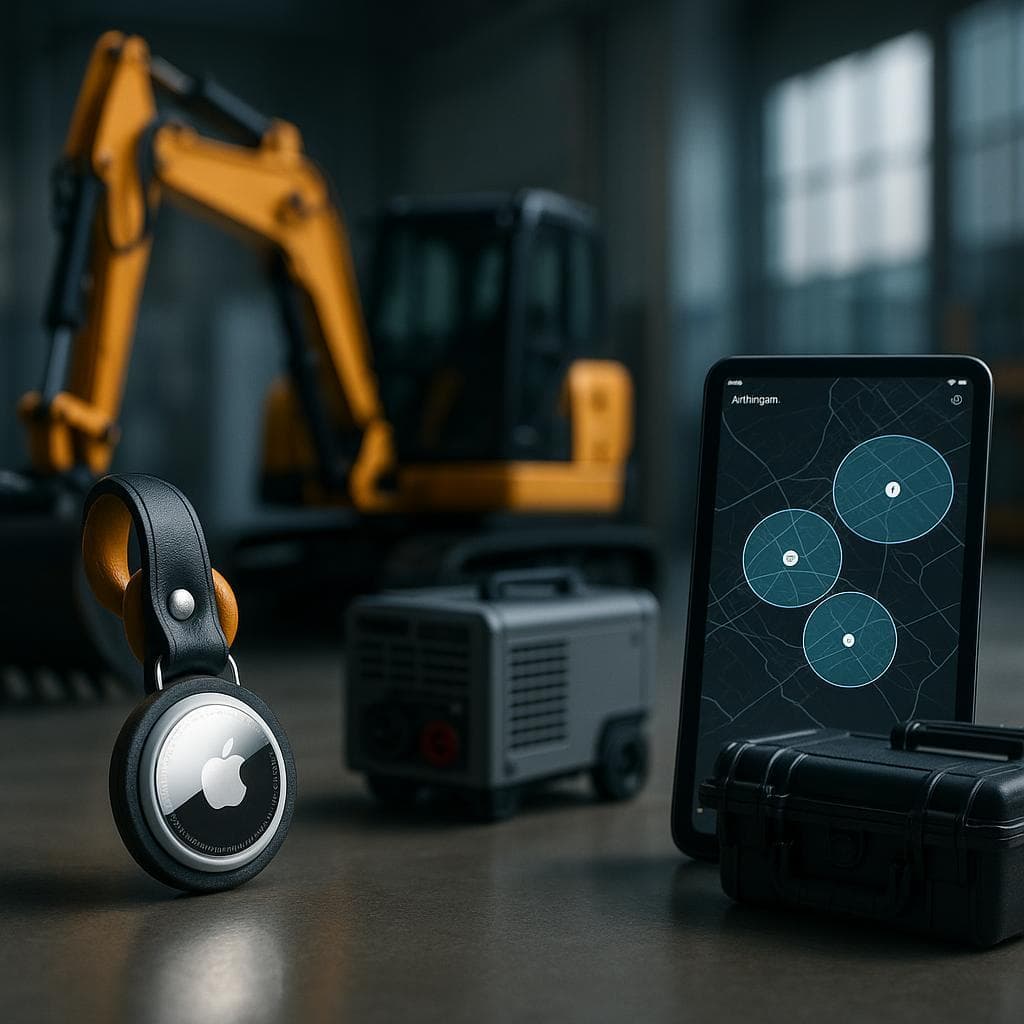
AirTag-based tracking gives dealers a safety net. If a bike leaves the lot after hours, the geofence alert fires immediately. Even if the thief has a 20-minute head start, the Find My network typically picks up the AirTag's location as the bike moves through populated areas.
Race Teams and Event Equipment
Race teams haul $50,000-$200,000 in bikes and parts to events. Bikes get staged in open pits, left in trailers at hotels overnight, and transported across state lines. A single stolen race bike can represent months of setup and tuning work beyond its dollar value.
Tracking each bike individually means knowing which trailer holds which bike, confirming the full inventory after each event, and having recovery capability if something goes missing from the pits.
Where to Hide a Tracker on a Dirt Bike
The best hiding spots share three qualities: protected from water and impacts, away from engine heat, and not obvious during a quick visual inspection.
Top Locations
Under the seat (subframe area). Remove the seat, zip-tie the AirTag or tracker to the subframe tube near the battery tray or fuse box. Accessible for battery changes, hidden from view with the seat on. This is the most common location and the first place a knowledgeable thief checks, so it shouldn't be your only tracker.
Inside the airbox. The airbox is a sealed or semi-sealed plastic enclosure that houses the air filter. It's protected from dust, water spray, and direct impacts. Secure the AirTag inside with adhesive-backed foam or a small Velcro strip attached to the inner wall. Most thieves don't pop open the airbox.
Inside the frame tube. Many dirt bike frames have hollow sections near the steering head or under the fuel tank. If you can access an opening (some require removing the tank), dropping a wrapped AirTag inside the frame makes it essentially invisible. Downside: harder to access for battery changes.
Behind the number plate. The front number plate on MX bikes has a small air gap behind it. An AirTag fits in this space. It's quick to install and reasonably hidden, though it's more exposed to water and impacts than the airbox.
In the tool compartment or storage cavity. Some trail bikes (CRF250F, KTM XC-W models) have a small tool compartment or storage area. These spots are easy to access and provide decent protection.
Durability on Dirt Bikes
AirTags are solid-state. No spinning hard drive, no moving antenna, no fragile LCD. The internal components are potted (sealed in epoxy-like material), and the device is IP67 water resistant. This makes them well-suited for the vibration, dust, and occasional water exposure that comes with off-road riding.
That said, the CR2032 battery can lose contact during heavy impacts (big jumps, crashes). Use a snug-fitting silicone holder or wrap the AirTag in a layer of foam tape to keep the battery compressed against the contacts. For MX racing, where impacts are most severe, check the battery monthly rather than annually.
GPS Tracker Options for Dirt Bikes
Dedicated Motorcycle GPS Trackers
| Tracker | Device Cost | Monthly Fee | Battery Life | Tracking Type |
|---|---|---|---|---|
| Monimoto 9 | $229 | $3.50/month | 12 months | Cellular GPS, motion-activated |
| Invoxia GPS Tracker | $130 | Included (3 years) | 6 months | Cellular GPS, continuous |
| LandAirSea Overdrive | $30 | $20/month | 1-2 weeks | Cellular GPS, continuous |
| Tracki | $16 | $17/month | 2-5 days | Cellular GPS, continuous |
| Spot Trace | $100 | $12/month | 6-8 months | Satellite, motion-activated |
Dedicated trackers provide real-time cellular GPS with higher precision and faster updates. The trade-offs: shorter battery life (except Monimoto), monthly subscriptions that add up across a fleet, and the need to recharge units regularly.
Apple AirTag + AirPinpoint
| Item | Cost | Details |
|---|---|---|
| AirTag | $29 one-time | CR2032 battery lasts ~1 year |
| AirPinpoint Business | $11.99/device/month | Fleet dashboard, geofencing, multi-user |
| AirPinpoint Enterprise | $14.99/device/month | Webhooks, API access, priority support |
| Battery replacement | $1/year | Standard CR2032 coin cell |
AirTags rely on the Find My network, which means location updates happen when an Apple device passes within Bluetooth range (roughly 30-50 feet). In populated areas, this happens every few minutes. At a busy trailhead or in town, updates are frequent. In the middle of the desert with no one around, there may be no updates until the bike moves toward civilization.
For theft recovery, this network effect actually works in your favor: a stolen bike being transported on a highway or parked in a suburb will get pinged by passing iPhones constantly.
Cost Comparison: 15-Bike Rental Fleet
This is where the numbers matter. A rental operation tracking 15 bikes over 3 years:
Monimoto (Dedicated GPS)
| Cost Category | Year 1 | Year 2 | Year 3 | 3-Year Total |
|---|---|---|---|---|
| Devices (15 x $229) | $3,435 | $0 | $0 | $3,435 |
| Subscriptions (15 x $3.50/mo) | $630 | $630 | $630 | $1,890 |
| Annual Total | $4,065 | $630 | $630 | $5,325 |
AirTag + AirPinpoint (Business Plan)
| Cost Category | Year 1 | Year 2 | Year 3 | 3-Year Total |
|---|---|---|---|---|
| AirTags (15 x $29) | $435 | $0 | $0 | $435 |
| AirPinpoint (15 x $11.99/mo) | $2,158 | $2,158 | $2,158 | $6,474 |
| Battery replacement (15 x $1) | $15 | $15 | $15 | $45 |
| Annual Total | $2,608 | $2,173 | $2,173 | $6,954 |
LandAirSea Overdrive (Budget GPS)
| Cost Category | Year 1 | Year 2 | Year 3 | 3-Year Total |
|---|---|---|---|---|
| Devices (15 x $30) | $450 | $0 | $0 | $450 |
| Subscriptions (15 x $20/mo) | $3,600 | $3,600 | $3,600 | $10,800 |
| Annual Total | $4,050 | $3,600 | $3,600 | $11,250 |
Plus, LandAirSea units need recharging every 1-2 weeks. For 15 bikes, that's 15 charging cycles twice a month, year-round. The labor cost of plugging in and managing 360 recharge cycles per year isn't trivial for a busy rental shop.
The Theft Math
A single stolen dirt bike costs $3,000-$12,000 to replace, depending on the model. If tracking prevents even one theft per year, it pays for itself multiple times over, regardless of which system you choose.
For a 15-bike fleet: $435 in AirTags + $2,158/year for AirPinpoint vs one stolen CRF450R worth $9,700. The tracking system pays for itself in the first prevented theft.
Geofencing for Rental Operations
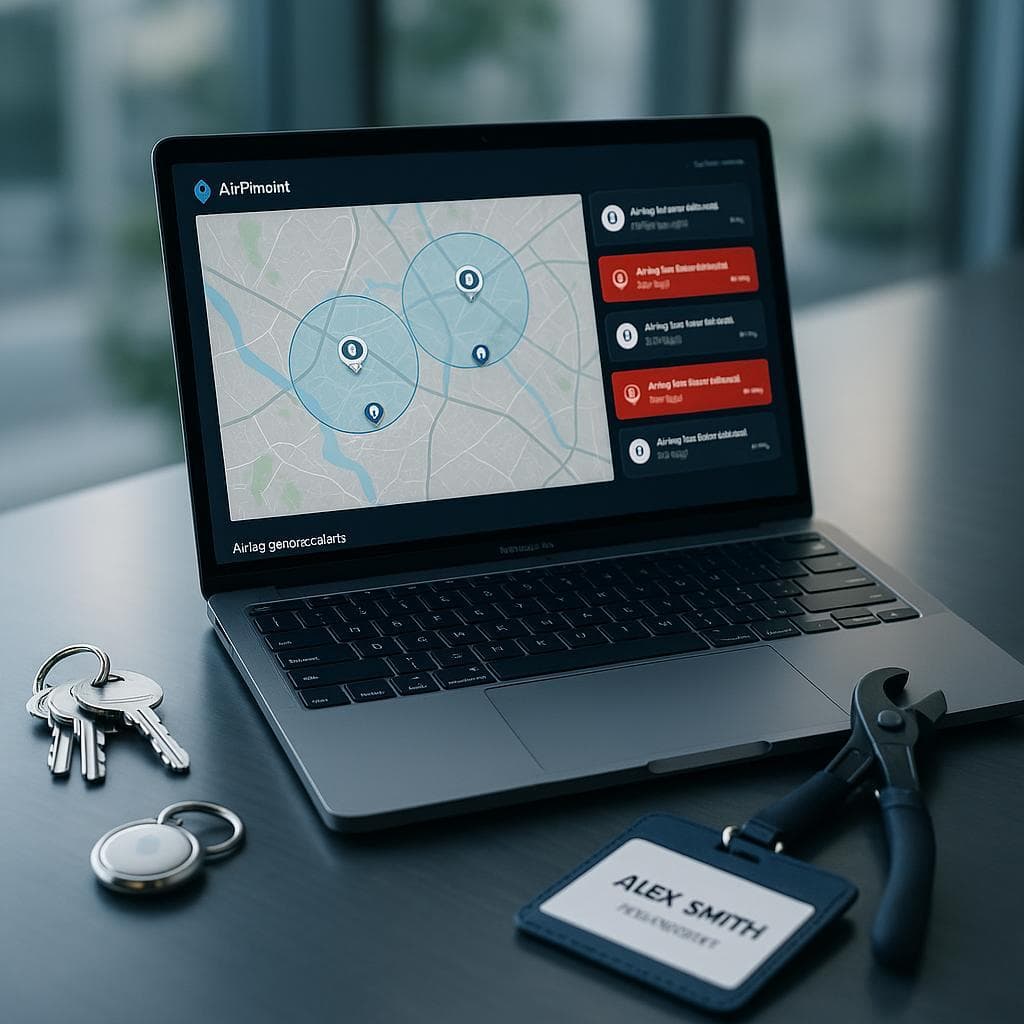
Geofencing is where tracking transforms from a passive safety net into an active fleet management tool. In AirPinpoint, you draw polygon boundaries on a map, and the system alerts you when a tracked bike crosses them.
Practical Geofence Setups
Rental property boundary. The baseline. Any bike leaving your lot outside operating hours triggers an alert. Catches after-hours theft and employees taking unauthorized rides.
Approved riding area. Draw a generous boundary around the trail system or riding area your renters are supposed to use. If someone decides to take your CRF250R on a 50-mile highway joyride to the next town, you know immediately.
Trailhead parking zones. Mark each trailhead where you stage bikes. If a bike leaves a trailhead while the rest of the group is on the trail, it's either being loaded into someone's truck or a renter went rogue.
Restricted zones. Mark areas that are off-limits (private property borders, dangerous terrain, paved roads where dirt bikes shouldn't be). Renters violating these boundaries can be warned or charged damage fees per your rental agreement.
Alert Configuration
False positives kill the usefulness of any alert system. AirPinpoint uses a consecutive-count threshold, meaning a bike must register outside the geofence boundary multiple times before triggering an alert. This prevents false alerts from a single GPS ping that drifts outside the boundary. Set the threshold higher for large riding area geofences (bikes near the edge will occasionally ping outside) and lower for your property boundary (any real departure should alert quickly).
Honest Limitations
AirTag-based tracking is not the right solution for every scenario. Knowing the limits helps you plan around them.
No real-time GPS coordinates. AirTags don't have GPS hardware. They get location from passing Apple devices. In populated areas, this is close to real-time (updates every 1-5 minutes). In remote backcountry, it could be hours between updates or no updates at all.
Deep backcountry coverage gaps. If your rental operation runs in areas with zero cell coverage and zero foot traffic (remote BLM land, wilderness), AirTags won't provide location data until the bike moves toward civilization. Dedicated satellite trackers like Spot Trace ($100 + $12/month) are better for truly remote tracking.
Anti-stalking sound. AirTags play a chirp after being separated from their owner's phone for an extended period. The sound is quiet, especially when hidden inside an airbox or frame tube, but a thief who hears it and knows what it is could remove the AirTag. This is why hiding location matters and why layering trackers (one visible deterrent, one hidden) is the best approach.
Battery in extreme conditions. CR2032 batteries perform poorly in extreme cold (below 0F). If your bikes sit outside in freezing temperatures, expect shorter battery life. In normal operating conditions (40-120F), the 1-year battery life holds.
Setting Up Tracking for Your Fleet
Step 1: Install AirTags
Buy AirTags in bulk (4-packs at $99 reduce per-unit cost to $24.75). Install one AirTag per bike in the airbox or under the seat. Use silicone holders or foam tape to secure them and dampen vibration. Label each AirTag with the bike number or VIN in the Find My app.
Step 2: Register in AirPinpoint
Add each bike to your AirPinpoint dashboard. Tag them by model, fleet number, or assignment (rental, school, race). This is your single view of the entire fleet.
Step 3: Set Up Geofences
Draw your property boundary, riding areas, and any restricted zones. Configure alert thresholds based on how sensitive you need each zone to be.
Step 4: Add Team Members
Give your shop manager, tour guides, and office staff access to the AirPinpoint dashboard. Each person sees the fleet map and receives geofence alerts relevant to their role.
Step 5: Maintenance Schedule
Set a calendar reminder to swap AirTag batteries every 10-11 months, before they die. For MX bikes that take heavy impacts, check batteries quarterly. A dead AirTag is the same as no AirTag.
Theft Recovery: What to Do
If a dirt bike goes missing:
- Check AirPinpoint immediately. Open the dashboard and locate the bike. The most recent location ping will show where the bike is or was last detected.
- Call police with the location data. Provide the current or last known GPS coordinates from AirPinpoint. Officers can respond directly to the location rather than filing a report and hoping for the best.
- Do not attempt recovery yourself. This is important. Share the location with law enforcement and let them handle it. Confronting a thief is dangerous and can complicate legal proceedings.
- Document everything. Screenshot the AirPinpoint location history showing the bike leaving your property. This serves as evidence for police reports and insurance claims.
- Monitor for movement. Stolen bikes sometimes sit in a garage for days before being moved or sold. Keep watching the AirPinpoint dashboard. The Find My network will ping the AirTag whenever someone with an iPhone walks or drives past the location.
Physical Security Layers
Tracking is a recovery tool, not a prevention tool. Pair it with physical security:
- Disc locks ($15-$40) on the front brake rotor prevent the bike from being rolled.
- Cable locks ($20-$60) through the frame and anchored to a truck bed rail, trailer D-ring, or ground anchor.
- Bike covers at dealerships. Out of sight, out of mind. A covered bike is less of a target than one gleaming on an open lot.
- Trailer locks if your bikes travel on trailers. A stolen trailer means stolen bikes. Consider tracking the trailer separately.
- Lighting and cameras at your storage area. Even basic motion-activated floods deter casual theft.
None of these stops a determined thief with bolt cutters and 5 minutes. That's why tracking exists: it's your fallback when prevention fails.
 Our Solution