Calibration Equipment Tracking: Know Where Your Instruments Are, Not Just When They're Due
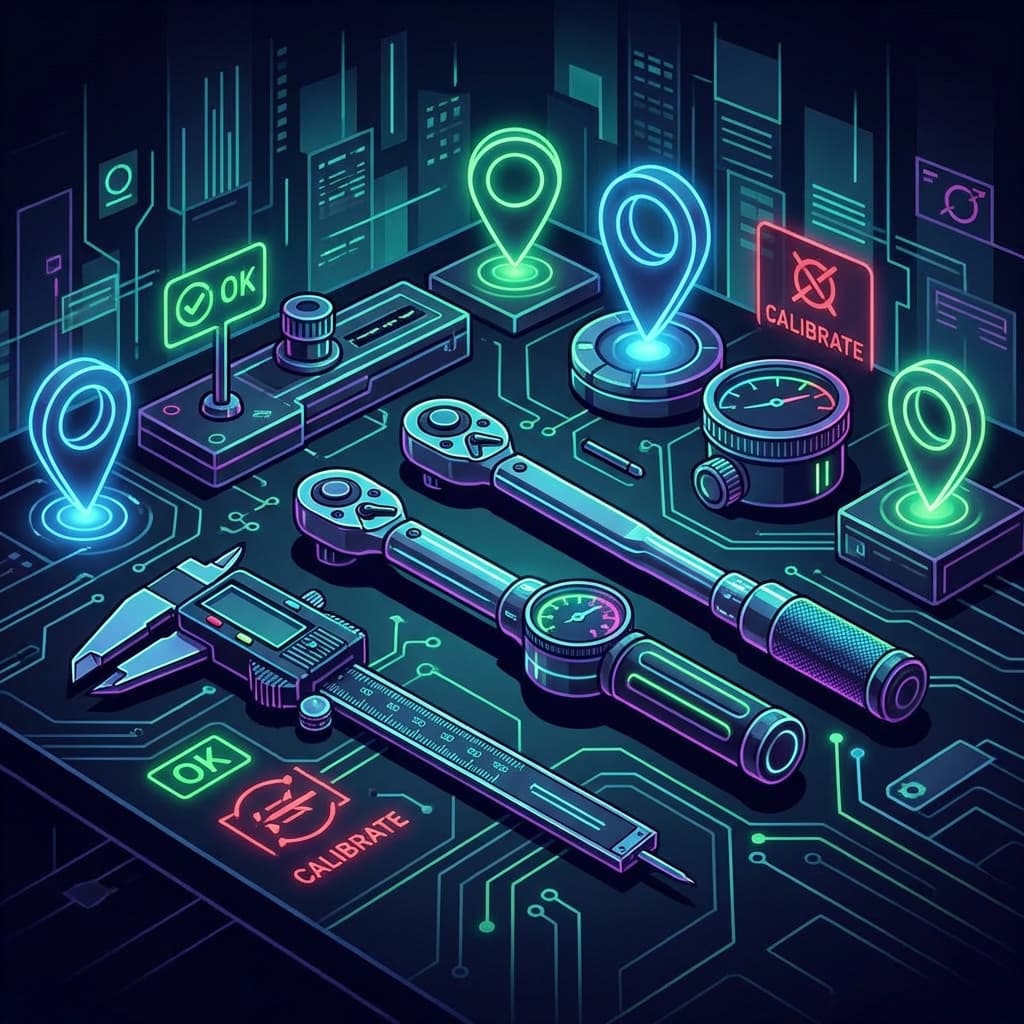
Your calibration management software tracks schedules perfectly. It sends reminders when instruments are due. It stores certificates, measurement data, uncertainty budgets.
But it cannot tell you where that torque wrench actually is right now.
This is the gap that costs quality departments thousands of hours per year: the disconnect between calibration schedule management (software) and physical instrument location (tracking). A quality manager with 350 calibrated instruments across three buildings and a dozen company trucks knows the problem intimately. The instrument is due tomorrow. The software says so. Finding it takes the rest of the day.
The Real Cost of Missing Calibrated Instruments
What One Bad Measurement Costs
| Industry | Typical Cost of Out-of-Cal Incident | Example |
|---|---|---|
| Aerospace (AS9100) | $100K-1M+ | Torque wrench 5% out causes rework on 200 fastener assemblies |
| Pharmaceutical (FDA 21 CFR Part 11) | $250K-2M+ | Analytical balance drift triggers batch recall |
| Automotive (IATF 16949) | $50K-500K | Micrometer error passes defective parts to OEM |
| Oil & Gas | $100K-500K | Pressure gauge reading causes pipeline shutdown |
| Construction | $25K-200K | Concrete test cylinders fail post-pour inspection |
These are not theoretical numbers. A single out-of-calibration measurement creates a chain reaction: suspect product that must be quarantined, retrospective analysis of every measurement made since the last good calibration, customer notification if product shipped, and corrective action documentation for the next audit.
The Instrument Search Problem
The average manufacturing plant manages 200-500 calibrated instruments. Larger operations track 2,000+. These instruments are not sitting in locked cabinets waiting politely to be calibrated.
They are:
- In a technician's truck on a job site 40 miles away
- Loaned to a subcontractor who forgot to return it
- In a toolbox in Building 3, second floor, somewhere
- Sent to an external calibration lab three weeks ago
- In the bottom drawer of someone who left the company
Time spent finding instruments for calibration:
| Plant Size | Instruments | Avg. Search Time | Annual Hours Lost |
|---|---|---|---|
| Small shop | 50-100 | 15-30 min each | 50-150 hours |
| Mid-size plant | 200-500 | 20-45 min each | 200-600 hours |
| Multi-site operation | 500-2,000 | 30-90 min each | 500-2,000+ hours |
At $50-75/hour for a calibration technician's loaded rate, a 500-instrument operation burns $15,000-45,000 per year just searching for instruments that need calibration.
Equipment at Risk
| Instrument Category | Unit Cost | Calibration Cost | Typical Cal Interval | Risk if Missing |
|---|---|---|---|---|
| XRF analyzers | $30,000-60,000 | $500-1,500 | 6-12 months | Alloy verification failures |
| CMMs | $50,000-500,000 | $2,000-5,000 | 6-12 months | Dimensional inspection invalid |
| Torque wrenches | $100-2,000 | $50-150 | 6-12 months | Joint integrity failures |
| Pressure gauges | $50-500 | $75-200 | 12 months | Process control drift |
| Multimeters (Fluke) | $200-3,000 | $100-300 | 12 months | Electrical measurement errors |
| Calipers/micrometers | $50-1,000 | $30-100 | 6-12 months | Dimensional spec failures |
| Hardness testers | $5,000-50,000 | $300-800 | 6-12 months | Material acceptance errors |
| Ultrasonic thickness gauges | $3,000-15,000 | $200-500 | 12 months | NDT inspection invalid |
The Calibration Software Landscape
What Calibration Management Software Does Well
Dedicated calibration software handles the schedule and compliance side:
- Calibration due date tracking and automated reminders
- Certificate storage and measurement data records
- Measurement uncertainty calculations
- As-found / as-left data recording
- Standards traceability (NIST, ISO 17025)
- Calibration procedure management
- Out-of-tolerance investigation workflows
What It Does Not Do
Every major calibration platform has the same blind spot: physical location. The software assumes you can find the instrument. The "Location" field in most calibration databases is a static text entry ("Building A, Lab 2") that nobody updates when someone borrows the instrument.
Calibration Software Comparison
| Software | Pricing | Strengths | Location Tracking |
|---|---|---|---|
| GageTrak | $400-2,000+ (desktop) / cloud subscription | Most widely used, manufacturing focus, IATF 16949 workflows | Static field only |
| Fluke Met/Team | ~$150/month+ | Fluke ecosystem integration, strong measurement data, cloud-native | Static field only |
| IndySoft | Enterprise ($5K-25K+) | Highly configurable, multi-site, 21 CFR Part 11 compliant | Static field only |
| ProCal V5 | Enterprise ($5K-20K+) | Laboratory focus, ISO 17025, uncertainty budgets | Static field only |
| Calibration Control (Ape Software) | $1,500-5,000+ | SMB-friendly, barcode integration | Barcode scan points |
| CompuCal | Enterprise pricing | MRO integration, SAP connector | Static field only |
| Blue Mountain RAM | Enterprise ($10K+) | Regulatory compliance, pharma focus | Zone-level only |
Every one of these tools tracks WHEN. None of them track WHERE in real time.
Barcode scanning at fixed stations provides zone-level check-in/check-out data. But the moment an instrument leaves the scanned area — into a truck, to another building, to a subcontractor — the trail goes cold.
AirPinpoint: The Physical Location Layer
How It Works with Your Existing Calibration Software
AirPinpoint does not replace your calibration management software. It adds the missing dimension: real-time physical location of every tagged instrument.
Your calibration software handles:
- Calibration schedules and due dates
- Certificates and measurement data
- Compliance documentation (ISO 17025, IATF 16949, FDA)
- Calibration procedures and standards
AirPinpoint handles:
- Where each instrument is right now (building, floor, vehicle, job site)
- Movement history (where it's been, when, and for how long)
- Geofence alerts (notifications when instruments leave designated areas)
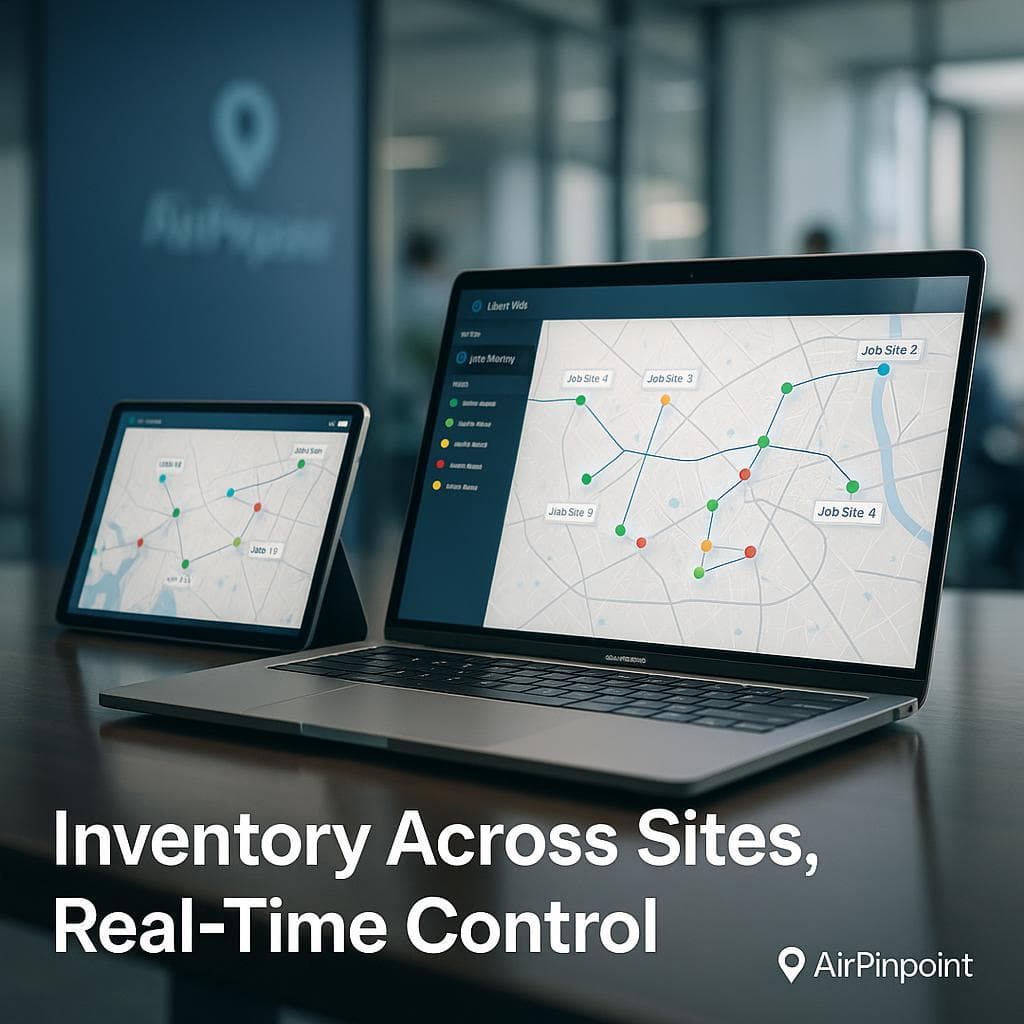
- Multi-site visibility (one dashboard across all facilities)
- Audit-ready location exports
The workflow:
- Your calibration software flags 15 instruments as due this week
- Your calibration tech opens AirPinpoint's dashboard
- They see all 15 instruments on a map — 10 in the main building, 3 in the field truck, 2 at the subcontractor's site
- They route their day efficiently instead of searching for hours
- Instruments at the subcontractor get a recall notification based on location data
Why This Matters for Compliance
ISO/IEC 17025:2017 requirements that benefit from location tracking:
| Requirement | Section | How Location Tracking Helps |
|---|---|---|
| Equipment identification and records | 6.4.3 | Physical location documented alongside calibration records |
| Handling, transport, storage | 6.4.3 | Movement history proves proper chain of custody |
| Interim checks | 6.4.13 | Locate instruments quickly for between-calibration verification |
| Equipment out of service | 6.4.12 | Geofence alerts prevent use of quarantined instruments |
| Metrological traceability | 6.5 | Full audit trail of instrument location + calibration status |
AS9100 Rev D (aerospace) adds requirements for:
- Documented control of monitoring and measuring equipment
- Protection from adjustments that would invalidate calibration
- Identification of calibration status
IATF 16949 (automotive) requires:
- Control of monitoring and measuring equipment per MSA manual
- Documented calibration records including location of use
- Customer notification if suspect product shipped
An auditor who asks "show me instrument #AT-4027" expects you to walk to it within minutes — not explain that you'll need to check a few buildings.
Industry Use Cases
Manufacturing Quality Control
The scenario: A Tier 1 automotive supplier manages 400+ calibrated instruments across a 250,000 sq ft plant. Torque wrenches, bore gauges, height gauges, and thread gauges move between production cells daily. During IATF 16949 surveillance audits, the quality manager needs to demonstrate control of all calibrated instruments.
Before AirPinpoint:
- Calibration tech spends 3 full days per month locating instruments for scheduled calibration
- Two instruments reported "missing" during last audit — corrective action required
- Three torque wrenches found in a retired employee's toolbox after 6 months
With AirPinpoint:
- Dashboard shows real-time location of all tagged instruments
- Calibration tech completes monthly rounds in 1 day instead of 3
- Geofence alerts flag instruments that leave the plant
- Audit response: "Let me show you on the dashboard" — instrument located in 30 seconds
Aerospace & Defense (AS9100)
The scenario: An MRO facility services aircraft components using 200+ calibrated instruments including torque wrenches, precision scales, and NDT equipment. Some instruments travel with technicians to customer sites. AS9100 requires full traceability.
Critical need: When an instrument is found out-of-tolerance during calibration, every measurement it made since the last good calibration must be reviewed. Knowing where the instrument was used — which aircraft, which work orders — is essential for the retrospective analysis.
AirPinpoint's location history provides a timestamped record of everywhere the instrument has been, supplementing work order records with physical location data.
Pharmaceutical (FDA 21 CFR Part 11)
The scenario: A pharmaceutical manufacturer validates analytical instruments (balances, pH meters, dissolution testers, HPLC systems) across production, QC labs, and R&D. FDA regulations require electronic records with audit trails.
Key requirement: Instruments must be in a controlled, qualified environment during use. AirPinpoint's geofencing can alert quality teams when a calibrated instrument moves outside its qualified area — preventing measurements made in uncontrolled conditions from entering batch records.
Oil & Gas Inspection
The scenario: An inspection company deploys XRF analyzers ($30K-60K each), ultrasonic thickness gauges, and pressure test equipment to pipeline sites across three states. Instruments ship between field offices, customer sites, and the central calibration lab.
The pain: At any given time, 30% of instruments are "in transit" — somewhere between the calibration lab and the field. External calibration vendors hold instruments for 2-4 weeks. Without location tracking, the equipment coordinator makes 10+ phone calls per day tracking down instruments.
With AirPinpoint: Every instrument visible on a single dashboard. Filter by calibration due date (from your cal software) and location (from AirPinpoint) to plan efficient recall routes.
Construction Material Testing
The scenario: A geotechnical firm operates from five offices across a metro area. Field technicians carry calibrated equipment (concrete cylinder test presses, nuclear density gauges, soil penetrometers) in their trucks. Instruments move between offices and job sites daily.
ISO 17025 compliance requires that instruments used for testing are current on calibration. A technician using an overdue instrument on a concrete pour creates a liability — the test results may be challenged.
AirPinpoint + calibration software together ensure: the tech's instruments are current (schedule) AND you know which truck they're in (location) for recall when due.
Implementation: Adding Location Tracking to Your Calibration Program
Phase 1: Tag Your Critical Instruments (Week 1-2)
Start with the instruments that are hardest to find:
- Portable/field instruments — torque wrenches, handheld meters, portable analyzers
- Shared instruments — items used by multiple departments or shifts
- High-value instruments — XRF analyzers, CMMs, specialty test equipment
- Instruments sent externally — items shipped to calibration vendors
How to tag:
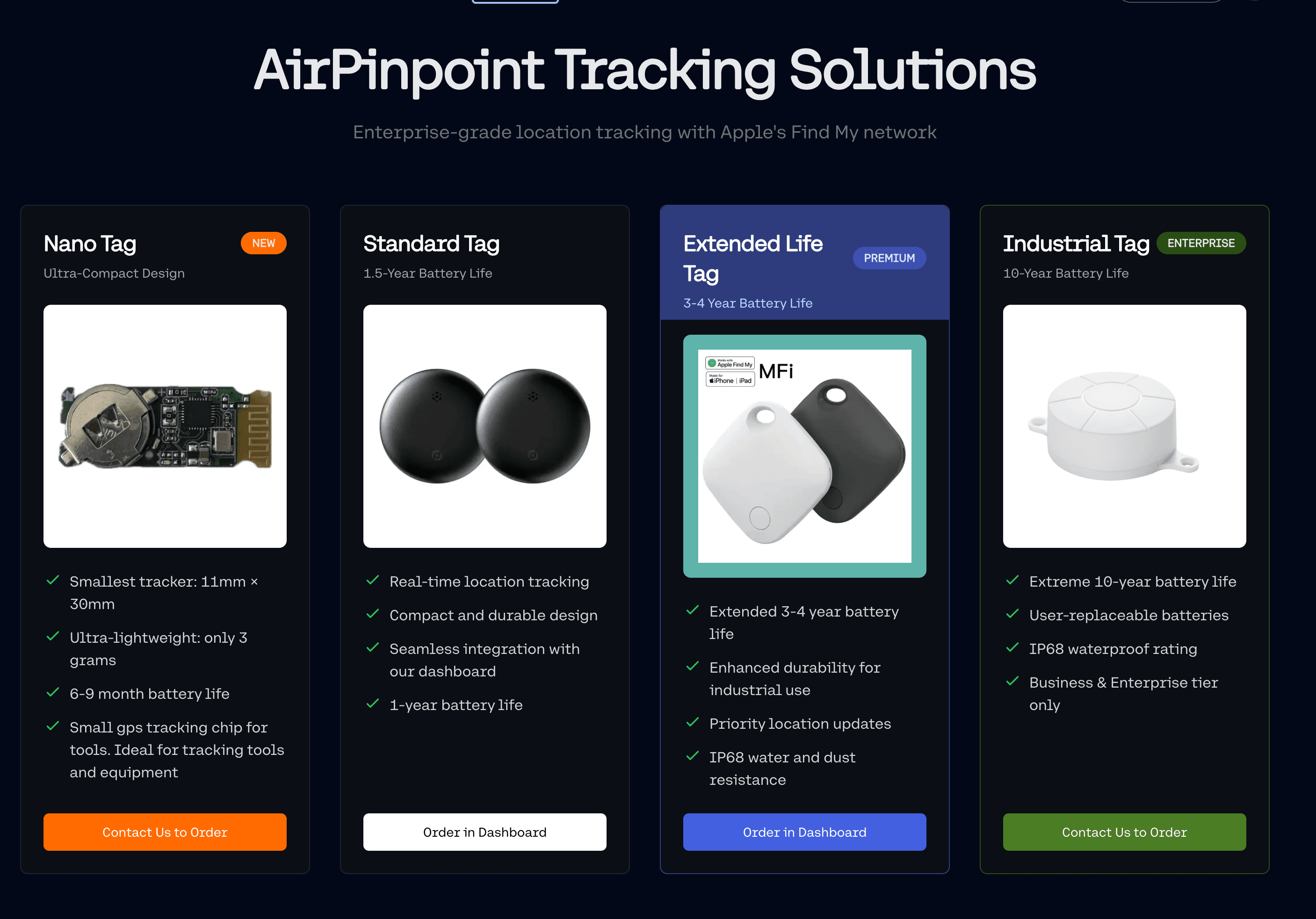
- Attach AirTag in a protective case or adhesive mount
- For instruments in cases, place inside the carrying case
- For bench instruments, mount on a non-critical exterior surface
- Document the AirTag ID alongside the instrument's calibration ID in your system
Phase 2: Configure Geofences (Week 2-3)
Set up geofence alerts in AirPinpoint for:
- Facility boundaries — alert when instruments leave the building
- Controlled areas — qualified environments for pharma/medical
- Vehicle zones — company truck parking to track field instrument inventory
- Calibration lab — know when instruments arrive/leave the cal lab
Phase 3: Integrate with Your Calibration Workflow (Week 3-4)
- Before calibration runs: Pull up AirPinpoint dashboard filtered by instruments due this week from your calibration software
- Route planning: Sort instruments by location to plan efficient pickup routes
- External cal tracking: Monitor instruments shipped to vendors — AirPinpoint shows transit and arrival
- Post-calibration: Verify instruments return to correct locations
- Export location data: Supplement calibration records with location history for audits
Phase 4: Ongoing Operations
- Monthly: Review location data for instruments that haven't moved (potential abandonment)
- Pre-audit: Generate location reports for all instruments in scope
- Quarterly: Reconcile physical locations with calibration software database
- As needed: Use location history for out-of-tolerance investigations
AirPinpoint vs RFID for Calibration Equipment
| Factor | AirPinpoint | RFID Calibration Tracking |
|---|---|---|
| Setup time | Hours (attach tags, add to dashboard) | Weeks-months (infrastructure, readers, integration) |
| Hardware cost | $29 per instrument (AirTag) | $5-25/tag + readers ($10K-50K) |
| Monthly cost | From $11.99/month per instrument | Software license ($5K-25K/year) |
| Location accuracy | Building/zone level via Apple Find My network | Zone-level (reader-dependent) |
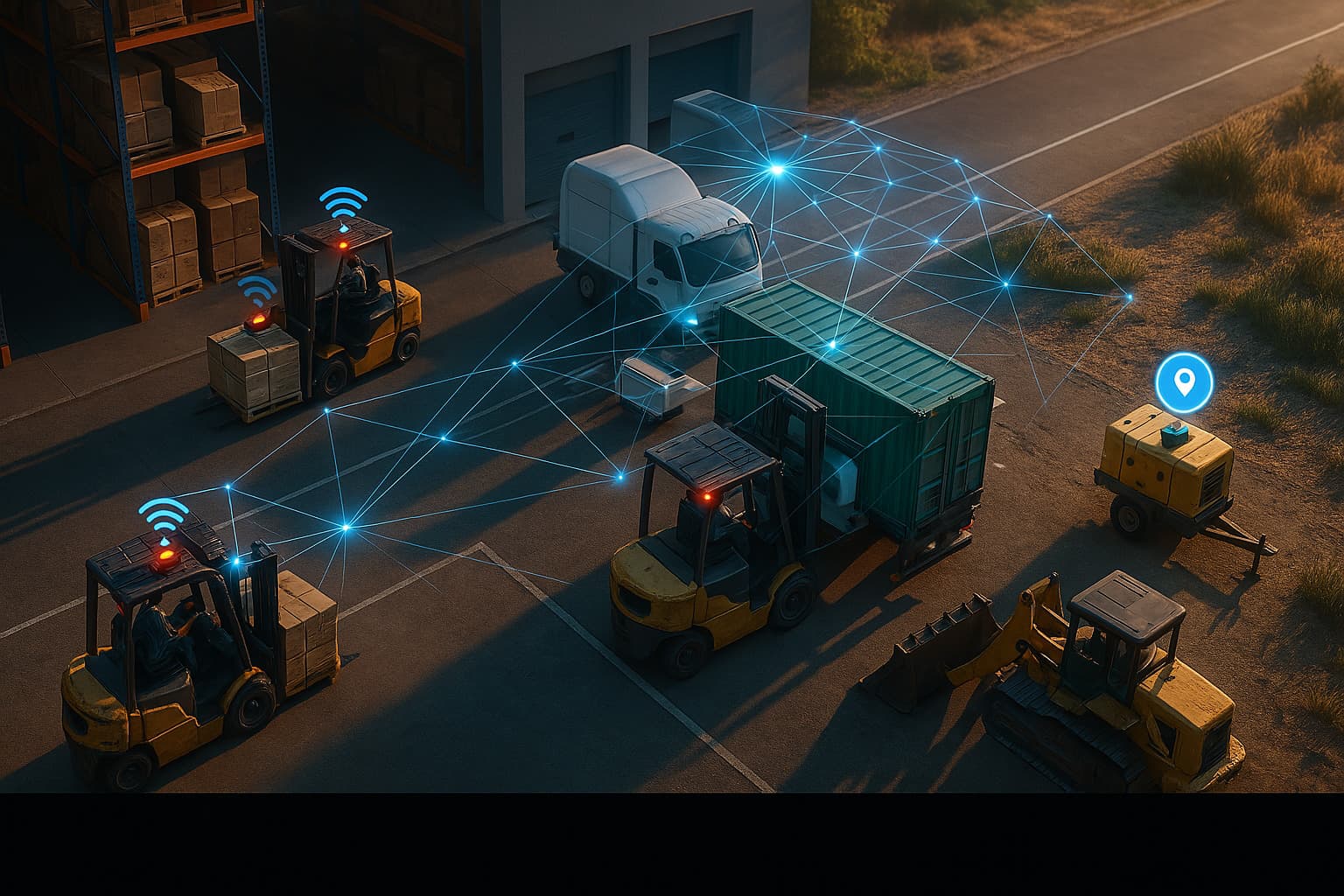
| Outdoor/field tracking | Yes — anywhere Apple devices exist | No — readers only at fixed locations |
| Multi-site visibility | Yes — one dashboard, all sites | Complex — requires infrastructure at each site |
| Best for | Portable/field instruments, multi-site, quick deployment | Fixed-facility, high-volume, automated check-in/out |
For most calibration programs, AirPinpoint provides immediate value because calibrated instruments move between buildings, vehicles, and sites — exactly where RFID infrastructure doesn't reach.
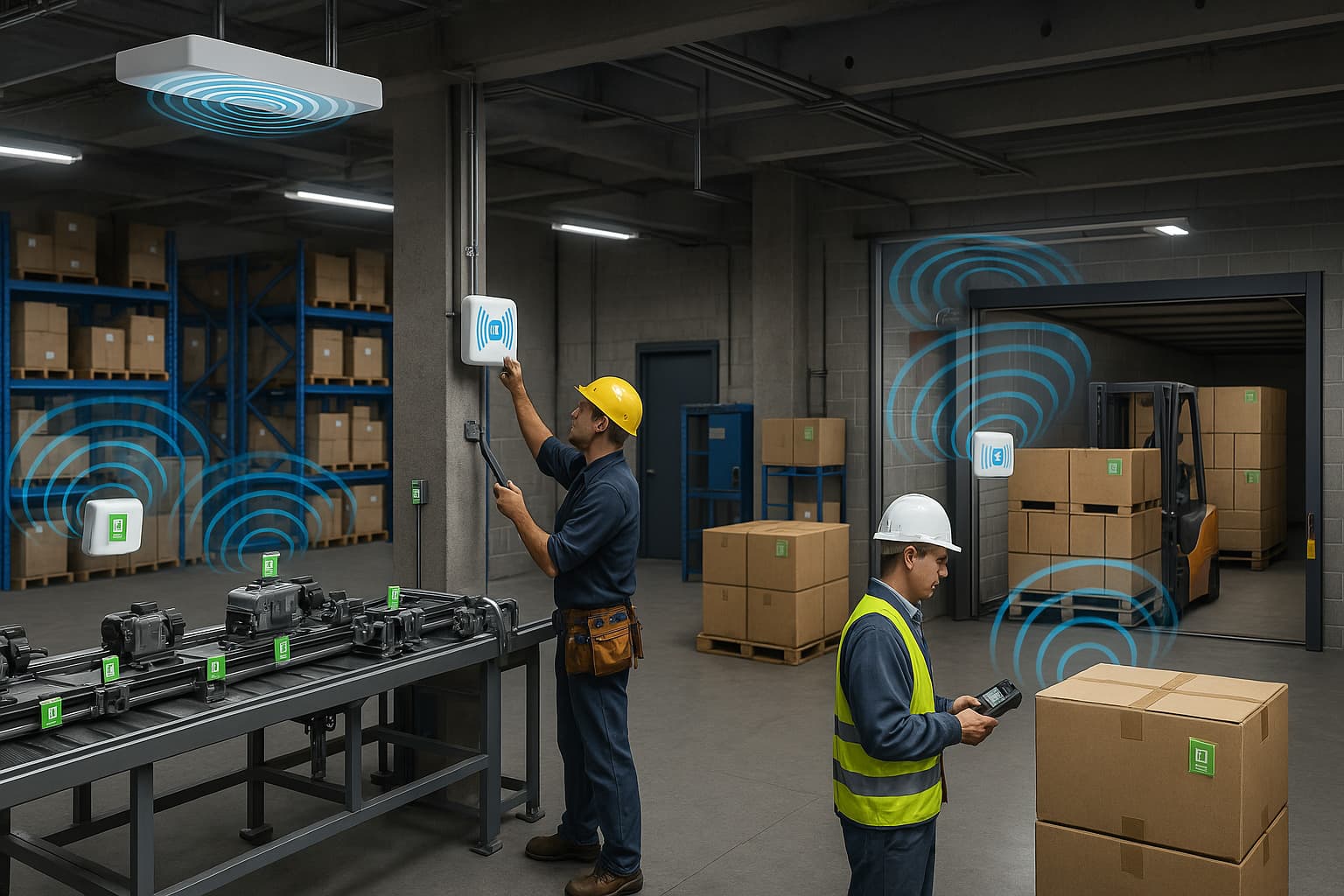
Learn more about RFID-based tracking approaches or compare with enterprise asset tracking software.
ROI Analysis: Adding Location Tracking to Your Cal Program
Mid-Size Manufacturer (350 Calibrated Instruments)
Annual cost without location tracking:
| Cost Category | Calculation | Annual Cost |
|---|---|---|
| Calibration tech search time | 350 instruments x 30 min avg search x $60/hr | $10,500 |
| Overdue instruments (unable to locate) | 15 instruments x 2 months overdue avg x risk | $25,000+ in audit risk |
| Lost instruments (never found) | 3 instruments/year x $2,000 avg replacement | $6,000 |
| Production delays from missing instruments | 20 incidents x 2 hrs x $200/hr production cost | $8,000 |
| Total annual waste | $49,500+ |
AirPinpoint investment:
| Item | Cost |
|---|---|
| AirTags (350 x $29) | $10,150 |
| AirPinpoint subscription (350 instruments) | From $4,196/month (volume pricing) |
| Setup and configuration | Internal, ~8 hours |
| Year 1 total | ~$60,500 |
Annual savings after Year 1:
- Search time eliminated: $10,500
- Overdue instruments recovered promptly: $25,000 (audit risk reduction)
- Lost instruments prevented: $6,000
- Production delay reduction: $8,000
- Total savings: ~$49,500/year against ~$50,350/year ongoing cost
The ROI here is not a dramatic payback story. It is a risk reduction story. The $25,000+ in audit risk reduction and the prevention of a single out-of-calibration incident ($50K-500K) is what justifies the investment. One prevented recall pays for a decade of tracking.
Choosing the Right Calibration + Tracking Stack
Small Shop (Under 100 Instruments)
- Calibration software: GageTrak desktop or Calibration Control
- Location tracking: AirPinpoint on portable/field instruments
- Total cost: $2,000-5,000/year
Mid-Size Manufacturer (100-500 Instruments)
- Calibration software: GageTrak365 or Fluke Met/Team
- Location tracking: AirPinpoint for all portable instruments + geofences
- Total cost: $8,000-30,000/year
Enterprise / Multi-Site (500+ Instruments)
- Calibration software: IndySoft or ProCal V5 with enterprise asset management
- Location tracking: AirPinpoint for field/portable instruments + RFID for fixed-facility check-in/out
- Total cost: $30,000-75,000+/year
Regulated Industries (Pharma, Aerospace, Nuclear)
- Calibration software: IndySoft or Blue Mountain RAM (21 CFR Part 11 / AS9100 validated)
- Location tracking: AirPinpoint for geofenced controlled areas + chain of custody documentation
- Additional: Validated export procedures for audit trails
- Total cost: $50,000-150,000+/year
For organizations managing instruments across multiple sites, see how cross-site inventory visibility works with AirPinpoint.
The Bottom Line
Calibration management software is essential. It handles schedules, certificates, compliance, and measurement data better than any spreadsheet.
But it has a blind spot: physical location.
Your calibration tech should not spend 30% of their time hunting for instruments that the software says are overdue. They should open a dashboard, see where every instrument is, and plan their route.
AirPinpoint fills the gap:
- Real-time instrument location across buildings, vehicles, and job sites
- Geofence alerts when instruments leave controlled areas
- Location history for audit documentation and out-of-tolerance investigations
- Multi-site visibility on a single dashboard
Start with:
- Tag your hardest-to-find instruments (field/portable equipment first)
- Set geofences for facility boundaries and controlled areas
- Integrate location checks into your existing calibration recall workflow
- Export location data to supplement calibration records
The quality managers who track both when and where spend their time calibrating instruments — not searching for them.
For related approaches, explore lab equipment tracking for research facilities and RFID-based asset management.
 Our Solution