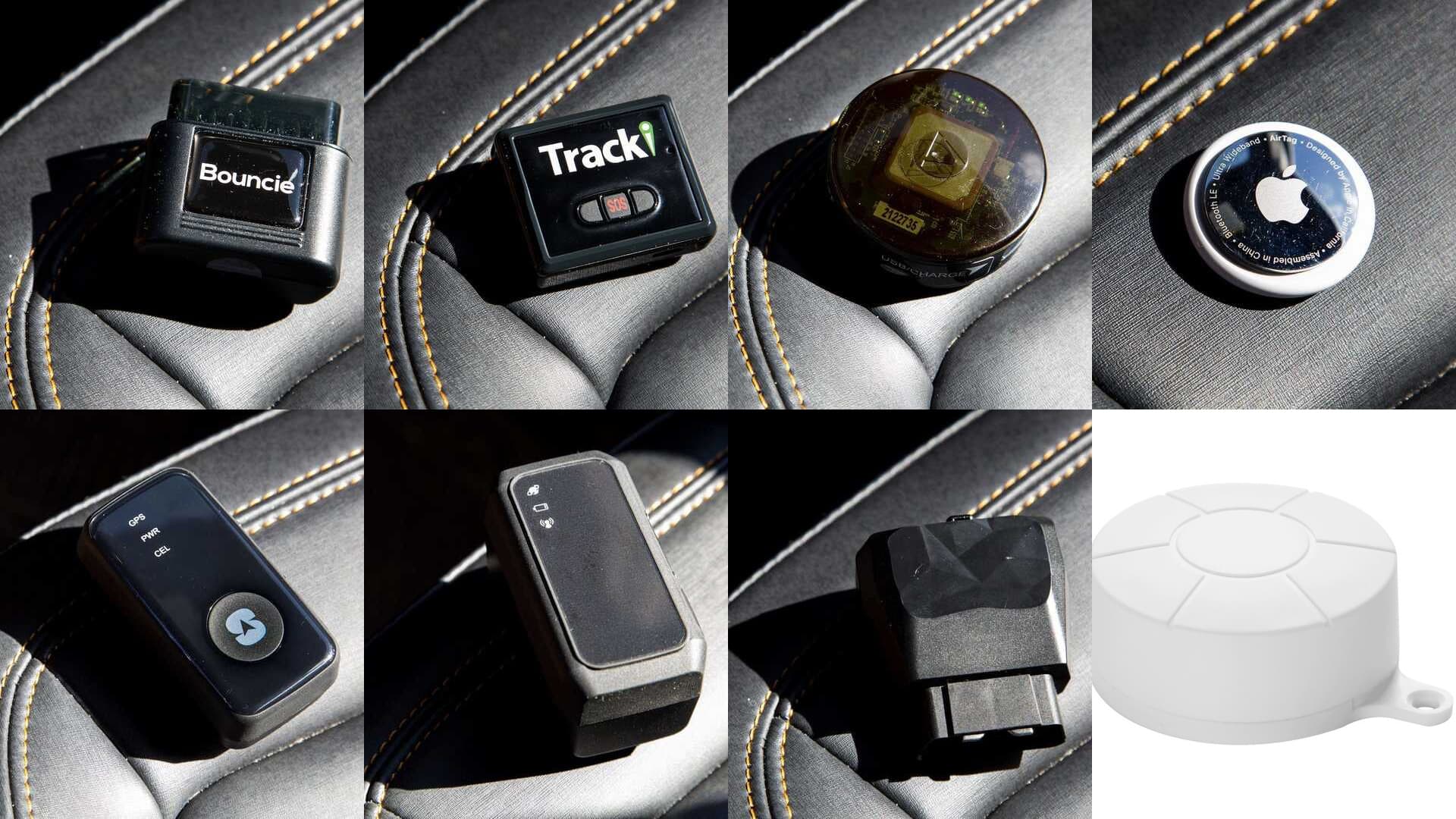
Best GPS Trackers for Equipment in 2026: Tested and Ranked by Cost-Per-Update
Most "best GPS tracker" lists rank by sticker price or battery life. Both are the wrong number. The sticker price hides the subscription, and the battery spec hides the update rate it assumes. This roundup ranks 11 trackers by the two numbers that actually decide which one is cheaper and more useful over the life of the asset: cost per location update, and true three-year cost including the labor of charging the thing.
How We Test
We run live Find My fleet tracking across real assets (trailers, generators, tool carts, and powered vehicles) and watch how often each device actually reports in the field, not what the spec sheet claims. Every price below was pulled from the vendor's own page and verified in June 2026; where a vendor only quotes by phone, we say so and mark the cell "varies." Update intervals are assessed in real-world conditions: a tag near foot traffic and a tracker on a rural asset are not the same test, and we note both. We do not run fabricated sample sizes or invented field statistics. Where we model cost-per-update, the assumptions are labeled so you can check the arithmetic yourself.
Quick Picks
- Best Overall: AirTag + Airpinpoint. Most updates per battery, no contract, tracks powered and unpowered assets at one flat price.
- Best No-Subscription: AirTag + Airpinpoint, $29 hardware plus a flat software fee with no per-device cellular charge.
- Best for Heavy Equipment: Samsara or Geotab (wired) if the machine has an engine and you need ELD or engine diagnostics; AirTag + Airpinpoint for everything that just needs location.
- Best for Trailers: AirTag + Airpinpoint. Trailers have no power source, and battery GPS forces a recharge routine an AirTag never needs.
- Best for Real-Time / ELD: Samsara, Geotab GO9+, or Verizon Connect, hardwired into the vehicle. These are the only honest real-time options.
- Best Budget: Trak-4 at $6.99/mo (prepaid annual) if you accept once-an-hour pings; AirTag + Airpinpoint if you want frequent updates on the same budget.
The Comparison Table (Ranked)
Ranked by best balance of frequent updates, true cost, and maintenance burden. "True 3-Yr Cost" is per device over 36 months and folds in recharge labor for battery trackers (15 min per cycle at $25/hr). Cellular prices marked "custom quote" are not published by the vendor; the ranges shown are what small fleets commonly report, not vendor-confirmed figures.
| Rank | Tracker | Best For | Hardware Cost | Monthly Fee | Contract | Battery Life | True 3-Yr Cost (incl. labor) | Verdict |
|---|---|---|---|---|---|---|---|---|
| 1 | AirTag + Airpinpoint | Mixed fleets, every asset | $29 | $11.99/device | None | 12+ months at full update rate | ~$461 | Most updates per battery, lowest maintenance |
| 2 | Trak-4 | Budget once-a-day breadcrumb | $13.88 | $6.99 (annual) | None | "Years" at ~1 update/day | ~$265 | Cheap if hourly-or-slower is fine |
| 3 | LandAirSea SYNC | Powered vehicles, OBD plug | $24.95 | $8.95 | None | Wired (OBD) | ~$347 | Cheapest real-time, but powered assets only |
| 4 | SpyTec Atlas | Portable asset, frequent updates | $0 (free) | $22.95 (annual) | None | ~34 days per charge | ~$1,135 | Good app, recharge labor adds up |
| 5 | LandAirSea 54 / Overdrive | Frequent updates, short stints | $29.95 / $74.95 | $19.95-$49.95 | None | 54: ~1-2 wks; Overdrive: ~3-4x longer | ~$795-$1,873 | Update rate and battery are one trade-off |
| 6 | Tracki | Light real-time, small assets | $17.88 | varies | None | 2-3 days real-time, weeks throttled | varies | Honest about the battery trade-off |
| 7 | Optimus 3.0 | Hidden vehicle tracking | $27.95 | varies | None | "Over 1 month" (throttled) | varies | Monthly fee not published on page |
| 8 | Monimoto 7 | Motorcycle / powersports theft | $129 | varies (eSIM) | None | 12-24 months | varies | Theft-alert niche, not fleet tracking |
| 9 | BrickHouse Security | Managed enterprise GPS | varies | varies | varies | varies | varies | Quote-only; no public pricing |
| 10 | Samsara (AG46 / Asset Tag) | ELD, engine telemetry | $0 (leased) | custom quote (~$33-45) | 3-5 years | Wired, or sealed multi-year | varies (high) | Real-time wired, locks you in |
| 11 | Geotab GO9+ / Verizon Connect | DOT-regulated wired fleets | varies (reseller) | custom quote (~$20-40) | 1-3 years | Wired (OBD) | varies (high) | Strong telematics, contract required |
A note on the cellular incumbents: Samsara, Geotab, and Verizon Connect do not publish per-device pricing. The figures above are commonly reported ranges, not vendor-confirmed numbers, which is itself worth weighing. You cannot fact-check a price the vendor refuses to print.
How We Rank: Cost Per Update, Not Cost Per Month
Every battery-powered GPS tracker advertises battery life in months or years. None of them print the update rate that figure assumes. It lives in the spec-sheet footnotes, and it is almost always one location report per day.
Tracki is the most honest vendor about this. Their published battery behavior: a couple of days in real-time mode (updates every 1-5 minutes), versus weeks if the device reports only 1-3 times per day. That one line is the entire industry's secret. Frequent updates kill a GPS battery in days. The only way to advertise months or years is to barely ever update.
So "battery life" is the wrong number to compare. The right number is updates per battery: how many location reports the device sends before it dies or needs a charger. Here is what the advertised figures work out to under a labeled assumption (AirTag pace = roughly 400 updates/day in a populated area; cellular figures use each vendor's own stated throttled rate).
| Tracker | Advertised battery | Assumed update rate | Updates per battery (modeled) | Battery life at AirTag pace |
|---|---|---|---|---|
| AirTag 2 | 12+ months | Every 1-5 min in populated areas | ~100,000+ | 12+ months (this is AirTag pace) |
| Samsara Asset Tag (battery) | multi-year (sealed) | ~1 check-in/day | ~1,000-1,100 | ~3 days |
| Trak-4 | "Years" | ~1/day | ~550-1,100 | ~1.5-3 days |
| LandAirSea 54 | ~1-2 weeks | Hourly (slowest setting) | ~250-350 | ~hours |
| Tracki (battery-save) | weeks | 1-3/day | ~75-90 | 2-3 days (Tracki's own real-time spec) |
Read that again. A multi-year sealed battery holds roughly 1,000 updates. An AirTag in a city delivers that many in under three days and keeps doing it for over a year on a $3 coin cell. Per battery, the AirTag delivers on the order of 100x the location reports of a once-a-day cellular tracker. Tracki's own real-time figure (2-3 days) lands exactly where the model predicts. This is not a trick. It is arithmetic the spec sheets hope you skip.
Why the gap is physics, not engineering
A cellular GPS tracker does two expensive things per update: hold the GPS radio on until it gets a satellite fix (up to 30 seconds of continuous draw), then power a cellular modem, attach to a tower, and transmit. LTE bursts pull hundreds of milliamps to over an amp. An AirTag does neither. It broadcasts a tiny Bluetooth packet every couple of seconds at average currents measured in microamps, and nearby iPhones do the GPS fix and the cellular upload on their own batteries, which get recharged every night, just not by you.
The AirTag outsources the two power-hungry parts of tracking to billions of devices that someone else keeps charged. No GPS-chip improvement closes that gap. The architecture is the difference. Wired trackers (Samsara AG46, Geotab GO9+) are exempt: they run on vehicle power and are genuinely real-time. If the asset has an engine and a battery, wired GPS works. The battery fine print applies to everything that does not.
What once-a-day actually means for your equipment
A tracker that reports once a day tells you where your excavator was, not where it is. Stolen equipment is in a container or a chop shop within hours. A geofence alert that fires up to 23 hours after the machine left the yard is a police report, not a recovery. For unpowered assets (trailers, generators, attachments, containers, the exact things people buy battery trackers for), cellular GPS forces you to pick two of three: frequent updates, long battery life, no charging routine. AirTags are the only option here that gives all three, because the battery doing the hard work belongs to someone else's iPhone.
Verified 2026 Pricing
Every figure below comes from the vendor's own page, checked June 2026. Where a vendor does not publish a number, the cell reads "varies."
| Provider | Hardware Cost | Monthly Cost | Contract | Battery / Power | Update Frequency |
|---|---|---|---|---|---|
| AirTag + Airpinpoint | $29 (AirTag 2) | $11.99/device | None | CR2032 (12+ months at full update rate) | Every 1-5 min in populated areas |
| Trak-4 | $13.88 (rechargeable) | $6.99 (prepaid annual) / $12.99 monthly | None | "Years" at ~1 update/day | Hourly to every 12 hrs |
| LandAirSea SYNC | $24.95 | $8.95 | None | Wired (OBD-II) | Every 3 sec |
| LandAirSea 54 | $29.95 | $19.95-$49.95 (by update rate) | None | Rechargeable (~1-2 weeks) | Every 3 sec to 3 min |
| LandAirSea Overdrive | $74.95 | $19.95-$49.95 (by update rate) | None | Rechargeable (3-4x the 54) | Every 3 sec to 3 min |
| SpyTec Atlas (Mini/Portable) | $0 (free with plan) | $22.95 (annual) / $34.95 monthly | None | ~34 days per charge | Frequent (rechargeable) |
| Tracki (Universal) | $17.88 | varies | None | 2-3 days real-time, weeks throttled | Real-time to every 5 min |
| Optimus 3.0 | $27.95 | varies | None | Over 1 month (throttled) | Real-time to throttled |
| Monimoto 7 | $129 | varies (eSIM) | None | 12-24 months | Alert-driven |
| BrickHouse Security | varies (quote) | varies (quote) | varies | varies | varies |
| Samsara (AG46 / Asset Tag) | $0 (leased) | custom quote (~$33-45 reported) | 3-5 years | Wired, or sealed multi-year | Real-time wired; ~daily on battery |
| Geotab GO9+ | varies (reseller) | custom quote (~$30-40 reported) | 1-3 years | Wired (OBD) | Real-time |
| Verizon Connect | $0 (leased) | custom quote (~$20-45 reported) | 3 years | Wired (OBD/hardwire) | Real-time |
Notes on these numbers:
- SpyTec sells hardware free with a plan; the $22.95/mo figure is the Atlas Mini/Portable annual rate, $34.95 month-to-month. Volume discounts (5% to 25%) kick in from 5 devices up.
- LandAirSea's monthly fee scales with update rate: $19.95 for 3-minute updates climbing to $49.95 for 3-second updates. The SYNC is an OBD plug at a flat $8.95.
- Trak-4's $6.99 is prepaid annual; month-to-month is $12.99. It is genuinely cheap, but the plan is built around hourly pings.
- Samsara, Geotab, and Verizon Connect quote by phone. Treat the ranges as reported, not confirmed.
Pros and Cons: Top Devices
AirTag + Airpinpoint
Pros:
- Most updates per battery of anything tested; 12+ months on a $3 coin cell at full update rate
- No contract, flat per-device software fee, no per-device cellular charge
- Tracks powered vehicles and unpowered assets (trailers, generators, tool carts) at one price
- Works indoors and inside containers where GPS goes blind
Cons:
- Not seconds-level live tracking; updates depend on nearby iPhones (minutes in cities, hours in deep rural)
- No ELD, no engine diagnostics, no driver-behavior monitoring
- Coverage thins out in areas with little foot or vehicle traffic
LandAirSea SYNC
Pros:
- Cheapest real-time option at $8.95/mo with no contract
- OBD plug, no charging, always on
- 3-second update interval
Cons:
- Powered vehicles only; useless on a trailer or generator
- OBD port occupied; no battery fallback
SpyTec Atlas
Pros:
- Polished app and history; reliable reporting
- No contract, automatic volume discounts
- Free hardware with a plan
Cons:
- ~34-day battery means a recharge routine and real labor cost over three years
- Per-device cost climbs fast across a mixed fleet
Samsara (wired)
Pros:
- Genuine real-time on vehicle power
- ELD, engine fault codes, driver monitoring, mature platform
Cons:
- 3-5 year contract with early-termination exposure
- No public pricing; quote-only
- Overkill (and overpriced) for assets that only need location
When Cellular GPS Actually Wins
Cellular GPS costs several times more than AirTag-based tracking. For most operations that premium buys features they never touch. But two cases genuinely justify it:
DOT-regulated vehicles that require ELD compliance. Hours-of-Service logging requires a certified hardwired OBD-II device. This is a legal requirement for CDL drivers, not a nice-to-have. Samsara, Geotab, and Verizon Connect all offer integrated ELD. AirTags cannot do ELD.
Vehicle-specific telemetry: fuel levels, engine fault codes, maintenance by engine hours. These need a direct OBD-II or hardwire connection to the vehicle's computer. If your operation depends on fuel consumption per route or real-time engine diagnostics, you need a wired GPS device on those specific vehicles.
There is also one geographic case: equipment that operates exclusively in deep rural areas with no cell coverage and minimal traffic (timber, remote mining, wilderness) needs cellular or satellite GPS. But job sites, industrial parks, customer locations, and parking lots all have steady iPhone traffic, where in practice a tag refreshes every few minutes. A rural asset with no one around can go hours between updates, which is the honest limit of the model.
The 3-Year Total Cost of Ownership
Hardware price is a rounding error next to 36 months of subscription. This is where the ranking earns its keep. Battery trackers also carry a hidden labor cost: someone has to find each device, pull it, charge it for 2-4 hours, and reinstall it, on repeat.
15 Assets (Mid-Size Fleet)
| Solution | Hardware | 36-Mo Subscription | 3-Yr Total | Monthly Equivalent |
|---|---|---|---|---|
| AirTag + Airpinpoint | $435 | $6,476 | $6,911 | $192 |
| Trak-4 (annual, hourly) | $208 | $3,776 | $3,984 | $111 |
| SpyTec Atlas (annual) | $0 | $12,393 | $12,393 + recharge labor | $344+ |
| LandAirSea 54 (3-min plan) | $449 | $10,773 | $11,222 + recharge labor | $312+ |
| Samsara (reported) | $0 | $17,820-24,300 | $17,820-24,300 | $495-675 |
| Geotab (reported) | $1,200-1,800 | $16,200-21,600 | $17,400-23,400 | $483-650 |
At 15 assets, Trak-4 is cheaper than Airpinpoint on paper, but only at hourly pings, and that is before recharge labor. Every rechargeable option (SpyTec, LandAirSea) adds a labor line nobody puts in the quote. At 15 devices recharging weekly to monthly, that is 450 to 2,340 charge cycles over three years. At $25/hr and 15 minutes per cycle, that is $2,812 to $14,625 in labor the pricing table never shows.
50 Assets (Large Operation)
| Solution | Hardware | 36-Mo Subscription | 3-Yr Total | Monthly Equivalent |
|---|---|---|---|---|
| AirTag + Airpinpoint | $1,450 | $21,582 | $23,032 | $640 |
| Samsara (reported) | $0 | $59,400-81,000 | $59,400-81,000 | $1,650-2,250 |
| Verizon Connect (reported) | $0 | $36,000-81,000 | $36,000-81,000 | $1,000-2,250 |
| Geotab (reported) | $4,000-6,000 | $54,000-72,000 | $58,000-78,000 | $1,611-2,167 |
At 50 assets, a Samsara deployment runs $59K-81K over three years on commonly reported pricing. Airpinpoint runs $23K. That gap is enough to buy a used pickup.
Frequently Asked Questions
What's the best GPS tracker with no subscription?
There is no useful "fully no-subscription" cellular GPS tracker. A cellular tracker needs a SIM and a data plan to send its location, so a monthly fee is unavoidable for that category. The closest thing to no-subscription is an AirTag: the $29 hardware works on Apple's Find My network with no cellular fee. To turn it into a business tracker (fleet dashboard, location history, geofencing, team access), you add flat software like Airpinpoint at $11.99/device, which is still far below any per-device cellular plan and has no contract.
What can I use to track my equipment?
Three options, in order of how most operations should think about them. First, AirTag + Airpinpoint for anything that just needs location: trailers, generators, tool carts, attachments, and most vehicles. It is the cheapest per asset, needs almost no maintenance, and works indoors. Second, wired cellular GPS (Samsara, Geotab, Verizon Connect) for powered vehicles that need real-time telematics or ELD compliance. Third, battery cellular GPS (Trak-4, LandAirSea, SpyTec, Tracki) when you want cellular but the asset has no power, accepting that frequent updates mean frequent recharging.
Is there a better GPS than AirTag?
For seconds-level real-time tracking of a powered vehicle, yes: a hardwired cellular GPS like Geotab or Verizon Connect reports faster and more predictably, because it is not waiting for a passerby's iPhone. For everything else, especially unpowered assets and mixed fleets, an AirTag delivers far more updates per battery, costs a fraction as much over three years, works indoors, and needs no charging. The right answer depends on whether the asset has an engine and whether you need true real-time. For location alone, the AirTag is hard to beat on cost and maintenance.
Best GPS tracker for heavy equipment?
It splits by what the machine does. If it has CDL drivers, ELD requirements, or you need engine-hour and fault-code data, put a wired Samsara or Geotab GO9+ on those specific machines. For tracking location, theft recovery, and utilization across the rest of the yard (excavators parked overnight, loaders between sites, attachments and trailers), AirTag + Airpinpoint covers everything for $11.99/device with no contract and no recharge routine. Most fleets are better served by a wired tracker on the handful of regulated vehicles and AirTags on everything else, rather than paying cellular rates on every asset.
How to Choose
- Audit your assets. Count everything worth tracking and separate powered vehicles from unpowered equipment. Most companies find 2-3x more trackable assets than they expected.
- Decide what data you actually need. Real-time position? Daily check-ins? Geofence alerts? ELD? Driver monitoring? Every feature you do not need is money spent for nothing.
- Run a small pilot. Track 5-10 assets for 30 days before signing anything. Confirm the update frequency and battery life hold up in your actual operating environment.
- Calculate the real 3-year cost. Use the TCO tables above. Include recharge labor for battery trackers and early-termination fees for contract providers.
For most equipment tracking, especially mixed fleets with both powered and unpowered assets, Airpinpoint gives the best balance of update frequency, cost, and maintenance. Start small and expand once it has proven out in your environment.
Related Guides
- AirTags vs GPS Trackers: Full Cost Comparison
- AirTags vs Samsara: Fleet Tracking Comparison
- Fleet Tracking for Small Business
- Trailer GPS Tracker Guide
- Construction Equipment Tracking Guide
- AirTag Battery Life: How Long Do They Last?
- Geofence Alerts with AirTags
- AirTags vs LandAirSea
- AirTags vs SpyTec
- Motive IPO: What It Means for Fleet Tracking
