Best Golf Cart GPS Tracker 2026: Fleet Tracking for Courses and Resorts
For a fleet of golf carts that stays on a course, resort, or gated community near people, the best tracker is an AirTag managed through Airpinpoint: every cart on one dashboard at $29 hardware and $11.99 per cart per month, with a geofence around the whole property. For recovering a cart stolen off the property or watching live telemetry, a wired cellular GPS unit fits better. This page covers both honestly.
The average golf cart costs $7,000-12,000. A fleet of 30+ carts is $200K-350K in mobile assets that are easy to steal: no keys, low speed, no plates. Course operators need to know where every cart is, and to be told the moment one leaves the property.
How do you track a fleet of golf carts?
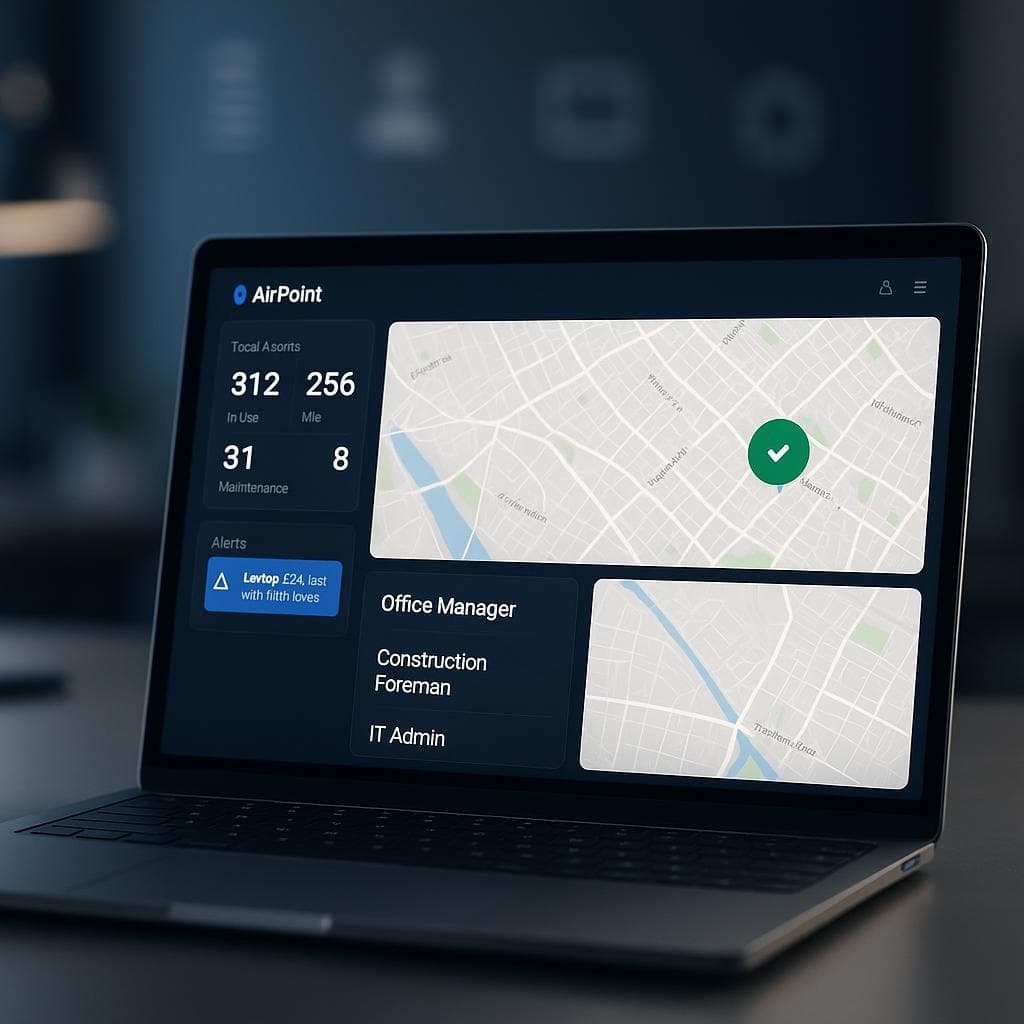
You attach an AirTag to each cart and register it in Airpinpoint, then watch the whole fleet on one map. Apple's Find My network turns every iPhone, iPad, and Mac into a passive Bluetooth scanner, and a course with a few hundred daily players is full of them. Each cart reports its location whenever a player or staff phone passes within range, even parked in a cart barn. Airpinpoint removes Apple's 32-item-per-Apple-ID limit and adds the fleet dashboard, geofencing, location history, and team access the consumer Find My app leaves out.
What is the best golf cart GPS tracker?
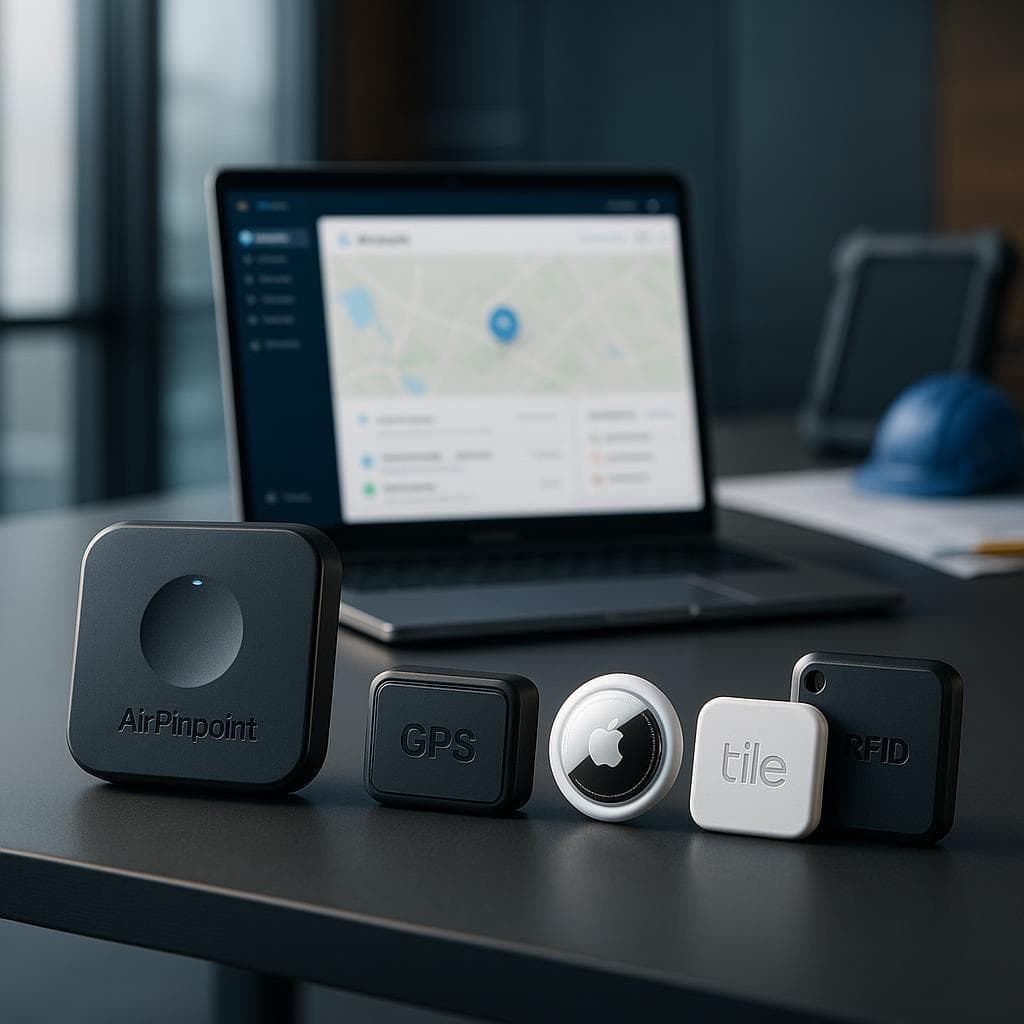
The best tracker depends on where the carts live and what you need from the data. Use the table to match a tool to the job.
| Feature | DIY AirTag (Find My app) | Airpinpoint + AirTag | Wired GPS (Samsara, Spytec) |
|---|---|---|---|
| Hardware cost | $29/tag | $29/tag | $100-200/unit |
| Monthly cost | $0 | $11.99/cart | $30-50/device |
| Carts on one dashboard | 32 per Apple ID | 500+ | Unlimited |
| Geofence the property | No | Yes (PostGIS polygons) | Yes |
| On-property tracking | Yes | Yes | Yes |
| Off-property recovery | Limited | Limited (needs Apple devices nearby) | Yes (cellular anywhere) |
| Live telemetry | No | No (updates in minutes) | Yes (seconds) |
| Install required | No | No | Yes (wire into cart) |
| Battery life | 12+ months | 12+ months (7+ years custom) | Vehicle power |
AirTags through Airpinpoint cost 60-80% less than wired GPS and update more often for carts that stay near people. Wired cellular GPS still wins the moment a cart is on a highway with no Apple devices around, because the unit reports its own position over cellular. That is the real split: on-property fleet management favors AirTags, off-property theft recovery favors cellular GPS.
How does AirTag golf cart tracking work?
An AirTag broadcasts a small Bluetooth pulse that any nearby Apple device picks up and relays to Apple's servers, which means the tag never needs WiFi, cellular, or its own GPS fix. Across the 2.5 billion devices in the Find My network, a busy course generates constant updates. The tradeoff is honest: an AirTag only reports when an Apple device is within roughly 100 feet, so a cart left somewhere empty goes quiet until a phone walks by. On a populated course or resort that is rarely a problem. For off-property recovery on open roads, that is exactly where cellular GPS earns its monthly fee.
The AirTag battery lasts 12+ months on a $1-3 CR2032 because nearby iPhones do the satellite fix and the cellular upload on their own power. Battery-powered GPS trackers advertise multi-year life, but that figure assumes roughly one update per day. Run a battery GPS at a useful rate and it dies in days. Wired GPS sidesteps this by running on the cart's own power.
How much does golf cart tracking cost?
On Airpinpoint, tracking is $29 per AirTag one-time plus $11.99 per cart per month on the Business plan, with no contract. The Enterprise plan at $14.99 per device per month adds REST API access and webhooks for integration with course management software. A wired GPS system runs $100-200 per unit plus $30-50 per device per month and needs installation.
For a 60-cart fleet:
- Airpinpoint: $1,740 in AirTags one-time, then about $720/month.
- Wired GPS: $6,000-12,000 in hardware, plus $1,800-3,000/month, plus install labor.
Can you geofence a golf course?
Yes. Airpinpoint uses PostGIS polygon geofencing, so you draw the real shape of the course, resort, or community boundary instead of a radius circle that either clips the property or spills into the neighbors. When a cart crosses the line, the office gets an email and a webhook fires. For a gated community or a resort with a single road out, this is the alert that matters: a cart leaving at 2am is the signal, and you know within minutes, not at the next morning's count.
Which golf operations use this?
Golf courses. Carts cycle between the clubhouse, the course, and the cart barn all day. The dashboard shows every cart at once, and the geofence catches a cart heading for the parking lot exit.
Resorts and communities. Shared fleets spread across a large property. Location history settles "who had cart 14 last" and shows where carts cluster so staff can rebalance.
Rental fleets. When a renter does not bring a cart back, the location history shows exactly where it is. The webhook integration can flag overdue returns automatically.
How do you get started?
Sign up at airpinpoint.com, attach an AirTag to each cart, and register them in under five minutes per batch. No wiring, no SIM cards, no contracts. Most operations start by tagging the full fleet and drawing one geofence around the property, then add history and webhooks once the location data is flowing.
 Our Solution