Copper Theft on Construction Sites: Why It Keeps Happening and What Actually Stops It
A crew of three people with bolt cutters can strip $50,000 in copper wire from a commercial building in under 30 minutes. They'll sell it at a scrap yard for $2,000. You'll spend $150,000 replacing the wire, repairing the damage, and absorbing the project delay.
Copper theft costs the US construction industry over $1 billion annually according to Department of Energy estimates. Construction sites account for 30-40% of all copper theft incidents. And with copper prices hovering near $4.50-$5.00 per pound in 2026, close to historic highs, the problem is getting worse.
This guide covers what actually works to prevent copper theft on job sites, from scheduling tricks that eliminate opportunity to $29 tracking tags that help police recover stolen material before it's melted down.
Why Copper Theft Targets Construction Sites
Construction sites combine everything a copper thief needs: large quantities of exposed copper, predictable empty periods (nights and weekends), multiple access points, and minimal surveillance.
What gets stolen:
- Electrical wire (most common): Romex, THHN, MC cable, feeders. A single floor of a commercial building can hold $20,000-$50,000 in wire.
- Plumbing pipe: Type L and Type M copper pipe, especially in mechanical rooms.
- HVAC copper: Refrigerant lines, condenser coils, evaporator coils.
- Grounding conductors: Often the first thing pulled because they're exposed and easy to follow.
- Transformer wire: Found in electrical rooms, extremely high copper density.
When it happens:
- 70% of construction equipment theft occurs between 6 PM and 6 AM (FBI UCR data)
- Thursday through Sunday is peak period. Thieves scout during the week and hit on weekends.
- Holiday weekends (Memorial Day, Labor Day, Thanksgiving) see 3-4x the normal theft rate.
- Active job sites account for 60% of copper theft. Equipment yards and storage handle the rest.
Copper price drives theft rates directly. Every $1/lb increase in copper price correlates with a 30-40% increase in theft incidents. When copper dropped below $2/lb in 2009, theft reports fell by half. At today's $4.50+/lb, we're near peak theft conditions.
The Real Cost of a Copper Theft Incident
The copper itself is the smallest part of your loss.
Residential Construction
| Cost Category | Typical Range |
|---|---|
| Copper wire stolen | $3,000-$8,000 |
| Reinstallation labor | $4,000-$10,000 |
| Drywall/framing repair (thieves rip walls to pull wire) | $2,000-$5,000 |
| Re-inspection fees | $500-$1,500 |
| Project delay (1-2 weeks) | $2,000-$8,000 |
| Insurance deductible | $1,000-$2,500 |
| Total real cost | $12,500-$35,000 |
A $5,000 copper theft on a single-family home build becomes a $15,000-$25,000 problem.
Commercial Construction
| Cost Category | Typical Range |
|---|---|
| Copper wire/pipe stolen | $20,000-$100,000 |
| Reinstallation labor | $15,000-$75,000 |
| Structural repair | $5,000-$20,000 |
| Re-inspection and engineering review | $2,000-$10,000 |
| Project delay (2-6 weeks) | $10,000-$100,000 |
| Insurance premium increase (next year) | $5,000-$15,000 |
| Total real cost | $57,000-$320,000 |
One bad weekend can cost a commercial project six figures.
The Damage Beyond Dollars
Copper thieves don't carefully disconnect wire. They cut it. That creates:
- Electrocution hazard: Cut live wires left exposed in walls and ceilings
- Fire risk: Damaged wiring in insulation can arc and ignite
- Structural damage: Thieves rip open drywall, break studs, and damage framing to access wire runs
- Plumbing contamination: Cut pipe lets debris and water into plumbing systems
- Code violations: Spliced or incomplete wire runs fail inspection even after replacement
Prevention Methods That Actually Work
No single measure stops copper theft. Layered security makes your site harder to hit than the next one. Thieves pick the easiest target. Don't be the easiest target.
Layer 1: Scheduling and Operations
The cheapest and most effective prevention costs nothing extra.
Install copper late in the build sequence. Don't pull wire until drywall is closed. Don't run plumbing copper until walls are sealed. The shorter the window between installation and energization/pressurization, the smaller the theft opportunity.
"We now install all copper on Fridays and energize by end of day. Thieves don't touch live wire." - Electrician on r/Electricians
Minimize on-site copper inventory. Just-in-time delivery instead of staging a week's worth of material. If you have three days of copper on site but only need one day's worth, you're storing two days of inventory for thieves.
Log everything. Photograph wire installations with timestamps. Record spool serial numbers. This documentation helps with insurance claims and police reports.
Layer 2: Physical Security
Lock wire rooms and mechanical rooms. A $15 padlock on the electrical room door stops opportunistic theft. Won't stop a determined crew, but eliminates the casual walk-through steal.
Secure staging areas. Copper deliveries should go into a locked conex/shipping container or inside a secured room. Never leave wire spools sitting in an open area overnight.
Fencing with locked gates. Job site perimeter fencing with locked access points. Not impenetrable, but adds time and risk for the thief.
Remove copper from exposed locations at end of day. If wire is pulled but not terminated, have crews coil and lock loose runs rather than leaving them hanging.
Layer 3: Deterrence
Cameras with signage. Visible cameras paired with "This site monitored 24/7" signs. Even dummy cameras with real signage create hesitation. Actual cameras provide evidence for prosecution.
Motion-activated lights and alarms. Solar-powered motion lights on job site perimeters. Connected alarm systems that alert a monitoring service or your phone.
Material marking. Several options:
- SmartWater: Forensic liquid with unique DNA code, invisible to thieves but detectable by police. Some police departments provide free kits.
- UV marking: Stamp contractor license number or project address on copper with UV-reactive ink.
- Physical etching: Engrave contractor info directly into copper pipe with an electric engraver.
Some states now require scrap yards to check for marked copper. In those states, marking creates a real deterrent because the copper becomes harder to sell.
Layer 4: Tracking
This is where technology fills the gap that physical security leaves.
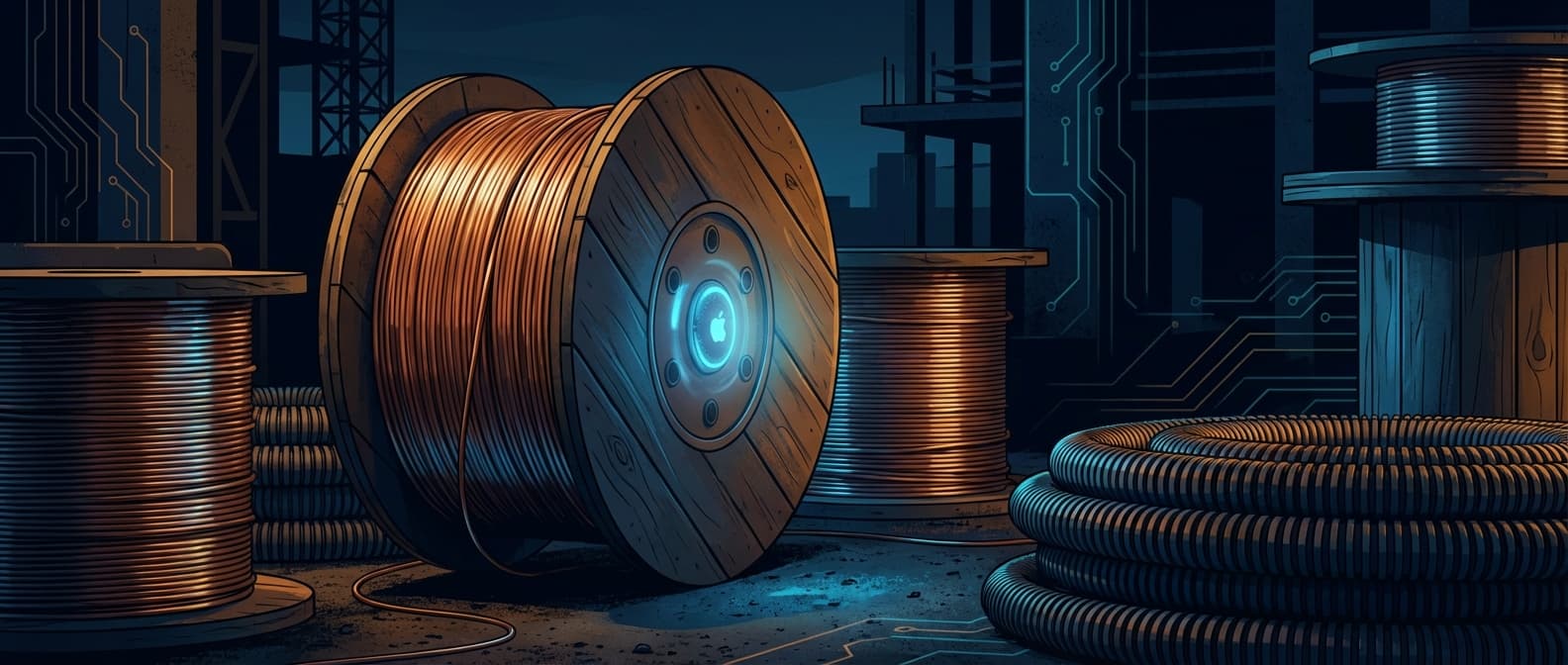
AirTags on wire spools and pipe bundles. A single AirTag ($29) dropped into the center hub of a wire spool tracks that $5,000-$10,000 worth of material. If the spool leaves the site after hours, you get an alert.
- Hide the AirTag inside the spool hub (drop through the center)
- Tape an AirTag to the inside of pipe bundles
- Place AirTags in conduit boxes staged for installation
- Waterproof case not needed for indoor-stored material
Geofencing with AirPinpoint. Set a virtual perimeter around your job site. When tagged material crosses the geofence after hours, you get an email or webhook alert. This gives you a window to call police before the copper reaches a scrap yard.
Why this works for recovery. 28 states now require scrap dealers to hold copper for 3-15 days before processing. That means stolen copper often sits at the scrap yard for days. If your AirTag tracks the copper to the yard, police can recover it and arrest the seller.
The math: A $29 AirTag on a $5,000 wire spool is 0.6% of the material cost. A contractor running 10 active job sites with 5-10 tagged spools per site spends $1,450-$2,900 on AirTags that last a year. One prevented theft pays for 5 years of tags.
With AirPinpoint ($11.99/device/month Business plan), you get a dashboard showing all tagged materials across all sites, geofence alerts, and location history. For a 50-spool deployment, that's $600/month for complete visibility across your copper inventory.
Layer 5: Legal and Insurance
Know your state's metal theft laws. 28 states have specific metal theft statutes with enhanced penalties. In many states, copper theft is a felony starting at $500 (lower than the general theft felony threshold). Posting the applicable statute on job site signage adds another deterrent.
Document for insurance. Take photos of all copper before and after installation. Keep receipts for every spool. If you file a claim, detailed documentation reduces disputes and speeds payment.
Report every incident. Even small thefts. Police reports create data that drives enforcement funding and helps prosecutors establish patterns when they catch repeat offenders.
The Scrap Yard Problem (and How It's Changing)
The reason copper theft is so persistent: scrap yards have historically asked few questions. Walk in with a van full of copper wire, get cash, walk out.
That's changing. As of 2026:
- Most states require photo ID for scrap copper sales
- Many states require scrap dealers to photograph the material and the seller
- 3-15 day hold periods before dealers can process copper (gives police time to match stolen material reports)
- Some states require electronic reporting of all copper purchases to police databases
- The federal PART Act (targeting catalytic converters) has created momentum for similar federal copper tracking requirements
This matters for tracking. When scrap yards hold copper for days, a $29 AirTag hidden in a wire spool gives police a days-long window to match your stolen material report with the AirTag location at the scrap yard.
Job Site Copper Security Checklist
Use this as a weekly review:
- All copper stored in locked containers or rooms when not being installed
- Wire spools tagged with AirTags (all spools over $500 value)
- Job site geofence active in AirPinpoint with after-hours alerts enabled
- Cameras operational and signage visible at all entry points
- Motion lights functional on job site perimeter
- Copper serial numbers and photos logged
- No loose, exposed copper left overnight (coiled and secured by end of day)
- Perimeter fencing intact with gates locked
- Installation schedule minimizes copper exposure time (install late, energize same day)
- All incidents reported to police (even small ones)
When to Choose Which Prevention Method
| Method | Cost | Effort | Effectiveness | Best For |
|---|---|---|---|---|
| Schedule optimization | $0 | Medium | High | Every site |
| Padlocks on rooms | $15-$50 | Low | Medium | Interior work |
| Perimeter fencing | $500-$5,000 | High | Medium-High | Large sites |
| Cameras + signage | $200-$2,000 | Medium | High | Repeat-theft sites |
| SmartWater/UV marking | $50-$200 | Low | Medium | States with scrap yard checks |
| AirTag tracking | $29/spool | Low | High (recovery) | High-value material, multi-site |
| AirPinpoint fleet mgmt | $11.99/device/mo | Low | High | Multi-site contractors |
| Security guard | $15-$30/hour | None (outsourced) | High | High-value commercial |
Most contractors should start with scheduling + padlocks + AirTags. Add cameras and marking as budget allows. Security guards only for high-value commercial projects with extended exposure periods.
The Bottom Line
Copper theft won't stop as long as copper prices stay above $3/lb. The goal isn't to make your site theft-proof. The goal is to make it harder to hit than the site down the road, and recoverable when it does get hit.
The contractors who lose the least money to copper theft do three things consistently: they minimize the time copper sits exposed on site, they lock up what they can, and they track what they can't lock up.
A $29 AirTag on a $5,000 wire spool won't stop someone from stealing it. But when police recover that spool at a scrap yard 8 miles away the next morning because your AirPinpoint dashboard showed exactly where it went, that's how you break the cycle.
