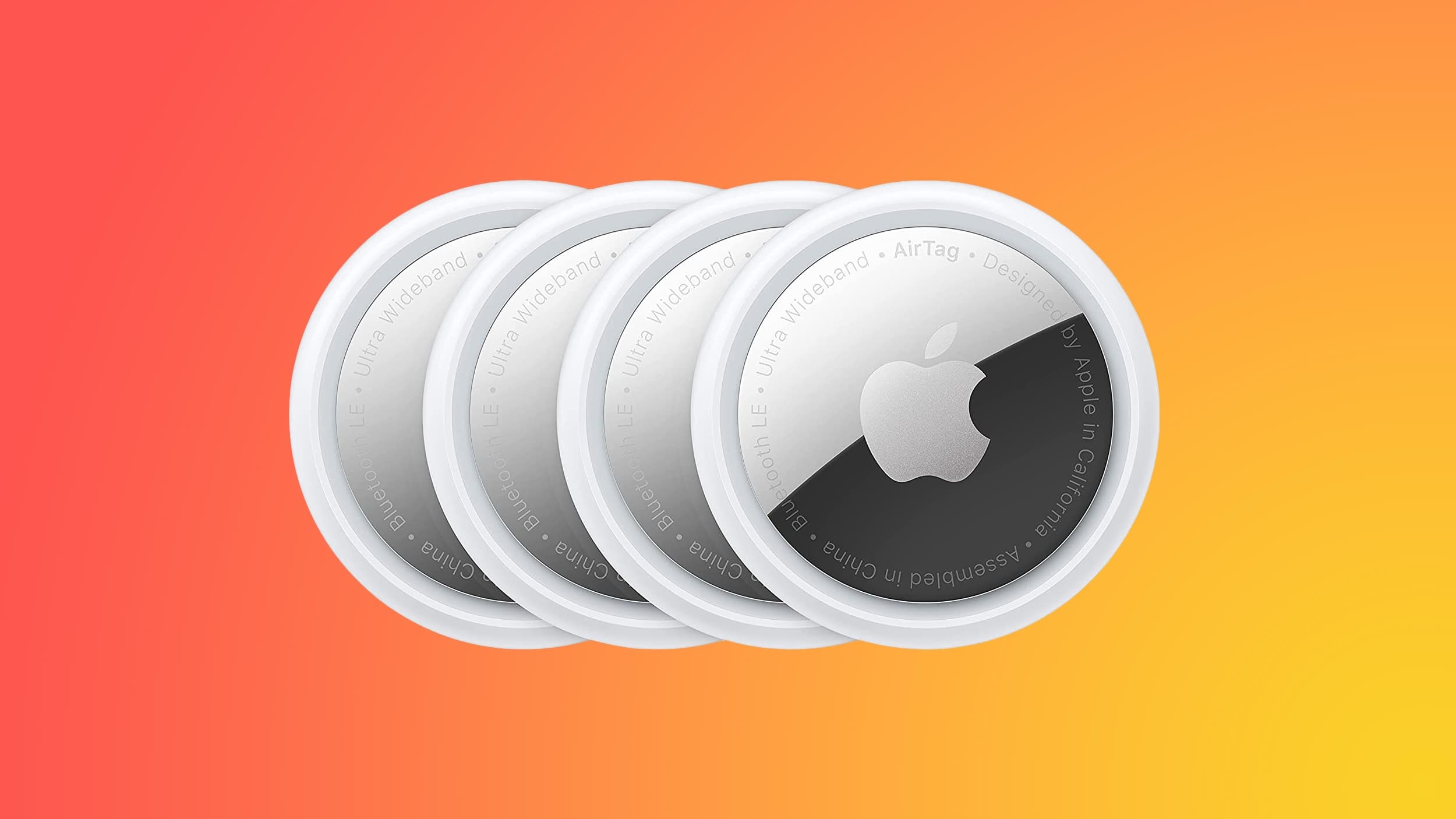
AirTag 2: Everything That Changed
The AirTag 2 shipped on January 26, 2026, replacing the original entirely. Same $29 price. Same CR2032 battery. Nearly identical appearance. But two upgrades matter more than the rest combined: the speaker is now loud enough to actually hear in a noisy environment, and Precision Finding reaches up to 50 percent farther.
We have been tracking AirTags across hundreds of business deployments at Airpinpoint since 2022. This is what the AirTag 2 actually changes, what it doesn't, and what it means if you're tracking equipment, vehicles, or inventory at scale.
AirTag 1 vs AirTag 2: Full Specs Comparison
| Spec | AirTag (1st Gen, 2021) | AirTag 2 (2026) |
|---|---|---|
| Price | $29 / $99 (4-pack) | $29 / $99 (4-pack) |
| Weight | 11g | 11.8g (+7%) |
| Water Resistance | IP67 | IP67 |
| Battery | CR2032 (user-replaceable) | CR2032 (user-replaceable) |
| Battery Life | "More than a year" | "More than a year" |
| UWB Chip | 1st-gen U1 | 2nd-gen |
| Precision Finding Range | Not published by Apple | "Up to 50% farther" / "1.5x greater" than gen 1 (Apple) |
| Speaker Volume | 66dB measured (Cult of Mac) | 87dB measured (Cult of Mac); "50% louder" (Apple) |
| Bluetooth ID Rotation | Standard | More frequent |
| Share Item Location | No | Yes (50+ airlines) |
| Apple Watch Support | No | Series 9+, Ultra 2+ |
| Requires | iOS 14.5+ | iOS 26.2.1+ |
| Find My Network | 1B+ Apple devices | 1B+ Apple devices |
The weight increase (0.8g) is imperceptible. The form factor is identical enough that every existing AirTag accessory, case, and holder works with the new model. The only visual difference is the text engraved on the back.
The Speaker Upgrade is the Biggest Deal
The original AirTag had a speaker problem. At 66dB, the "find" chime was roughly the volume of a normal conversation. Try hearing a conversation-volume beep inside a packed suitcase, under a car seat, or buried in a warehouse shelf. You couldn't.
Independent testing tells the story:
- Cult of Mac measured the AirTag 2 at 85-87dB, compared to 66dB on the original
- Macworld confirmed similar figures in their teardown review
- CNN measured an even wider gap: 87.5dB (original) to 105.5dB (AirTag 2)
The measurement methodology explains the CNN discrepancy (likely closer proximity to the microphone), but the direction is consistent across every review. The AirTag 2 is substantially louder. 85dB is comparable to a food blender or heavy traffic. 105dB is approaching a rock concert.
For personal use, this means you can actually find your keys in a couch cushion without pressing your ear against every surface. For business use, the implications run deeper. A warehouse worker can trigger a sound alert and hear it from across a shelf aisle. A fleet manager can locate a tagged tool in the bed of a pickup truck without climbing in. The speaker was the original AirTag's weakest link for recovery, and Apple fixed it.
Apple also hardened the speaker against tampering. The original AirTag had a well-documented problem: bad actors would remove or disable the speaker to prevent detection during stalking. The AirTag 2 speaker is harder to remove without destroying the device. This addresses a real safety concern, and it also means business-deployed AirTags are more resistant to deliberate sabotage.
Precision Finding Range: Up to 50 Percent Farther
Apple's announcement puts it this way: Precision Finding "guides users to their lost items from up to 50 percent farther away than the previous generation," and the AirTag product page calls it "up to a 1.5x greater Precision Finding range." Apple has never published a meter figure for either generation, so treat the widely repeated "15 meters" for gen 1 as a reviewer estimate, not a spec. What is certain is the ratio: the second-generation Ultra Wideband chip, the same one in the iPhone 17 lineup and Apple Watch Series 11, buys you about half again the distance at which your iPhone shows a directional arrow and a distance readout.
Two important notes on this upgrade:
It only affects the UWB "arrow" experience, not Bluetooth range. Bluetooth Low Energy range remains approximately 100 meters, which is the range that matters for the Find My network and for platforms like Airpinpoint that query location data server-side. Your AirTag 2 will not suddenly appear on more iPhones passing by. The crowd-sourced network behavior is unchanged.
Apple Watch now supports Precision Finding. Series 9 and later, plus Ultra 2 and later, can use the UWB direction-finding feature. This is new. The original AirTag required an iPhone for Precision Finding. For someone wearing an Apple Watch on a construction site or in a warehouse, this is a practical upgrade. Pull up your wrist, get a directional arrow, walk toward the asset.
Share Item Location: The Airline Feature
AirTag 2 introduces a "Share Item Location" feature that lets you share your AirTag's real-time location with a third party. Apple launched this with 50+ airline partners including Delta, United, Lufthansa, and Singapore Airlines.
The use case is straightforward: you check a bag, the airline loses it, and instead of waiting days for someone to scan a barcode, the airline can see exactly where the bag is sitting. This works because you share the location from your Find My app directly with the airline's support team.
For business users, Share Item Location opens an interesting door. If you're shipping high-value equipment and want a logistics partner or customer to see where it is in transit, this feature provides a native mechanism for that. No API integration required, just a share link from the Find My app.
Privacy: Faster Bluetooth Rotation
The AirTag 2 rotates its Bluetooth identifier more frequently than the original. This makes it harder for third parties to persistently track an AirTag's movement by monitoring its Bluetooth signal over time.
Combined with the tamper-resistant speaker and Apple's existing anti-stalking notifications (which alert iPhone and Android users when an unknown AirTag is traveling with them), the AirTag 2 represents a meaningful step forward in the ongoing tension between "track your stuff" and "don't track people."
For businesses, the faster rotation has no impact on tracking capability. The Find My network handles identifier rotation transparently. Your location data flows the same way it always has.
What Didn't Change
Some things worth noting that stayed the same:
- Battery life. Apple claims "more than a year," same language as the original. Real-world results on the original averaged 10-14 months. Early AirTag 2 deployments suggest similar or slightly better life due to chip efficiency gains, but no dramatic improvement. Still CR2032, still user-replaceable.
- IP67 water resistance. Submersible to 1 meter for 30 minutes. Adequate for rain, puddles, and accidental drops in water. Not designed for sustained underwater use.
- No GPS. The AirTag 2 still does not contain a GPS chip. It relies entirely on the Find My network of over a billion Apple devices to crowdsource its location. This is the fundamental architecture that makes AirTags cost $29 with no monthly fee at the hardware level, and it is also the reason AirTags work differently from dedicated GPS trackers.
- No cellular radio. No SIM, no LTE, no direct internet connection. Location updates depend on proximity to Apple devices.
What AirTag 2 Means for Business Tracking
We run Airpinpoint, a fleet management platform for AirTags and Find My-compatible trackers. Hundreds of businesses use our dashboard to track equipment, vehicles, tools, and inventory. So we think about AirTag upgrades in terms of operational impact, not spec sheets.
The speaker upgrade reduces recovery time. When a tagged asset is within Bluetooth range, the ability to trigger an audible alert that you can actually hear in a noisy environment (a job site, a warehouse, a parking lot) cuts the time between "I know it's somewhere nearby" and "I found it." For companies tracking hundreds of assets, those minutes add up.
Extended Precision Finding range helps in specific scenarios. Half again the UWB range means a worker with an iPhone or Apple Watch can get directional guidance across a larger area. In a warehouse, that is the difference between searching an entire section and walking straight to the right shelf. On a construction site, it is the difference between checking every trailer and heading to the correct one.
The core tracking architecture is unchanged. Bluetooth range is the same. Find My network behavior is the same. Crowd-sourced location updates work identically. If you are using Airpinpoint (or any Find My-based platform) for fleet tracking, geofencing, or location history, the AirTag 2 drops into your existing setup with zero changes. Same onboarding process, same dashboard, same data.
Same price means same economics. At $29 per tag with no per-device hardware subscription from Apple, the cost structure that makes AirTag-based tracking dramatically cheaper than GPS ($25-45/device/month) remains intact. The AirTag 2 is a better product at the same price point.
The battery comparison that doesn't show up on spec sheets. GPS trackers advertising 3-5 year batteries get there by updating once a day. That's the spec-sheet footnote that nobody quotes at you. Across Airpinpoint production tags, the median tag logs about 96 Find My updates a day and the busiest decile clears 250, which is roughly 35,000 to 95,000 location updates over a year on a single CR2032. A Samsara AG46 battery option at ~1 check-in/day produces roughly 1,100 updates over its advertised 3-year life. At AirTag's update pace, that same battery would last about 3 days. The architecture explains the gap: each GPS update requires a satellite fix (up to 30 seconds of radio-on time) plus a cellular transmit burst pulling hundreds of milliamps. An AirTag broadcasts a microamp Bluetooth packet and the iPhones around it do the expensive parts on their own batteries. For unpowered assets, the AirTag 2 is simultaneously the most-frequently-updating and the longest-lasting option available.
Should You Upgrade?
If you are buying new AirTags, buy the AirTag 2. The original is discontinued, so this is your only option anyway.
If you have original AirTags deployed and working, there is no urgent reason to replace them. The crowd-sourced tracking works the same. Your location data is the same. The upgrades (louder speaker, longer Precision Finding, Share Item Location) are nice-to-have improvements, not must-have fixes.
The natural upgrade cycle is battery replacement. When your original AirTag's battery dies (typically 10-14 months), consider whether the $29 for a new AirTag 2 is worth it versus a $0.50 CR2032 replacement. For high-value assets or assets that are frequently misplaced, the louder speaker alone justifies the swap. For assets that sit in a known location and are tracked passively via geofencing, keep the original until it fails.
Bottom Line
The AirTag 2 is not a reinvention. It is a focused improvement on the two things that mattered most: finding the tag when you're close to it (louder speaker, longer Precision Finding range) and preventing misuse (tamper-resistant speaker, faster Bluetooth rotation). The price didn't change. The battery didn't change. The network didn't change.
For the millions of people who use AirTags to find their keys, this is a solid upgrade. For businesses tracking fleets of equipment with platforms like Airpinpoint, it is a welcome refinement that makes the last-50-feet problem easier to solve without changing anything about how large-scale tracking works.
Apple stops at 32 AirTags per account
Airpinpoint tracks unlimited tags in one dashboard, with location updates about every 5 minutes, geofence alerts, and a REST API, from $11.99 per tag per month.
Free to start. Works with the AirTags you already own. 6,700+ tags under management.
